
Unbiased headlines. Facts, not spin.
Every story is an unbiased news briefing written from 110+ sources across the spectrum — sources linked so you can verify it yourself.
 finance
Notable (6/10)
Event date: August 31, 2026
finance
Notable (6/10)
Event date: August 31, 2026
Aon Draws $65 Billion in Demand for Bond Sale to Fund $17 Billion USI Insurance Buy
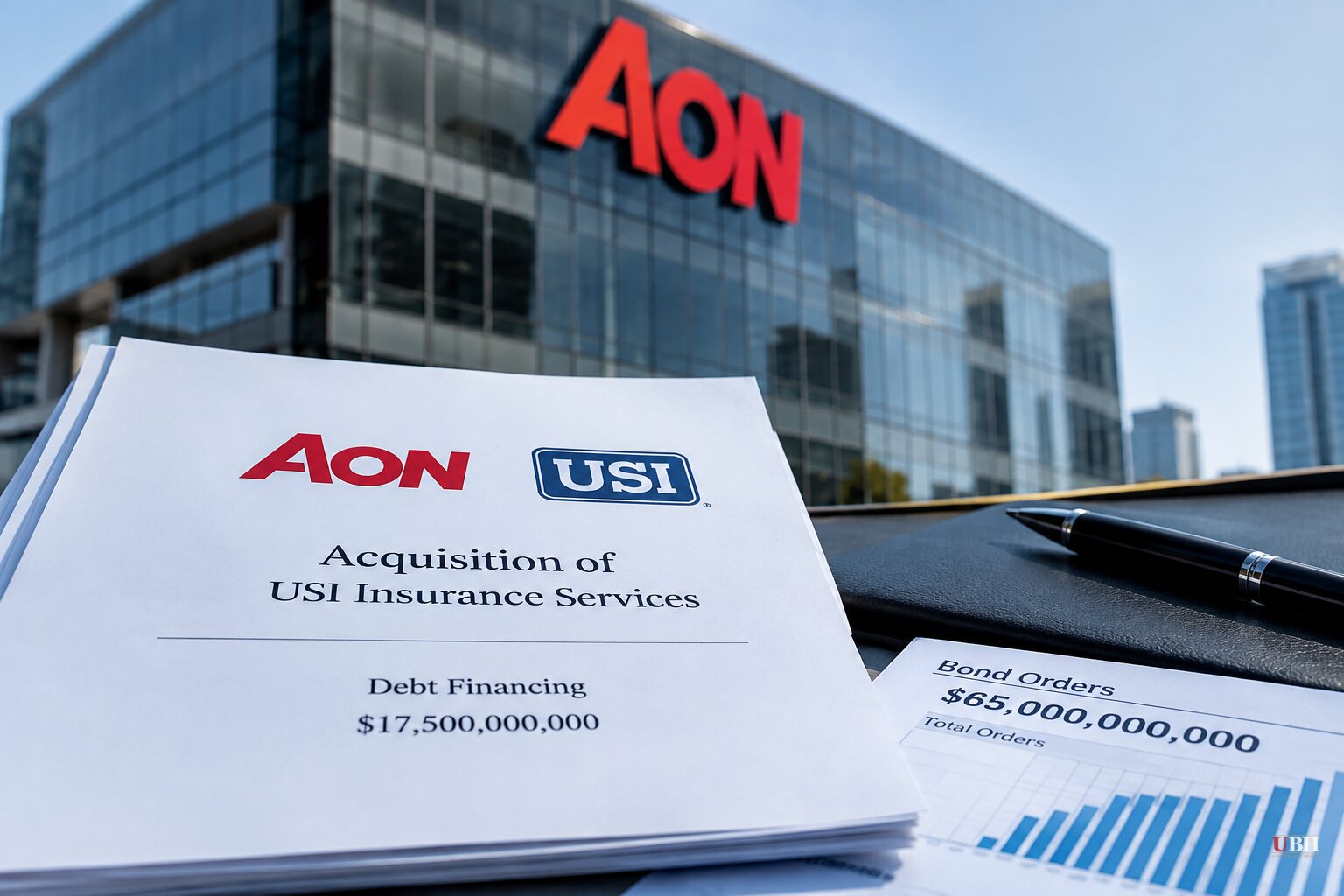
Aon plc confirmed on Monday, August 31, 2026, that it's buying USI Insurance Services from KKR and other shareholders for $17 billion, and on Monday, September 14, the company drew roughly $65 billion in investor demand for the bond sale funding it, according to Bloomberg and Crain's Chicago Business.
Investors wanted in on the longest-maturity tranches most, per people familiar with the matter cited by Bloomberg.
The Deal Itself
USI is the 10th-largest insurance broker in the U.S., with about $3 billion in annual revenue, more than 10,500 employees and nearly 200 offices, according to the companies' joint press release distributed by PR Newswire. It sells property and casualty coverage, employee benefits, personal risk products and retirement planning, mostly to businesses too big for a local agency but too small for the giants.
After accounting for roughly $278 million in tax attributes, the net price comes to $16.7 billion, or about 14.5 times USI's synergized trailing-twelve-month adjusted EBITDA, according to Insurance Business Magazine. Aon CEO Greg Case told the Wall Street Journal, as reported by Insurance Business, that the deal will have a financial impact "almost immediately."
USI Chairman and CEO Mike Sicard will become president of Aon plc and global CEO of Middle Market once the deal closes, reporting to Case and joining Aon's executive committee. "Joining Aon represents a truly energizing next chapter for our firm," Sicard said in the companies' statement.
The deal builds on Aon's $13 billion acquisition of NFP in 2024, another middle-market insurance brokerage. Aon later sold most of NFP's wealth-management arm back to Madison Dearborn Partners for about $2.7 billion, according to the Epoch Times, a move that narrowed NFP's focus to core risk and benefits work. Aon puts the total U.S. middle-market opportunity at more than $40 billion, or over a third of U.S. commercial P&C premium, and says the USI deal deepens its reach into excess and surplus lines, a segment distributed through wholesalers and managing general agents that represents about 26 percent of U.S. commercial property and casualty premiums, according to Aon.
For KKR, this is a straightforward private-equity exit. The firm bought USI alongside Canadian pension fund CDPQ in 2017 for about $4.3 billion from Onex Corp, then added more than $1 billion to its stake in 2023 to become USI's largest shareholder, according to Insurance Journal. Selling nine years later for $17 billion is a win for KKR's limited partners.
The Debt Side of the Ledger
Aon is paying for all of it with new debt: a seven-tranche, $13.5 billion U.S. dollar bond issue plus a $4 billion term loan, a $17.5 billion financing package according to Gokhshtein Research. That's the money behind the $65 billion in demand, not the $17 billion purchase price itself, a distinction worth keeping straight since the two numbers get close enough to blur.
Aon says the combined middle-market business will generate roughly $395 million a year in cost and revenue synergies, with the deal adding to adjusted earnings per share starting in 2028, per the PR Newswire release. Aon itself has told investors, per Gokhshtein, that full debt funding will pressure earnings per share in 2027 before those synergies show up. The company says it plans to focus on paying down debt rather than buying back shares in the near term, aiming to protect its current credit ratings of Baa2 at Moody's and A- at S&P.
That's the legitimate concern: a one-year EPS hit is a real cost shareholders are being asked to absorb now for synergies promised years out, especially with Bloomberg separately reporting the U.S. 10-year Treasury yield breaching 5% on inflation and supply worries.
The counterweight is that bond investors, who get paid regardless of Aon's stock price, looked at the same balance sheet and offered nearly five times what Aon asked for. TD Cowen raised its Aon price target to $420 from $416 while maintaining a Buy rating, per Gokhshtein, with the stock recently trading around $302.69 against a 52-week high of $382.89.
What's Still Open
The deal is expected to close in the fourth quarter of 2026, subject to regulatory approval, according to Insurance Journal and the Epoch Times. Whether the promised $395 million in run-rate synergies materializes on Aon's timeline, and whether that 2027 earnings dip is as contained as Aon projects, won't be answerable until Aon reports full-year results in the years ahead. Investors bought the bonds on the promise. Shareholders are the ones waiting to see if it pays off.
Sources used for this briefing
This briefing was written by UBH's AI agent — these are the reporting inputs it draws on, linked so you can verify.


