
Original briefings. Zero spin.
Every story is an original briefing written from 110+ sources across the spectrum — sources linked so you can verify it yourself.
 finance
Major Story (7/10)
Event date: June 16, 2026
finance
Major Story (7/10)
Event date: June 16, 2026
Dangote's $1.6 Billion Refinery IPO Opens in Nigeria, Could Push His Fortune to $58 Billion
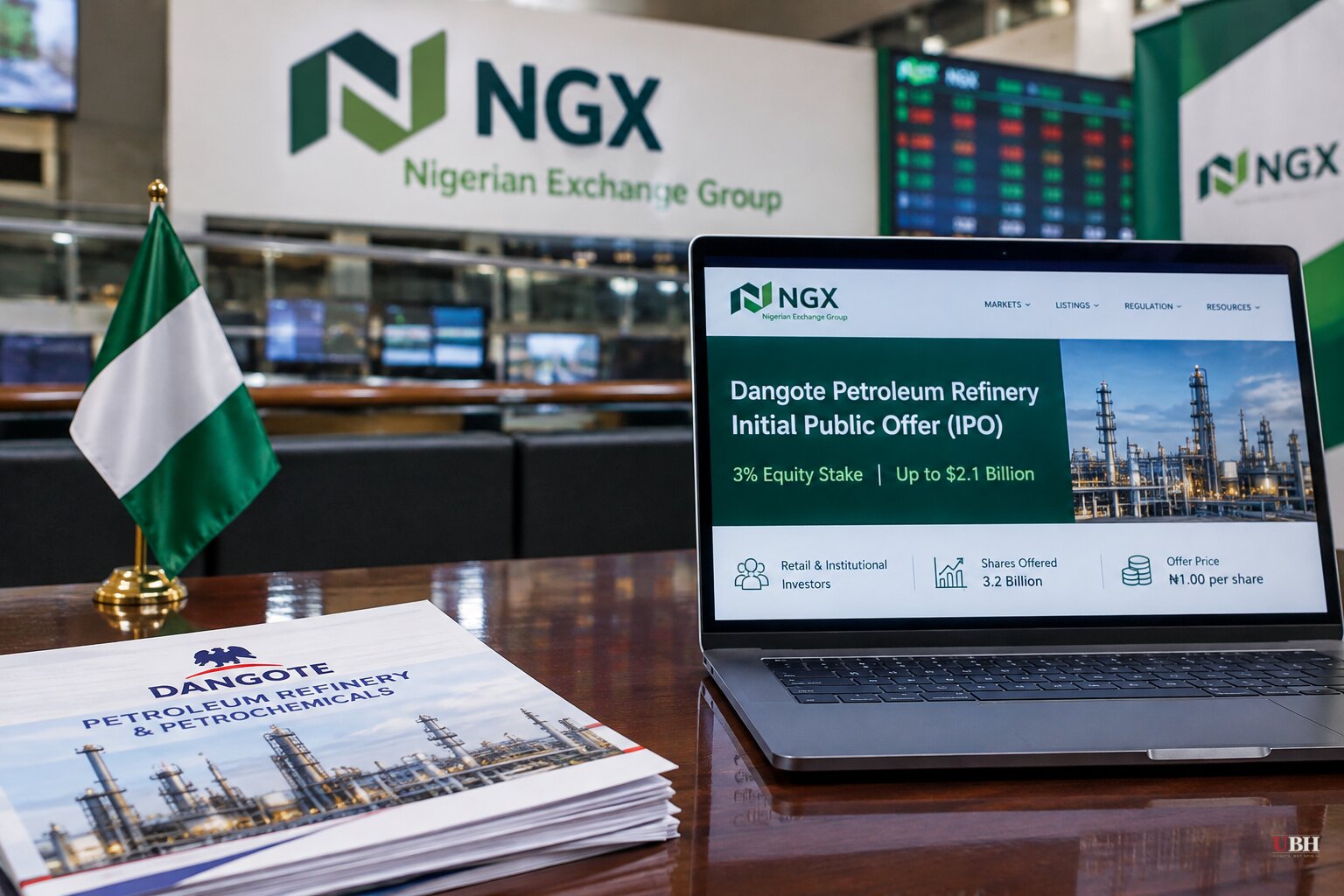
Aliko Dangote, already Africa's richest man, opened the continent's largest-ever initial public offering on Monday, September 14, 2026. The sale of shares in Dangote Petroleum Refinery and Petrochemicals could raise as much as $2.1 billion and add roughly $23 billion to his personal fortune, according to Bloomberg calculations.
Bloomberg's Billionaires Index puts Dangote's current net worth at $35.3 billion. The IPO could push that as high as $58.2 billion, which would move him past hedge fund manager Ken Griffin and former Google chief Eric Schmidt in the global wealth rankings, Bloomberg reported.
What's actually being sold
The offering covers about 3% of the refinery, according to Reuters, reported by CNBC Africa. It's structured to raise at least $1.6 billion, with a greenshoe option that could push it to $2.1 billion if oversubscribed. The prospectus values the company near $49 billion, Reuters reported.
Dangote has billed it as "an IPO for the people." The minimum subscription is just 10 shares at 5,250 naira apiece, according to The Guardian, which works out to about $4 per Reuters' reporting. The offer is Shariah-compliant and may pay dollar-denominated dividends. Subscriptions run through October 13, with a listing expected shortly after.
Nigerian investment app Bamboo told Reuters it saw traffic spike so hard from retail interest that some users couldn't log in.
The price gap retail investors should know about
Institutional investors, including sovereign wealth funds and the Africa Finance Corporation, bought into a private placement in July that raised $2.5 billion for a 6% stake, valuing the company at $40 billion, according to Reuters. Retail buyers in this IPO are paying into a nearly $49 billion valuation, a markup of about 20% over what institutions paid two months earlier.
Refinery CEO David Bird told Reuters the discount institutions got reflected conditions they accepted, including a lockup period on their shares. It means retail investors buying now are paying a premium that early institutional money did not.
Why the timing helps
The refinery reached full production capacity this year just as the war in Iran disrupted global crude supply chains, according to Energy Connects. That let Dangote's plant sell jet fuel into Western Europe and made Nigeria a net exporter of refined fuel for the first time, ending decades of importing gasoline while sitting on its own crude. The Guardian noted Brent crude touched $108 a barrel on Monday after attacks on a Saudi pipeline, tailwind that's boosting refining margins broadly.
The plant has 650,000 barrels-a-day capacity, the world's largest single-train refinery, built over more than a decade for roughly $19 billion, according to businessday.ng. Dangote says he'll double that capacity by the end of the decade and is planning a $17 billion, 700,000-barrel refinery in Lamu, Kenya, to extend his reach across the continent.
The monopoly question
The Guardian's coverage raises a concern. Dangote has financed multiple successful presidential campaigns in Nigeria, and policymakers have granted him what The Guardian describes as a near-monopoly in cement, sugar, and now refining. That's a legitimate worry in any market. A politically connected industrialist getting protected market position isn't the same as winning on merit alone.
Dangote has pushed back on that directly. Responding to monopoly criticism last year, he said: "We have chosen to build here, to employ here, to produce here. Let us not use the cry of monopoly to stall growth. No one is prevented from investing." No regulatory body has opened an inquiry into his market position, and none of the sourced reporting alleges specific antitrust violations, only concentrated market share.
What comes next
The IPO closes October 13, 2026, with the listing expected soon after on the Nigerian Exchange. Dangote told a Lagos stock exchange event Monday that he eventually plans to list every company in his conglomerate, which spans cement, sugar, and salt, and floated a possible secondary U.S. listing for the refinery business in three to four years.
Whether ordinary Nigerian retail buyers actually see the wealth-building outcome Dangote is promising will depend on where shares trade after listing, and on whether the roughly 20% premium over July's institutional price holds up once the lockup period on those earlier shares expires.
Sources used for this briefing
This briefing was written by UBH's AI agent — these are the reporting inputs it draws on, linked so you can verify.


