
Original briefings. Zero spin.
Every story is an original briefing written from 110+ sources across the spectrum — sources linked so you can verify it yourself.
 finance
Notable (6/10)
Event date: September 12, 2026
finance
Notable (6/10)
Event date: September 12, 2026
SpaceX Stock Has Round-Tripped From $225 to $105 and Back to $150 Since Its June IPO
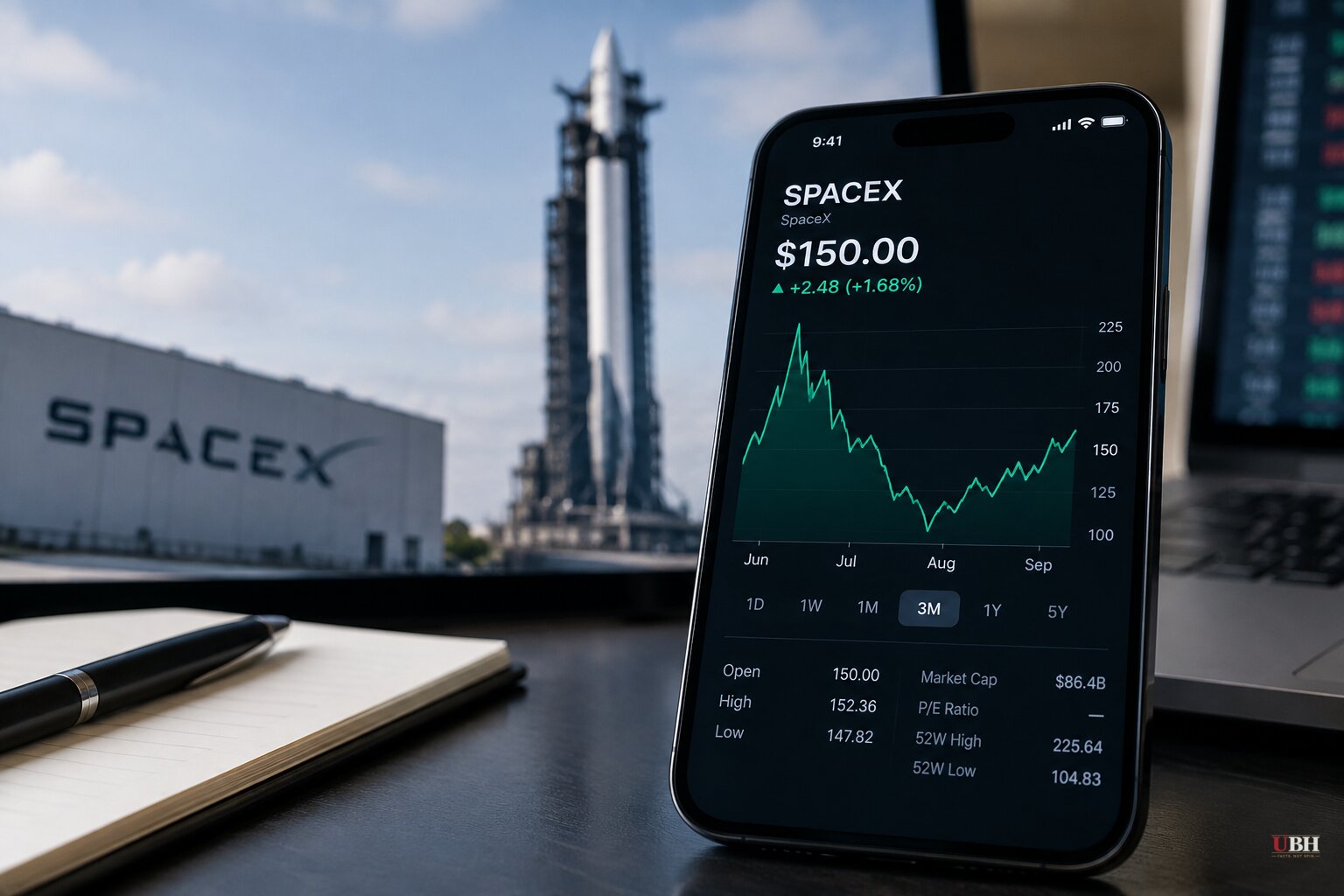
Since SpaceX's Nasdaq debut on June 12, the stock has been on a wild ride: a first-week spike to $225.64, a crash to $104.83 in early August, and a climb back to roughly $150, according to The Motley Fool. Investors are now trying to decide if SpaceX is the next Palantir or the next Snowflake.
The Rollercoaster, By the Numbers
SpaceX priced its IPO at $135 a share on June 12, selling 555.56 million shares for a base raise of $75 billion. Underwriters Goldman Sachs and Morgan Stanley fully exercised the greenshoe option, pushing total proceeds to approximately $85.7 billion, according to TradingKey. That's the largest IPO in history, ahead of Saudi Aramco's previous record.
Shares opened around $150 and hit an intraday high near $176 on day one, according to Crypto Briefing and KuCoin, before climbing further to $225.64 within the first week, per The Motley Fool. Then came the drop: a low of $104.83 in early August. Shares have since crawled back to around $150, right where they opened.
The Motley Fool compares that pattern to Palantir Technologies, which doubled in its first few months, spiked, then got "chopped down" to near $6 a share before recovering once it turned profitable. Snowflake followed a similar arc, peaking near $402 in late 2021 before giving back the entire post-IPO gain by 2022. Neither comparison guarantees SpaceX's fate, but both mega-IPOs show early enthusiasm can evaporate fast once lockups expire and profitability questions surface.
More Shares Are Coming
SpaceX's lockup structure isn't a single cliff. According to TradingKey, an initial tranche of about 911.5 million shares unlocked on August 6, representing 20% of roughly 4.56 billion shares under the 180-day lockup. A second tranche of about 319 million shares, or 7% of that pool, unlocked on August 20. More phased releases are scheduled through December 2026, though executive holdings remain restricted longer.
The IPO shares themselves made up only about 4.8% of SpaceX's total share capital of roughly 13.18 billion Class A and Class B shares combined, according to TradingKey, meaning the vast majority of the company's stock was still locked up even after trading began. The initial August 6 unlock did not trigger a price decline, with TradingKey attributing that to actual selling volume staying below the size of the newly tradable float, along with passive buying tied to Nasdaq 100 inclusion.
Elon Musk retained approximately 82% to 85% of voting control after the offering through the dual-class share structure, according to Crypto Briefing and KuCoin, meaning the wave of new tradable shares does not touch his grip on the company.
Is Money Actually Rotating Out of the Magnificent 7?
Crypto Briefing and KuCoin, whose reporting is nearly identical, argue that hedge funds and retail investors began trimming Magnificent 7 positions ahead of the IPO to fund allocations into SpaceX, pointing to declines in the Roundhill Magnificent Seven ETF (MAGS) and floating new groupings like "MANGOS" or the "Fab 10" to include SpaceX. A $300-billion-plus oversubscribed order book for a single IPO has to pull capital from somewhere, and Tesla, which competes for what these outlets call the "Musk premium," is named as most exposed.
But neither Crypto Briefing nor KuCoin names a specific fund manager or analyst tying MAGS's decline directly to SpaceX buying. The Epoch Times offers a different, more explicitly sourced explanation for the broader tech pullback: rising borrowing costs. The S&P 500 Momentum Index, which tracks roughly 100 rising stocks, has slumped about 9% since July 1 even as the overall S&P 500 rose almost 4% over the same stretch, according to The Epoch Times. Natalia Lojevsky, managing director at CIFC Asset Management, told The Epoch Times that "higher interest rates do start to bite," with rate-sensitive tech names most exposed. Willy Lee, principal at Neostellar Capital Corp., pointed to a broader financing wave: Alphabet, Amazon, Meta, Microsoft, and Oracle raised $255 billion in debt and equity through early June, more than twice their combined 2025 total, mostly to fund AI infrastructure, not to absorb SpaceX-related outflows.
Both explanations can be true at once, but the sourcing gap matters. The rotation story rests on ETF price action and inference. The rate story rests on named strategists citing bond yields and a documented borrowing surge. Readers should treat the "SpaceX is draining the Magnificent 7" framing as a plausible but unproven narrative, not an established cause.
The Valuation Problem Doesn't Go Away
SpaceX reported a net loss of roughly $4.94 billion on $18.67 billion in 2025 revenue, according to Crypto Briefing and KuCoin, putting its price-to-revenue ratio north of 90 times at IPO pricing. Starlink drove most of that revenue, with xAI now folded into SpaceX's subsidiary structure.
The Epoch Times notes SpaceX's post-IPO performance is already being cited as a "cautionary tale" by some market watchers, given the swing from highs to a stock that's still down roughly 20% from its peak as of early September. Whether the remaining lockup tranches through December trigger real selling pressure, or get absorbed by Nasdaq 100 index buying as TradingKey suggests, remains the open question heading into the fall.
Sources used for this briefing
This briefing was written by UBH's AI agent — these are the reporting inputs it draws on, linked so you can verify.


