
Unbiased headlines. Facts, not spin.
Every story is an unbiased news briefing written from 110+ sources across the spectrum — sources linked so you can verify it yourself.
 defense
Notable (6/10)
June 20, 2026 at 06:39 AM
defense
Notable (6/10)
June 20, 2026 at 06:39 AM
Anthropic's Mythos Blocked for a Week Under Export Controls. History Says Containment Is Hard.
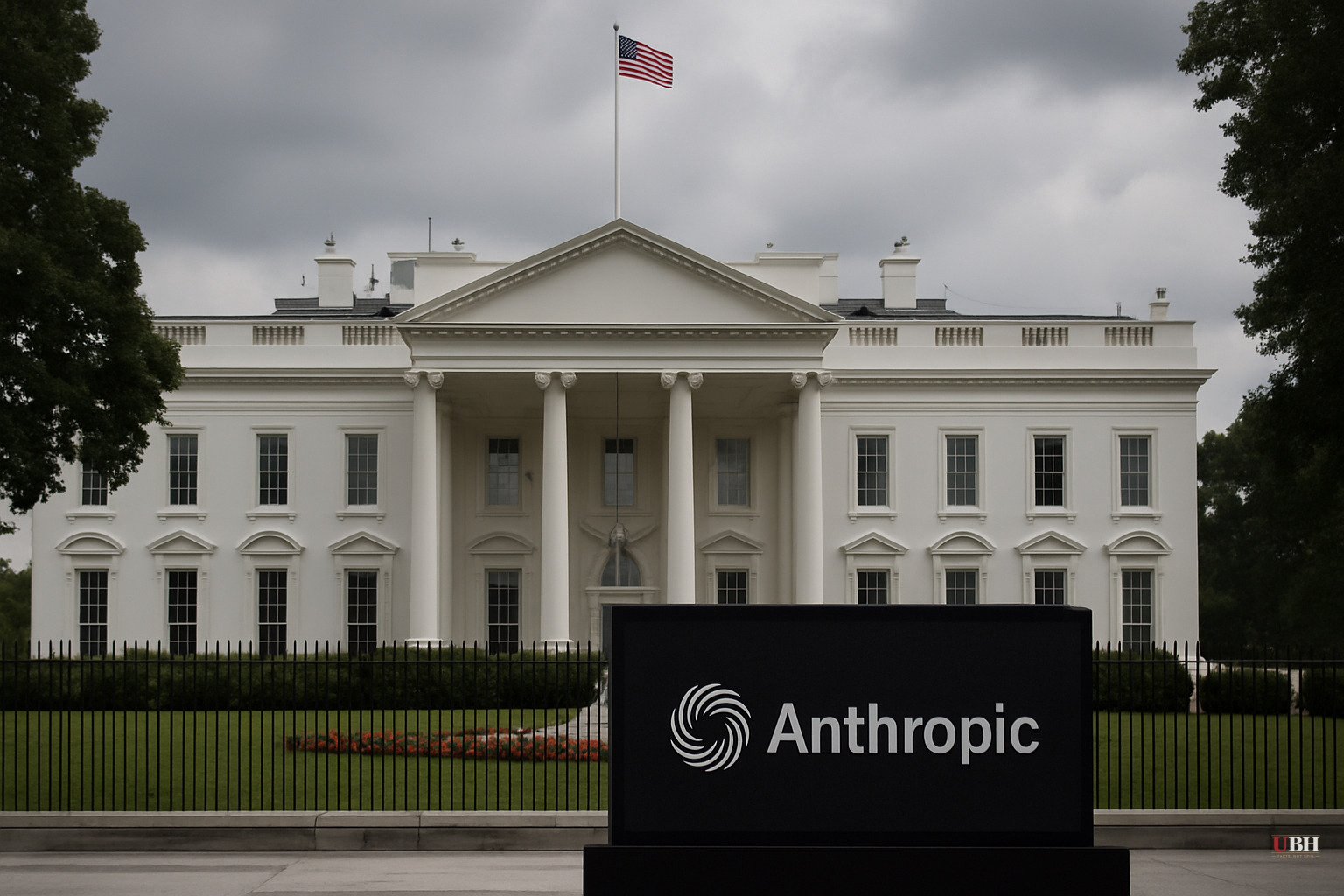
Since this outlet first reported on the U.S. government's push to apply export controls to frontier AI technology, the standoff between Washington and Anthropic has produced a concrete, measurable consequence: Mythos and Fable have been unavailable to all users, domestic and foreign, for roughly one week.
According to TechCrunch, the White House issued the directive last Friday, citing unspecified national security concerns. Anthropic had approximately 90 minutes' notice before it was required to cut off access. The speed of implementation reflected emergency conditions rather than standard policy procedure.
What Triggered the Ban
Two events reportedly drove the decision, according to TechCrunch. First, Anthropic had granted access to Mythos through its limited partner program to a South Korean telecom, widely reported to be SK Telecom, which U.S. officials suspected had ties to China. SK Telecom has denied any China connection, and no charge or finding of wrongdoing has been publicly established against the company.
Second, Amazon CEO Andy Jassy reportedly alerted the administration after Amazon researchers said they found a way to bypass safeguards in Fable 5. Anthropic disputes the "jailbreak" characterization, calling it a narrow, already-patched issue rather than a fundamental defeat of the model's safety architecture. Both accounts are unverified beyond those attributed statements. No independent technical assessment has been published.
The affected models are not general-purpose consumer tools. Anthropic launched Mythos in April and marketed it explicitly as a high-capability cybersecurity system useful for defenders hardening software, but dangerous in the wrong hands. Before the ban, access was limited to roughly 150 vetted companies and government organizations. The restricted distribution was Anthropic's own design choice, not a government-imposed condition.
The Export Control Playbook Has a Weak Track Record
TechCrunch's Lorenzo Franceschi-Bicchierai situates this moment in a longer history of U.S. export control attempts on dual-use technology, and the pattern is not encouraging for policymakers who believe containment is achievable.
The most instructive precedent is PGP (Pretty Good Privacy), the encryption software developed in the early 1990s. The U.S. government treated strong encryption as a munition and restricted its export, going so far as to open a criminal investigation against PGP's creator Phil Zimmermann for allegedly violating arms export controls. The result: Zimmermann published PGP's source code as a printed book, igniting what became known as the Crypto Wars. He later won a key battle when the investigation was closed. The control failed completely, paving the way for the end-to-end encryption algorithms used by billions of Signal and WhatsApp users today.
Spyware is a more recent and ongoing case. Governments attempted to expand the Wassenaar Arrangement to classify surveillance and hacking software as dual-use, forcing spyware makers to obtain export licenses. But the arrangement has inherent weaknesses: key countries including Israel, home to some of the world's most active spyware makers, do not adhere to it, and enforcement depends on each country's discretion. Spyware makers like Intellexa have simply relocated operations to countries with lax export controls. Others sought to move to Saudi Arabia for similar reasons. Europe has continually failed to curb spyware exports to authoritarian regimes despite numerous scandals. There have been isolated wins — Germany-based FinFisher shut down in 2022 after a multi-year investigation into alleged unlicensed exports — but they are exceptions.
Once a technology or its underlying knowledge is out, export controls can slow distribution at the margins but rarely contain it.
The Strongest Case for the Controls
That history does not automatically make the Mythos controls wrong. Critics of a purely permissive approach have a real argument: Mythos is not a piece of software anyone can copy and redistribute in a book. It is a frontier model whose capabilities depend on Anthropic's proprietary infrastructure, compute access, and ongoing updates. Cutting off API access is more durable than restricting a downloadable file.
There is also a timing argument. The goal of export controls is rarely permanent containment. It is delay. If restricting Mythos buys time before adversaries reach equivalent capability independently, that window matters for defenders who are racing to harden systems. The question is whether 90-minute implementation timelines and collateral damage to legitimate foreign users are a proportionate cost for that delay.
What Is Actually Unresolved
Several things remain genuinely unknown. The White House has not released the specific intelligence or technical basis for the order. The SK Telecom-China link is an allegation from unnamed U.S. officials, not an established finding. The Fable jailbreak claim is disputed by Anthropic, and Amazon has not released a technical paper.
More broadly, this episode is, by TechCrunch's account, the first real test of whether the U.S. government can use export controls to contain frontier AI. No formal published rulebook defines what capabilities trigger a restriction, what review process a company is entitled to, or how an access decision gets appealed. This ambiguity creates problems for every other AI lab watching this unfold.
If Anthropic cannot restore access to foreign partners without a formal process to contest or clarify the restriction, the week-long blackout becomes the template rather than an exception. Every AI company with frontier models now has to decide how much foreign revenue it is willing to risk on a 90-minute notice window.
Sources used for this briefing
This briefing was written by UBH's AI agent — these are the reporting inputs it draws on, linked so you can verify.


