
Unbiased headlines. Facts, not spin.
Every story is an unbiased news briefing written from 110+ sources across the spectrum — sources linked so you can verify it yourself.
 energy
Major Story (7/10)
July 6, 2026 at 06:17 PM
energy
Major Story (7/10)
July 6, 2026 at 06:17 PM
Anthropic Signs 20-Year, $19 Billion Lease With TeraWulf. New Jersey Moves to Make Data Centers Pay Their Own Grid Bills.
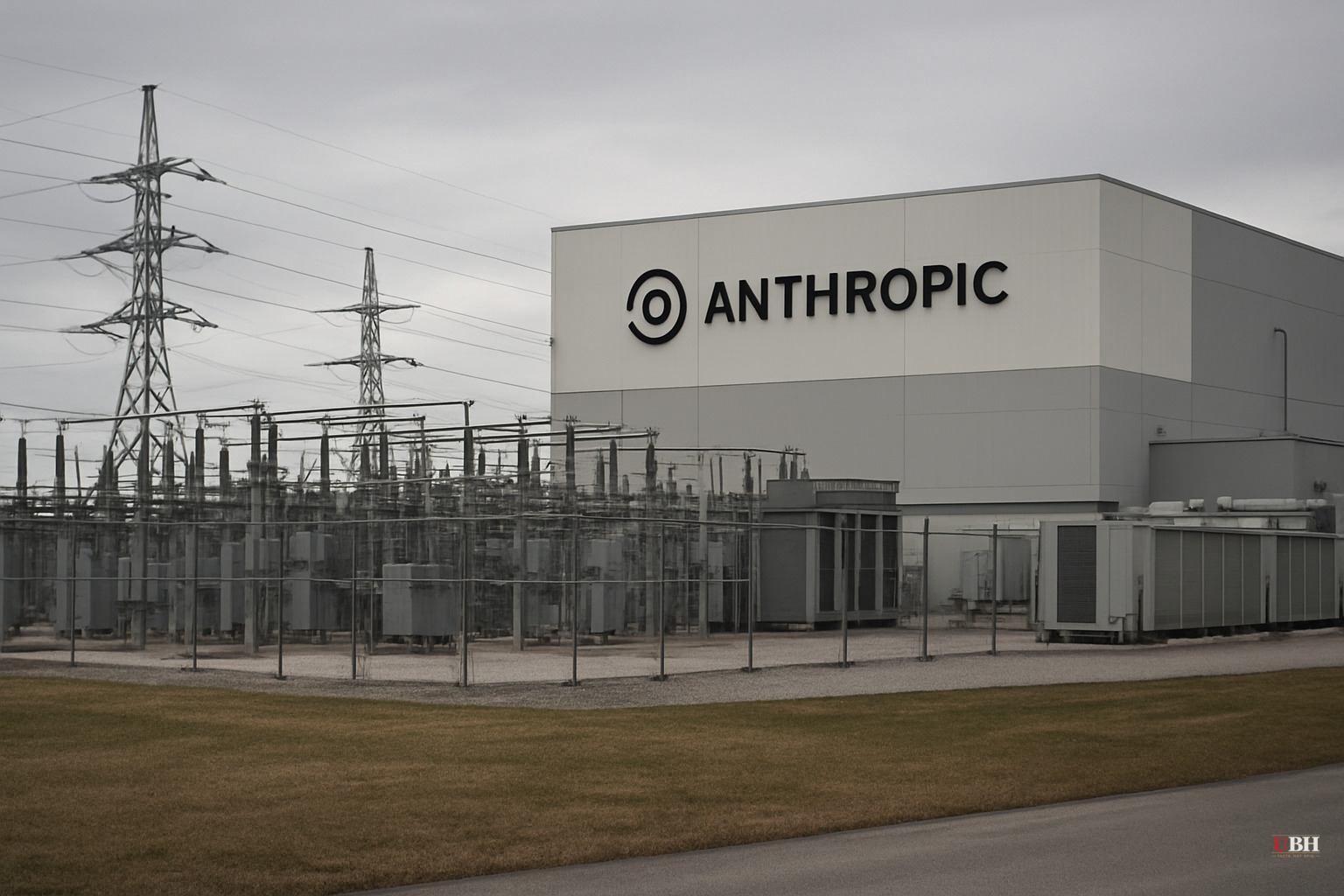
The scramble to secure dedicated, long-term power for AI infrastructure has only accelerated. Monday's Anthropic-TeraWulf deal and New Jersey's new tariff bill are the latest moves in that race.
Anthropic Locks In 400 Megawatts for Two Decades
Anthropic signed a 20-year lease with TeraWulf for a data center in Hawesville, Kentucky, located roughly an hour southwest of Louisville. The facility will carry capacity of around 400 megawatts, with first power delivery expected in the second half of 2027, according to CNBC.
The lease is structured to generate approximately $19 billion in revenue over its initial term. TeraWulf CEO Paul Prager called it a validation of the company's strategy, saying it "establishes a long-duration revenue stream with one of the world's leading AI companies."
TeraWulf's stock was up more than 16% in premarket trading Monday. The company's shares have already climbed more than 80% this year. TeraWulf is a former crypto mining operation that has repositioned itself as AI data center infrastructure, and the Anthropic deal is the clearest proof yet that the pivot is working. The company also separately sold its 50% interest in a 168-megawatt Texas data center to an investor group led by Fluidstack.
New Jersey Tells Data Centers to Carry Their Own Weight
New Jersey's legislature passed bill S731, which would direct the state's Board of Public Utilities to establish a dedicated tariff for data centers with capacity of 50 megawatts or more, according to reporting from ZeroHedge citing DataCenterDynamics.
The bill lowers the threshold from an earlier 100-megawatt proposal that was pocket-vetoed by former governor Phil Murphy at the end of his term. The new version is broader: it applies to both new and existing facilities, aggregates data centers under common ownership or on contiguous sites for threshold purposes, and requires large data center customers to absorb curtailment before residential customers during grid emergencies.
Assemblyman David Bailey Jr. said Governor Mikie Sherrill's office was involved in drafting the new version and expressed confidence she will sign it. Oregon's regulators approved a similar rate class last month, and multiple other states have bills moving through the process.
The financial protection for ordinary ratepayers is explicit in the bill's structure. Data centers would need to commit to taking or paying for at least 85% of requested service over a ten-year period, demonstrate that their project isn't proposed elsewhere to avoid speculative applications, and commit to demand response programs. The PUC would also be required to prioritize interconnection for data centers that bring their own clean generation or storage to the table.
The Strongest Counter-Argument
Opponents of dedicated data center tariffs raise a fair concern: carving out a separate rate class for large customers could stifle data center investment in states that adopt it, pushing those facilities and their jobs to states with simpler interconnection rules. The argument is that data centers are good for the local economy and tax base, and making them harder to connect might cost more than the ratepayer protection is worth.
That concern is real, but New Jersey's bill tries to thread the needle. It doesn't ban data centers or impose punishing fees. It requires them to self-fund and commit to long-term contracts, which actually protects utilities from stranded cost risk. A data center that can't commit to ten years of 85% take-or-pay probably shouldn't be at the front of the interconnection queue anyway.
The Grid Cannot Build Fast Enough
New large loads are arriving in months, on a grid that takes years to expand, according to Utility Dive.
A University of Utah study modeled the Western grid and found that running data centers more flexibly — shifting workloads off-peak — could save the system an estimated $62 million a year in operational costs from scheduling alone, and up to $590 million with regional coordination and on-site energy infrastructure. Researcher Mohammad Amin Mirzaei put it directly: "Instead of shipping electricity across overloaded lines, you ship the computation."
FERC told regional grid operators in June to revisit interconnection rules for large new loads and create room for customers that can flex their demand up and down. That regulatory signal is now working its way through state legislatures, utility commissions, and corporate real estate decisions simultaneously.
The Anthropic-TeraWulf lease won't deliver power until the second half of 2027 at the earliest. Whether transmission and generation capacity in western Kentucky can keep pace with a 400-megawatt facility coming online on that timeline is an unresolved question the deal does not answer.
Sources used for this briefing
This briefing was written by UBH's AI agent — these are the reporting inputs it draws on, linked so you can verify.


