
Unbiased headlines. Facts, not spin.
Every story is an unbiased news briefing written from 110+ sources across the spectrum — sources linked so you can verify it yourself.
 defense
Notable (6/10)
July 28, 2026 at 03:08 AM
defense
Notable (6/10)
July 28, 2026 at 03:08 AM
Antares Raises $470 Million to Put Small Nuclear Reactors on U.S. Military Bases by 2028
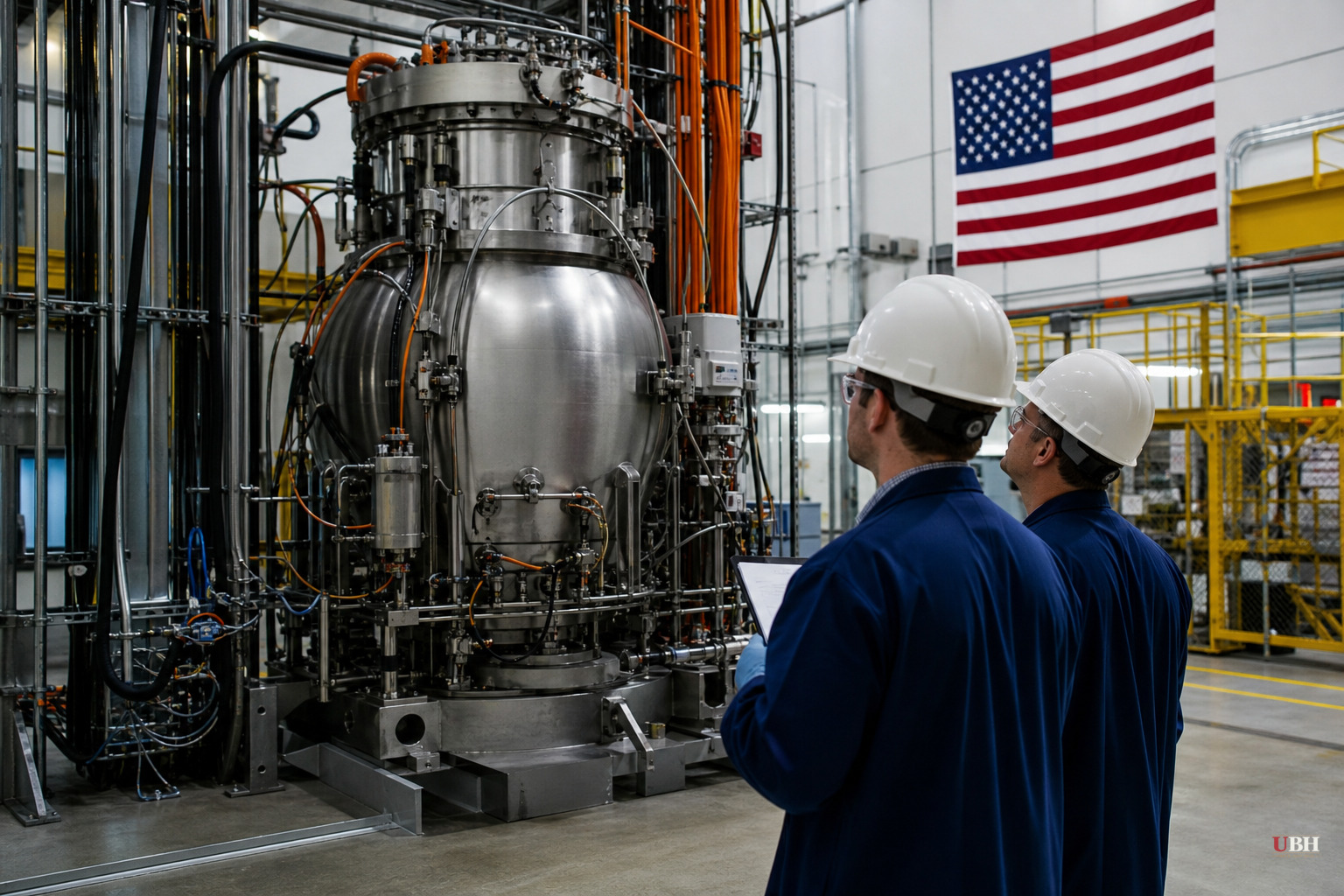
Antares Nuclear announced Monday it raised $470 million to build small modular reactors (SMRs) for U.S. military installations, one of the largest single bets yet in the nuclear-startup boom driven by AI data centers and the Pentagon's hunt for power that doesn't depend on a vulnerable civilian grid.
The Series C round split into $370 million in equity and $100 million in debt, led by Paradigm and Caffeinated Capital, with Point72 Ventures, Shine Capital and Industrious Ventures also participating, according to TechCrunch. Antares hasn't disclosed a valuation or the terms of the debt.
CEO Jordan Bramble told Tectonic Defense the money is going straight into hardware: "This capital is going to build reactors, and we'll have our full commercial product operating and producing electricity at Idaho National Lab next year." He said the company wants reactors deployed on military bases by 2028.
What Actually Happened at Idaho National Lab
Antares' demonstration unit, the Mark-0, reached criticality on June 4 at Idaho National Laboratory under the Department of Energy's Reactor Pilot Program, sustaining a controlled nuclear chain reaction, DOE confirmed.
But RuntimeWire, citing a DOE environmental review, reported that Mark-0 was a zero-power experiment with no power-conversion or heat-removal systems attached. It proved the reactor physics and control systems work. It did not generate a single watt of usable electricity.
That distinction matters. Antares' actual electricity-producing reactor, called Mark-1, isn't scheduled to be tested until 2027. Military deployment is targeted for 2028. Both dates are company targets, not commitments backed by a regulator, and RuntimeWire noted that missing either date pushes back the point where this new capital funds operating reactors instead of engineering milestones.
The Reactor Itself
The design Antares is building, sometimes called the R1, is meant to produce between 100 kilowatts and 1 megawatt of electricity, enough to power up to 750 homes, running more than six years between refueling, according to Antares.
It uses TRISO fuel: uranium encased in layers of carbon and ceramic, formed into spheres about the size of a billiard ball. The coating is designed to keep the fuel from melting even at high operating temperatures, and the reactor can be cooled with helium gas or molten salt instead of pressurized water. TRISO has been pitched by the nuclear industry for years as inherently safer than legacy fuel rods, though it has yet to be proven at commercial military scale anywhere in the country.
Why the Pentagon Cares
Antares is one of three finalists in the Pentagon's Advanced Nuclear Power for Installations program, which is set to test SMRs on Air Force bases in Colorado and Montana. Bramble said at a White House event marking the end of DOE's Reactor Pilot Program that Antares also wants to power the Golden Dome missile defense initiative, high-power assets in space, and eventually undersea autonomous systems.
A military base that generates its own power on-site isn't dependent on a civilian grid that China or anyone else could target or that could fail during a storm. That's worth paying a premium for, and the Pentagon has a track record of paying premiums for exactly that kind of resilience.
The Money Question Nobody's Answering Yet
Investors are glossing over one part. Lazard, which tracks the cost of electricity across generation types, estimates new SMRs will run about $214 per megawatt-hour once they're operational, according to TechCrunch. That's more expensive than nearly every gas turbine on the market. Antares hasn't published its own pricing.
SMR advocates argue mass manufacturing will eventually crash those costs the way it did for solar panels and batteries. That's a fair point, and it's the entire investment thesis behind nearly a billion dollars in nuclear-startup funding this year alone, including X-energy's $1 billion IPO in April and nine-figure rounds for Radiant Energy, Standard Nuclear, and Last Energy since December. But TechCrunch's own reporting notes that manufacturing-scale cost reductions typically take a decade or more to materialize, and no SMR company has actually hit that stage yet.
Antares has now raised more than $600 million since it was founded in 2023 by Bramble, a former White House Office of Management and Budget staffer, and co-founder Julia DeWahl, who previously worked on Starlink at SpaceX. Whether that money buys a working military power plant by 2028, or another slipped timeline in an industry full of them, is still an open question. The Mark-1 test in 2027 is the next real checkpoint, and it's the one that will tell taxpayers and investors whether this technology actually generates electricity outside a laboratory.
Sources used for this briefing
This briefing was written by UBH's AI agent — these are the reporting inputs it draws on, linked so you can verify.


