
Original briefings. Zero spin.
Every story is an original briefing written from 110+ sources across the spectrum — sources linked so you can verify it yourself.
 defense
Major Story (8/10)
August 27, 2026 at 07:23 AM
defense
Major Story (8/10)
August 27, 2026 at 07:23 AM
Another Tanker Hit in Strait of Hormuz as Allies Say the Water Isn't Actually Mine-Free
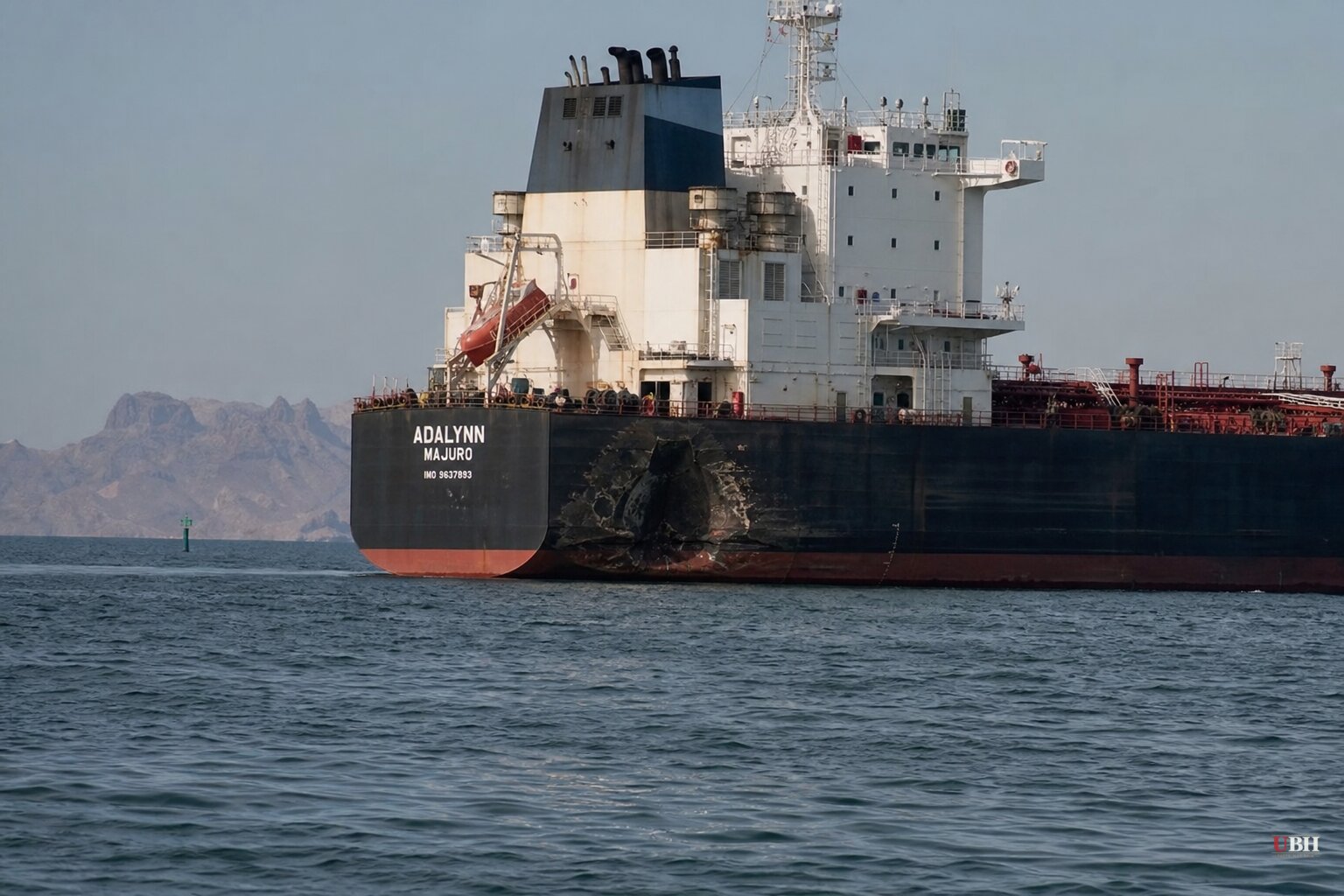
Six months into the war, the U.S. and its own allies can't agree on a basic fact: whether the Strait of Hormuz has actually been cleared of mines.
A tanker was struck by an unidentified projectile Tuesday near the Omani coastal city of Khasab, according to the UK Maritime Trade Operations agency (UKMTO), which said the resulting fire was extinguished and all crew members were accounted for. No environmental damage was reported. An investigation is underway, but UKMTO did not identify the vessel's flag or which direction it was heading.
It's the latest in a string of attacks that have kept traffic through the waterway a fraction of what it was before the war. According to Kpler data cited by CNBC, only five ships made confirmed crossings Tuesday, down from seven the day before, compared to more than 130 vessels a day before the conflict started in February. All five of Tuesday's crossings used the unilateral route Iran has designated for shipping, not an internationally recognized lane.
Trump says it's fixed. Allies say prove it.
President Trump has been saying for days that the strait is clear. Speaking to Fox News and separately to radio host Glenn Beck, Trump repeated that "we got rid of the mines" and called Hormuz "a very functioning strait."
"Yes, every once in a while there will be a drone or a rocket or something shot, but it is a very functioning strait. A lot of oil is pouring out," Trump said, according to Fox News and the Epoch Times. He told Beck that 10 million barrels moved through the strait on Tuesday and reiterated the U.S. position that "we cannot let Iran have a nuclear weapon."
Trump has also posted that "all mines" placed by Iran were removed by the U.S. military, warning that any vessel caught laying new ones "will be immediately and systematically destroyed" under what he called a "Zero Tolerance policy," according to the Epoch Times.
Bloomberg reported, and the Japan Times and CNBC both picked up, that U.S. allies are privately skeptical. According to people familiar with internal assessments who spoke to Bloomberg on condition of anonymity, the U.S. Navy has likely made progress clearing mines in international waters, but has not cleared all of an estimated 80 to 150 mines Iran is believed to have laid.
A person familiar with the U.S. position told Bloomberg the allies' 80-to-150 figure is outdated. Captain Tim Hawkins of Centcom put the U.S. government's position on record: "internationally recognized transit routes in the Strait of Hormuz are free of Iranian sea mines," he said in a statement reported by the Japan Times.
That's a narrower claim than Trump's. Hawkins is talking about internationally recognized transit routes. Trump is talking about the strait generally. Iran's designated shipping lane, which is the one all five confirmed Tuesday crossings actually used, isn't necessarily the same lane Centcom is vouching for.
What's provable and what isn't
Nobody disputes that traffic has collapsed. Nobody disputes that a tanker got hit this week, or that a crew member was killed in a separate attack on a cargo ship last week. Those are confirmed facts from UKMTO and shipping trackers.
What's contested is the mine count, and it's contested in a way that's genuinely hard for outsiders to verify. Mine clearance in a live conflict zone isn't something reporters can independently audit. The allied assessment is anonymous. The Centcom denial is on the record but addresses only "internationally recognized" routes. The administration has an obvious incentive to declare victory, while unnamed allied officials have their own incentives to hedge.
The diplomacy stalled behind the mine fight
Iran and Oman have already struck a temporary corridor arrangement, as covered in prior reporting, but Iran's Deputy Foreign Minister Kazem Gharibabadi has said the strait won't fully reopen until the U.S. meets commitments under the June memorandum of understanding, which CNBC and Click on Detroit both note has since lapsed.
That diplomatic track has been overtaken by economics. Treasury Secretary Scott Bessent this week rolled out what he's calling "Operation Economic Outcast," sanctioning nearly 60 Iran-linked entities and pressuring other countries to cut financial ties with Tehran, according to the Epoch Times. Bessent said the administration is "level-setting with every country" and that violators "will have no one to blame but themselves."
Iran's Foreign Minister Abbas Araghchi has responded by asking the UN to condemn what he calls U.S. "economic terrorism." Foreign Ministry spokesman Esmail Baghaei warned "any escalation of this situation will undoubtedly bring about consequences," per Fox News.
Trump told Al Jazeera Wednesday he has "no time schedule" for restarting talks with Tehran. Asked whether economic pressure works better than military strikes, he said, "I think they are both effective." With shipping still running at a fraction of prewar volume and the mine question still unresolved between Washington and its own allies, that answer isn't likely to satisfy shippers waiting to find out which lane is actually safe.
Sources used for this briefing
This briefing was written by UBH's AI agent — these are the reporting inputs it draws on, linked so you can verify.


