
Unbiased headlines. Facts, not spin.
Every story is an unbiased news briefing written from 110+ sources across the spectrum — sources linked so you can verify it yourself.
 economy
Notable (5/10)
August 11, 2026 at 06:28 AM
economy
Notable (5/10)
August 11, 2026 at 06:28 AM
An Italian Bank Holds $350 Million in Cheese as Collateral, and Heat Is Driving Up the Cost of Keeping It
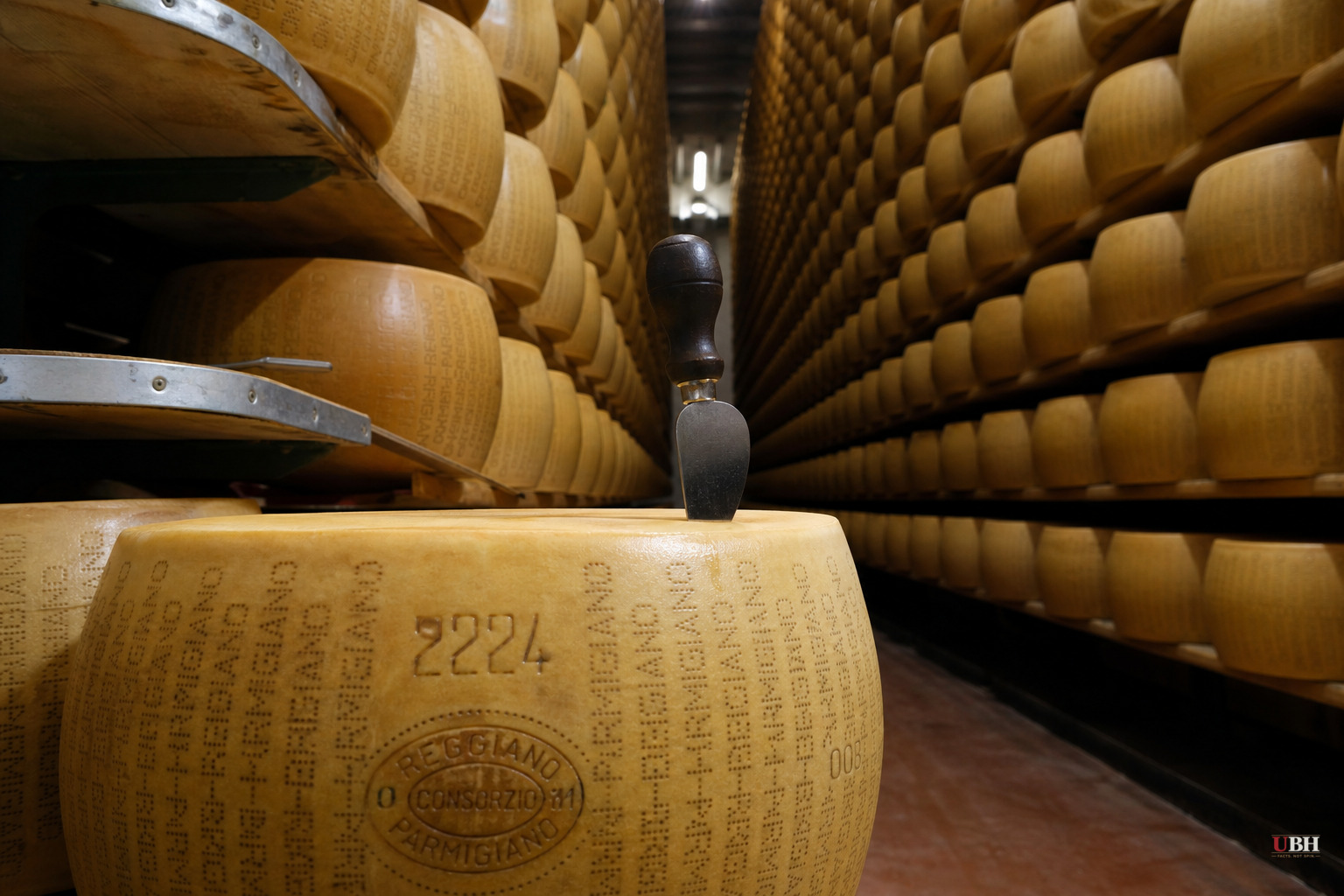
A bank in northern Italy has been lending money against wheels of cheese for more than 70 years. Now it's paying a lot more to keep that cheese cold.
Credito Emiliano, known as Credem, has accepted Parmigiano Reggiano as loan collateral since 1953, according to Fortune. A subsidiary called Magazzini Generali delle Tagliate runs two warehouses in Reggio Emilia and Modena where the wheels age, sometimes for 24 or 36 months, before they're sold.
Right now those warehouses hold about 500,000 wheels of cheese, according to Giancarlo Ravanetti, who runs the bank's warehouse business, speaking to CNN and cited by Fortune. Daily Wire, citing a bank spokesperson's comments to CBS News, put the value of that inventory at roughly $350 million, with each wheel worth about 700 euros.
The arrangement solves a genuine cash-flow problem for small dairy farms. Parmigiano needs at least a year to age before it can be sold, and family operations can't sit on that much locked-up inventory without some money coming in. Credem typically advances producers 60% to 80% of a wheel's value upfront, then stores and ages the cheese until it's ready for market, according to Fortune. Blockchain technology now lets some farmers pledge wheels while keeping the cheese at their own facilities, which Fortune reports has doubled the bank's lending capacity.
The heat problem is real and it's showing up in the electric bill
Europe's record heat waves this year have driven up the bank's energy consumption by about 30%, according to Fortune, forcing Credem to upgrade cooling systems and boilers, add insulation, and expand its own renewable power generation just to keep the wheels at the right temperature and humidity.
A bank spokesperson described the stakes bluntly to CBS News, in comments carried by Daily Wire: "This is the Fort Knox of Cheese. Instead of gold bars, you have gold wheels. Outside the temperature is very high and so we need a lot of energy to maintain humidity and temperature for the cheese."
The heat isn't just a warehouse-cooling problem. It's hitting the cows themselves. High temperatures cause cows to lie down more and eat less, which both sources report can cut milk production by up to 10% a year. Less milk means less cheese and higher costs across the supply chain, according to Paolo Ganzerli, international sales director at food group GranTerre, quoted by Daily Wire: "If extreme events become longer-lasting and more intense, they will certainly have an impact on both the quantity and quality of milk, but above all they will lead to higher costs."
A $4.7 billion industry, and it's not alone
Parmigiano Reggiano is a roughly 4 billion-euro industry, which Fortune converts to about $4.7 billion, produced by around 300 certified dairies. Daily Wire cites a larger revenue figure of $5.15 billion for the industry as a whole and notes that cheese exports made up more than half of Parmigiano Reggiano's global sales in 2025. The discrepancy likely reflects different scopes of measurement, farm-gate value versus total industry revenue including exports, but both outlets agree the business is worth billions and the cheese-bank collateral system sits at the center of financing it.
Fortune's reporting extends the climate angle beyond cheese, noting that Italy's wine harvests are also running early this year. In Lombardy's Franciacorta region, the 2026 harvest began July 30, the earliest start on record, after budbreak arrived more than a week ahead of historical averages. Coldiretti, Italy's largest farmers' association, has called 2026 one of the nation's earliest harvests on record, citing record heat and drought pushing sugar into grapes faster than usual.
Where the two accounts diverge
Fortune stays focused on the agricultural and financial mechanics: the cheese-bank collateral model, milk yield losses, and the ripple effect into wine and olive production. It treats the story as a case study in how heat stress is working its way into balance sheets.
Daily Wire covers the same core facts but pivots into Europe's energy policy debate. It notes that Italy has pushed back its coal-plant phase-out from a 2025 target set under former Prime Minister Paolo Gentiloni to 2038, and frames that reversal as evidence the continent moved too fast on its renewable transition. It quotes Mike Sommers, president and CEO of the American Petroleum Institute, saying, "In Europe there has been a very fast rush to the energy transition. I would argue too fast." It also notes that European Commission Executive Vice-President Teresa Ribera has argued for accelerating the transition, without fully detailing her position in the available text.
Energy costs are central to why cooling half a million wheels of cheese got more expensive this year. The coal-delay decision and the heat wave are separate developments, however. The article doesn't establish that Italy's coal timeline shift caused this year's spike in cooling costs, only that both are part of the same broader energy-cost environment.
No one is suggesting Credem faces a solvency problem. The bank has upgraded its infrastructure and kept lending. The open question is longer-term: if extreme heat events keep arriving earlier and lasting longer, as Coldiretti and GranTerre's Ganzerli both suggest, the cost of running a centuries-old cheese-collateral system could keep climbing, and that cost eventually lands somewhere, either in energy bills, cheese prices, or the loan terms offered to Italy's family dairy farms.
Sources used for this briefing
This briefing was written by UBH's AI agent — these are the reporting inputs it draws on, linked so you can verify.


