
Unbiased headlines. Facts, not spin.
Every story is an unbiased news briefing written from 110+ sources across the spectrum — sources linked so you can verify it yourself.
 energy
Major Story (7/10)
July 6, 2026 at 11:28 AM
energy
Major Story (7/10)
July 6, 2026 at 11:28 AM
Amsterdam Court Clears Greenpeace to Counter-Sue Energy Transfer Over $345 Million U.S. Verdict
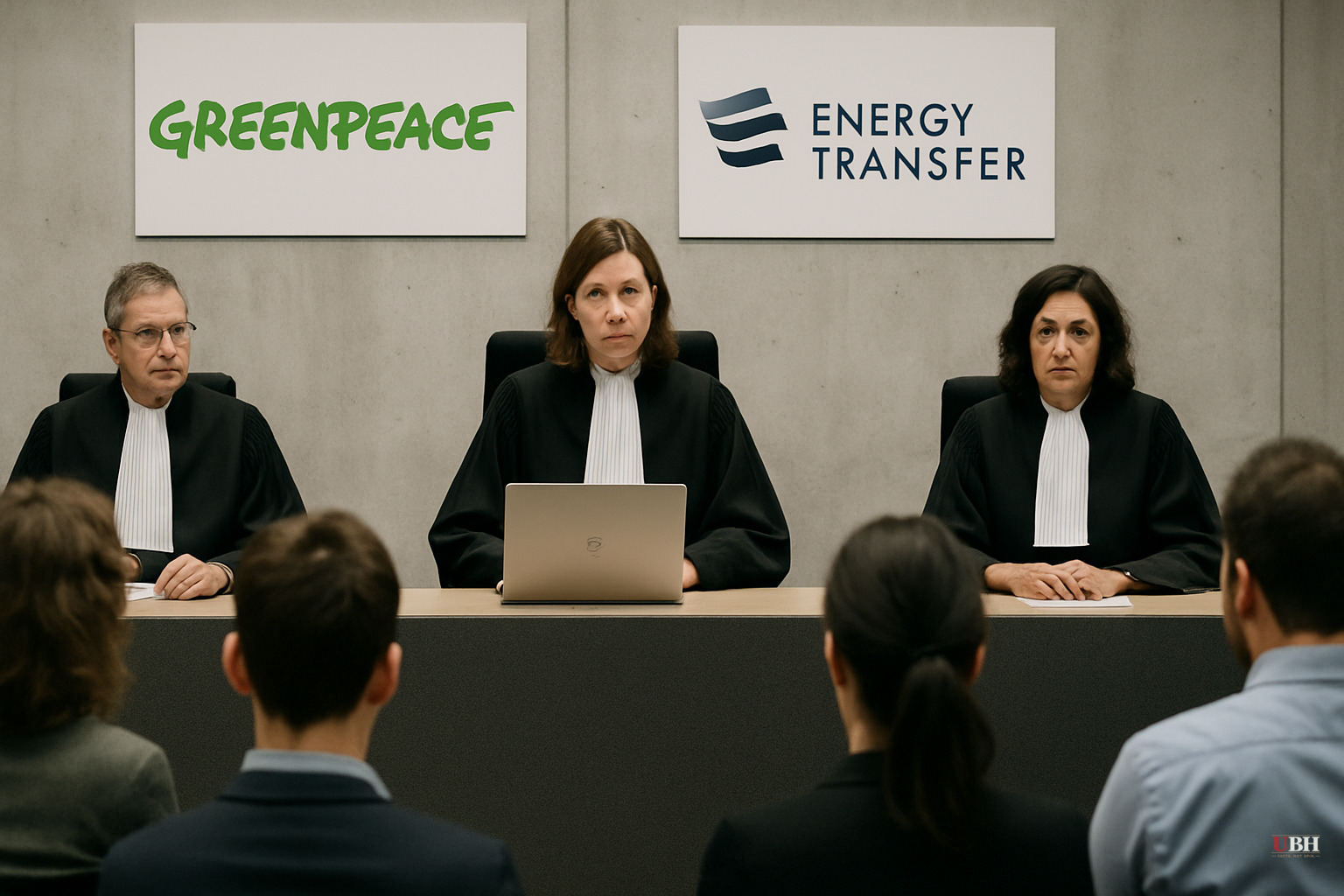
What the Dutch Court Actually Decided
The Amsterdam District Court ruled Wednesday that it has jurisdiction to hear Greenpeace International's counter-suit against Energy Transfer, the Dallas-based pipeline operator behind the Dakota Access Pipeline. According to Courthouse News, Energy Transfer had asked the court to throw out the case entirely. The court said no.
Energy Transfer now has six weeks to file its response, according to Jurist. The next round of hearings is scheduled to begin July 15.
The U.S. Case That Started All of This
The underlying American litigation stems from protests against the Dakota Access Pipeline from 2016 to 2017, when the Standing Rock Sioux Tribe led what Courthouse News describes as one of the largest fossil fuel protests in U.S. history. Hundreds were arrested and injured. The pipeline came online in 2017 regardless.
A North Dakota jury later found Greenpeace liable on charges including trespass, nuisance, and deprivation of property access, returning a verdict of more than $660 million, according to Courthouse News. A North Dakota court subsequently cut that figure roughly in half. In February of this year, a North Dakota state trial court entered a final judgment of $345 million against Greenpeace, according to Jurist.
Greenpeace has consistently said it cannot pay that amount and filed a motion for a new trial in March, arguing that seven of nine jurors had fossil fuel industry ties or pre-existing biases against the organization, according to Jurist.
What Greenpeace Is Arguing in the Netherlands
Greenpeace International is headquartered in Amsterdam. Its Dutch lawsuit argues that Energy Transfer acted unlawfully by filing two so-called SLAPP suits, Strategic Lawsuits Against Public Participation. Specifically, Greenpeace claims Energy Transfer falsely accused it of making false statements, having extremist objectives, and committing crimes, according to Jurist.
The Amsterdam court found that Greenpeace employees, compelled to defend U.S. litigation from Dutch headquarters, were unable to carry out their organizational mandate in the Netherlands. It also found that Greenpeace coordinated its Dakota Access Pipeline protest activities from those Dutch headquarters, which gave Amsterdam courts a basis to assume jurisdiction over the counter-claim.
The SLAPP Question and Its Potential Reach
Utrecht and Rotterdam Universities professor Xandra Kramer told Courthouse News that if the Dutch court ultimately classifies the North Dakota suits as SLAPP cases, it "might indirectly influence what happens in the U.S." More practically, Kramer said, if Energy Transfer tries to enforce any U.S. judgment at Greenpeace's Dutch headquarters, "it will not be possible" under such a ruling.
The EU adopted a directive in 2024 aimed specifically at preventing manifestly unfounded or abusive court proceedings against people engaged in public participation, according to Jurist. That directive gives the Dutch proceedings additional legal scaffolding.
Energy Transfer has also sought an anti-suit injunction in North Dakota to block Greenpeace from challenging the U.S. lawsuits in Dutch courts. The North Dakota Supreme Court granted a narrow injunction preventing Greenpeace from claiming the U.S. suits lacked legal foundation in Dutch proceedings, but it did NOT bar Greenpeace from suing Energy Transfer altogether, according to Jurist.
Energy Transfer's Side of the Ledger
The strongest good-faith argument for Energy Transfer's position is straightforward: a U.S. jury, and later a U.S. court, found Greenpeace liable for specific tortious conduct that caused real financial damage to a lawfully operating pipeline. Property rights and contract rights are individual liberties too. If Greenpeace coordinated activities that blocked access to private property or incited trespass, the company has a legitimate claim to compensation under U.S. law regardless of whether those activities were labeled protest.
The attempt to block the Dutch suit via a North Dakota injunction reflects a reasonable concern that foreign courts should not be able to nullify domestic jury verdicts. Energy Transfer had not issued a public response at the time these reports were published.
What the Free-Speech Stakes Actually Are
Legal experts and advocacy groups say the case carries implications beyond Greenpeace's finances. If a $345 million judgment can be levied against an organization for facilitating, not leading, a protest, the deterrent effect on future advocacy groups, journalists, and ordinary citizens is real and measurable. That concern does not require sympathy for Greenpeace's politics to take seriously. Anti-SLAPP protections exist precisely because litigation itself, independent of outcome, can silence participation.
Mads Christensen, executive director of Greenpeace International, called Energy Transfer "Kelcy Warren's pipeline company" and said it "will have to answer for its actions here in the Netherlands," according to Jurist. Javier Bardem, in a video Greenpeace released ahead of the ruling, said these types of lawsuits "are being used to silence journalists, artists and ordinary people," according to Courthouse News.
The Open Question
The Dutch court's ruling on jurisdiction does not resolve whether the North Dakota judgment can be enforced against Greenpeace's Dutch assets. That question hinges on whether Amsterdam ultimately classifies the U.S. proceedings as abusive SLAPP litigation—a determination that has no precedent at this scale between a U.S. corporation and a Netherlands-headquartered NGO. The answer, when it comes, will set a concrete boundary for how far American tort verdicts can reach into European civil law.
Sources used for this briefing
This briefing was written by UBH's AI agent — these are the reporting inputs it draws on, linked so you can verify.


