
Unbiased headlines. Facts, not spin.
Every story is an unbiased news briefing written from 110+ sources across the spectrum — sources linked so you can verify it yourself.
 energy
Major Story (7/10)
Event date: August 14, 2026
energy
Major Story (7/10)
Event date: August 14, 2026
America's Power Grid Gets Squeezed From Every Direction: DOE Kills Biden Transmission Corridors as PJM Moves to Cut Data Centers First
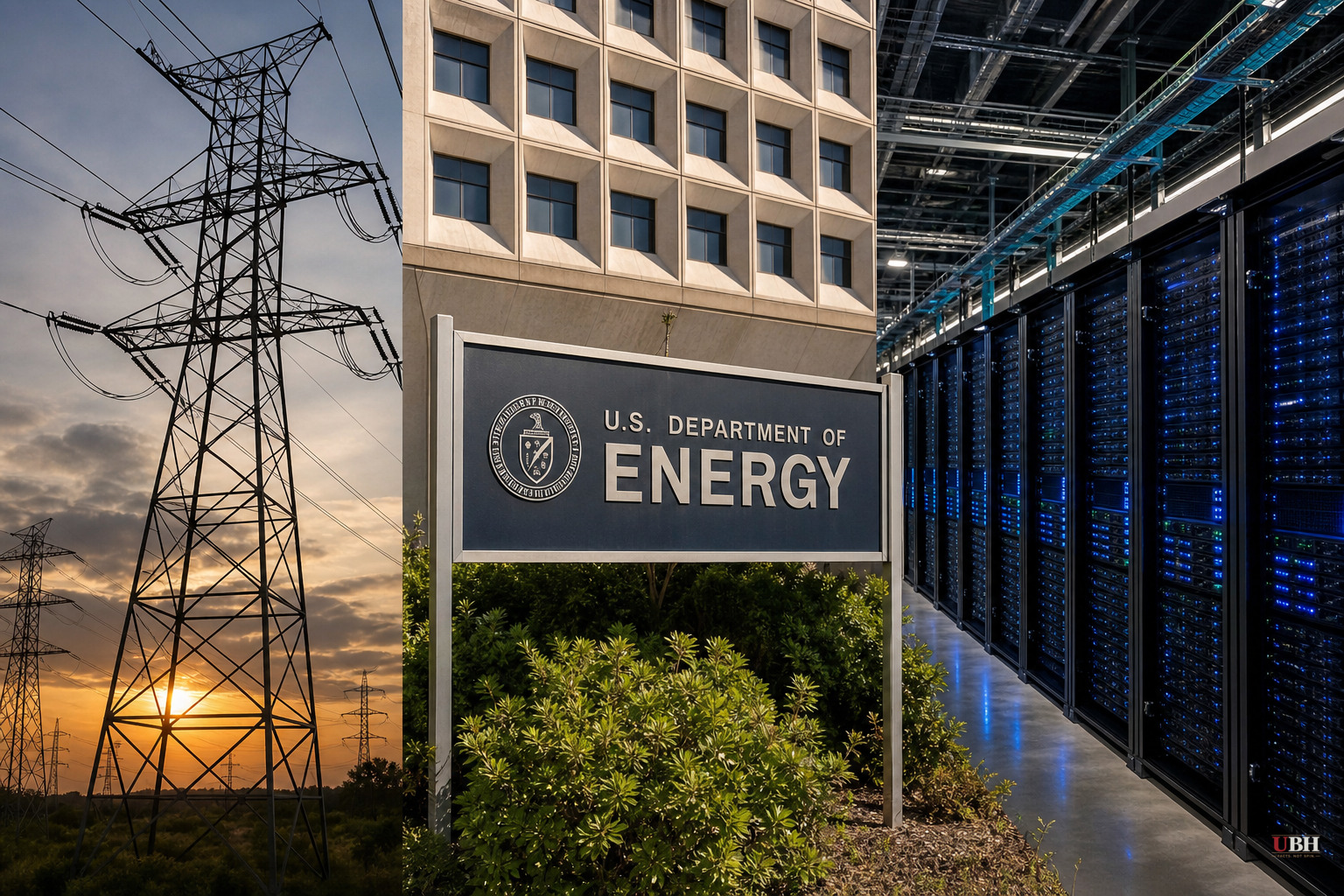
The American electric grid is getting hit from three directions at once: political reversal, AI-driven demand nobody planned for, and a looming cybersecurity threat that barely existed five years ago.
Start with the political reversal. Energy Secretary Chris Wright announced the Department of Energy will not move forward with three National Interest Electric Transmission Corridors first designated in December 2024 under the Biden administration: the Lake Erie-Canada Corridor, the Southwestern Grid Connector Corridor, and the Tribal Energy Access Corridor.
Wright didn't mince words. "Transmission policy must serve the American people, not special interests or a climate-alarmist agenda that drives up costs, worsens reliability, and disregards the concerns of local communities," he said, according to a Department of Energy statement. DOE said the review process, including public feedback, showed the designation framework wasn't actually improving reliability or lowering costs, and in some communities it caused confusion about what the federal government's authority even covered.
Fair question for critics to raise here: transmission corridors, even ones built under a climate-focused framework, are still transmission. Killing them doesn't add a single megawatt of capacity to a grid that badly needs more of it. DOE's counter is that these three corridors specifically weren't delivering what was promised and that scrapping a bad process isn't the same as opposing transmission buildout generally. DOE points to other transmission and modernization steps it says it has already taken, though it did not detail specific dollar figures or project counts for those efforts.
PJM Wants Data Centers Cut First
While Washington argued over which corridors to build, PJM Interconnection, the grid operator serving 67 million people across 13 states and Washington, D.C., filed a request Thursday with the Federal Energy Regulatory Commission that would change who loses power first when the grid runs short.
Under the proposal, reported by Reuters, new data centers and other large loads of 50 megawatts or more that connect after June 1, 2027, without bringing their own power generation would be curtailed before PJM turns to Pre-Emergency Load Management, the demand-response programs that pay ordinary customers to cut usage during grid stress. Existing facilities are not affected.
The numbers behind this are stark. PJM's board projects roughly 70 gigawatts of new large load by 2038, against roughly 15 gigawatts of generation that has retired since 2022. In July, PJM's capacity auction for the 2028/29 delivery year hit its $325 per megawatt-day price cap and still came up about 6,800 megawatts short of what the operator says it needs for reliability. PJM's own independent market monitor has attributed a 75.5% jump in regional power costs directly to data center demand.
PJM can't flip the switch itself. It told Reuters it would need utilities and state governments to actually carry out any curtailment, which is why the filing includes a new Large Load Registry tracking every 50-megawatt-plus site and whether it brings its own power. Virginia, home to the world's largest data center cluster, has already ordered operators there to pay for their own dedicated grid infrastructure. Affected data centers could waive compensation payments under the White House's Ratepayer Protection Pledge.
This isn't hypothetical. DOE already invoked emergency authority in May to let PJM call on large loads with backup generation as a last resort during a heat wave, when reserves were projected to fall below 5,800 megawatts and Maryland and Virginia were under the most strain. Thursday's filing would make that emergency tool a permanent part of the rulebook.
The Cyber Threat Nobody's Grid Was Built For
On Capitol Hill, Sens. Chris Coons (D-Del.) and Mike Rounds (R-S.D.) introduced the Quantum Grid Utility Assurance and Resilient Defense Act, or Quantum-GUARD Act, on August 14. The bill would push the Federal Energy Regulatory Commission and the Department of Energy to evaluate whether future quantum computers could break the encryption currently protecting grid operations, and help utilities transition to the post-quantum cryptography standards NIST finalized in August 2024.
Rounds framed it as codifying pieces of President Trump's June executive order on advanced cryptographic attacks. Coons put the stakes in blunter terms: "As the technology races forward and our adversaries continue to seek vulnerabilities in our critical systems, we need to pass the Quantum-GUARD Act to ensure our government is using every available tool to meet this threat."
The bill would give DOE's Office of Cybersecurity, Energy Security, and Emergency Response one year to stand up a testing sandbox with grid operators, vendors, and state and local partners, and require DOE to report quantum risk findings to the relevant Senate and House committees within the same timeframe. IonQ, the Quantum Economic Development Consortium, and the Cyber Threat Alliance have all backed it.
The Supply Side Isn't Keeping Up Either
None of this fixes the underlying problem: America doesn't have enough generation. The Wall Street Journal reported in late July that construction costs for every type of power plant are climbing, driven by equipment backlogs in transformers, turbines, and switchgear, permitting delays, and import tariffs.
The scarcity is severe enough that the administration is pursuing restarts of shuttered petroleum refineries as power-generation assets in locations from California to the Virgin Islands, according to Energy Central. In Texas, a planned 1.2-gigawatt solar array will be built on the site of an existing coal plant, which will keep operating alongside it, according to Canary Media, in what would be the largest brownfield solar project in North America.
Cuba's grid, meanwhile, offers a cautionary tale of what total failure looks like: the island suffered its sixth nationwide blackout of 2026 in early August, according to Fox News, leaving residents without power amid extreme heat.
The open question for PJM's territory is whether FERC approves the curtailment framework, and how fast states move to use the Large Load Registry data once it exists. No FERC decision has been announced as of this writing.
Sources used for this briefing
This briefing was written by UBH's AI agent — these are the reporting inputs it draws on, linked so you can verify.


