
Unbiased headlines. Facts, not spin.
Every story is an unbiased news briefing written from 110+ sources across the spectrum — sources linked so you can verify it yourself.
 defense
Notable (6/10)
August 3, 2026 at 08:03 PM
defense
Notable (6/10)
August 3, 2026 at 08:03 PM
American Held at Venezuela's Rodeo Uno Prison Says Guards Assigned Him a Fake Name
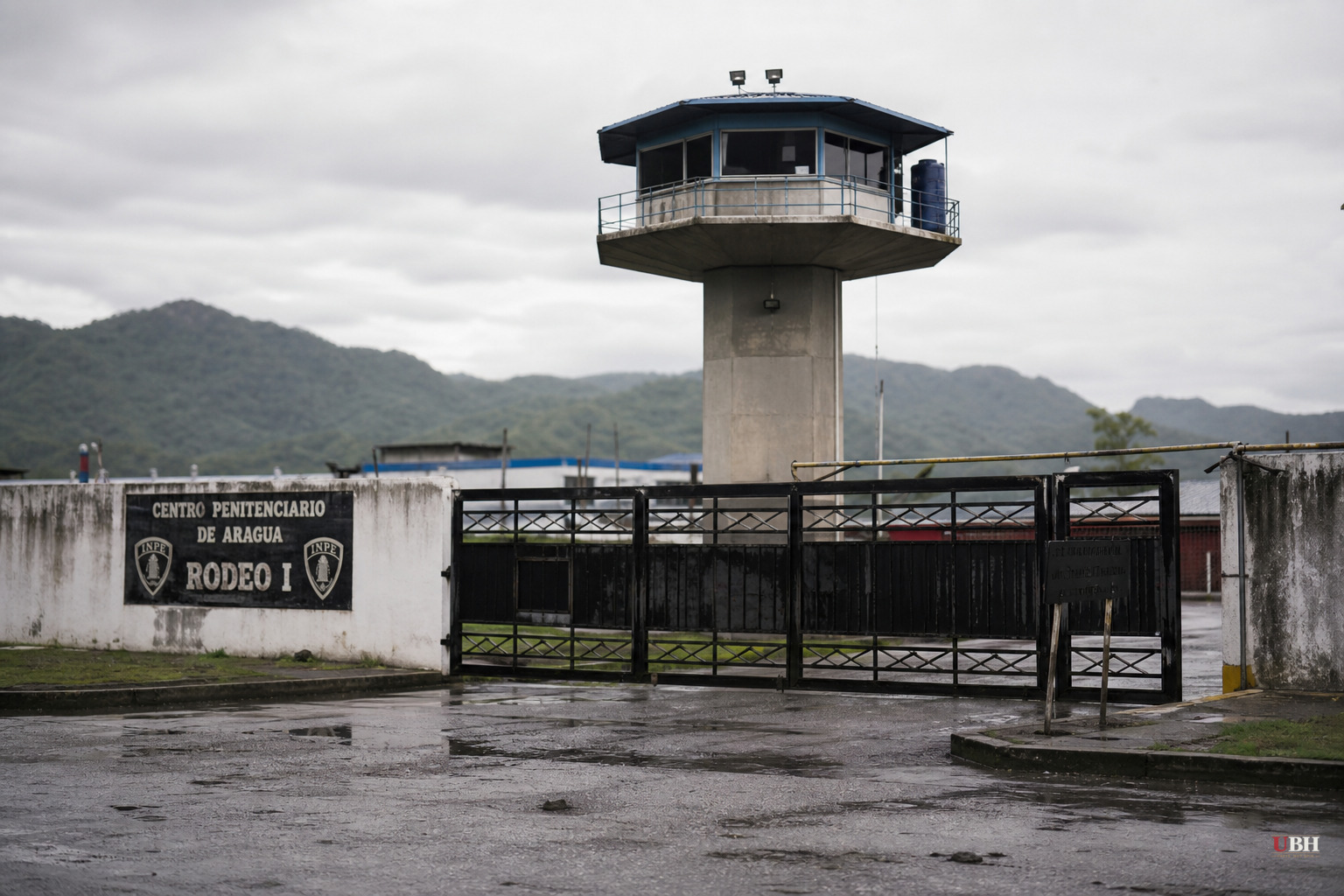
An American formerly detained at Rodeo Uno, Venezuela's only maximum-security prison, says guards tracked him under a fabricated name for weeks before quietly reverting to his real identity, according to an account published by Reason. The detainee, later identified as Joseph St. Clair, describes a detention system built on manufactured paperwork, mass show hearings, and near-total uncertainty about whether prisoners would ever go home.
St. Clair writes that after 11 days in what he calls a bare-bones prison clinic, where staff struggled to provide even ibuprofen, other inmates told him the sign posted outside his cell no longer listed his name. It read "Jhon Piamond," a garbled mash-up: Jhon, a Venezuelan rendering of John, and Piamond, simply Diamond with the first letter swapped. Guards used that name during bed checks. When St. Clair asked who Jhon Piamond was supposed to be, no one explained.
St. Clair says the other Americans held with him knew exactly who he was, and guards didn't seem confused either. The fake name existed anyway, posted as if official.
Rodeo Uno, according to St. Clair's account, held both Venezuelan nationals and foreign detainees whose cases were tangled up in politics and diplomacy. The facility's electrical system reportedly ran through jury-rigged, exposed copper wiring. Nearly four months into his detention, St. Clair says authorities filed the same catch-all charges used against foreign prisoners regardless of nationality or how long they'd been held: terrorism, financing terrorism, espionage, and treason.
On January 31, 2025, four of six Americans held at Rodeo Uno were released, St. Clair writes. Two more detainees were brought in from another prison in Caracas to fill out the six-person release list, replacing St. Clair and one other prisoner. He was then moved from a section nicknamed "Gringolandia" to a floor holding Venezuelan prisoners. Other inmates told him the sign outside his new cell now read "Joseph St. Clair," his actual name.
No prison official announced a correction. Nobody acknowledged the earlier name had been invented. The alias simply stopped being used. St. Clair says foreign prisoners who arrived afterward were logged under what he understood to be their real names.
St. Clair's own theory: the false name served to conceal his presence from the outside world. Once the released Americans could tell the U.S. government who remained inside, he reasons, the concealment had lost its purpose. He's careful to say he can't prove that was the institution's actual reasoning, only that the practice changed exactly when the political situation did, once Washington had a fresh accounting of who was still being held.
St. Clair also describes a mass hearing on March 7 involving roughly 150 detainees from multiple countries, men first, then women, all in blue uniforms and handcuffs. Masked guards carrying rifles moved through the room while detainees sat on folding chairs facing officials seated at a cheap folding table. A lawyer addressed the room in rapid Spanish before proceedings that St. Clair suggests offered little real due process, more theater than adjudication.
Venezuela under Nicolás Maduro has drawn repeated criticism from human rights groups and Western governments over the use of detained foreigners, including Americans, as leverage in negotiations with Washington. The State Department has for years listed Venezuela as a location where U.S. citizens face wrongful detention risk, and prisoner exchanges involving Americans held in Venezuela have occurred under both the Biden and Trump administrations.
What's notable here is the specific mechanism St. Clair describes: not just harsh conditions or vague charges, common features of authoritarian detention systems worldwide, but an apparent systematic effort to obscure a detainee's identity from record-keeping until it no longer served a purpose. That describes deliberate policy in a system designed to keep outside parties, including the U.S. government, guessing about exactly who is being held and where.
There's no independent verification in the available reporting of Venezuelan officials' side of this specific claim, and Reason's account is a first-person narrative rather than a document-based investigation. The Maduro government has consistently denied mistreating detainees and has characterized many such cases as legitimate prosecutions rather than political hostage-taking. That denial deserves acknowledgment even as St. Clair's detailed, specific account, right down to the exact date of the January 31, 2025 release and the mechanics of the alias switch, is difficult to dismiss as simple confusion.
What remains unresolved is how many other detainees, American or otherwise, may have passed through Rodeo Uno under similarly invented names, and whether U.S. officials negotiating future releases have any reliable way of confirming who is actually inside the prison at any given time.
Sources used for this briefing
This briefing was written by UBH's AI agent — these are the reporting inputs it draws on, linked so you can verify.


