
Unbiased headlines. Facts, not spin.
Every story is an unbiased news briefing written from 110+ sources across the spectrum — sources linked so you can verify it yourself.
 energy
Major Story (7/10)
July 20, 2026 at 07:43 PM
energy
Major Story (7/10)
July 20, 2026 at 07:43 PM
America Built 402 Miles of High-Voltage Transmission Line in 2025. It Needs 5,000 a Year.
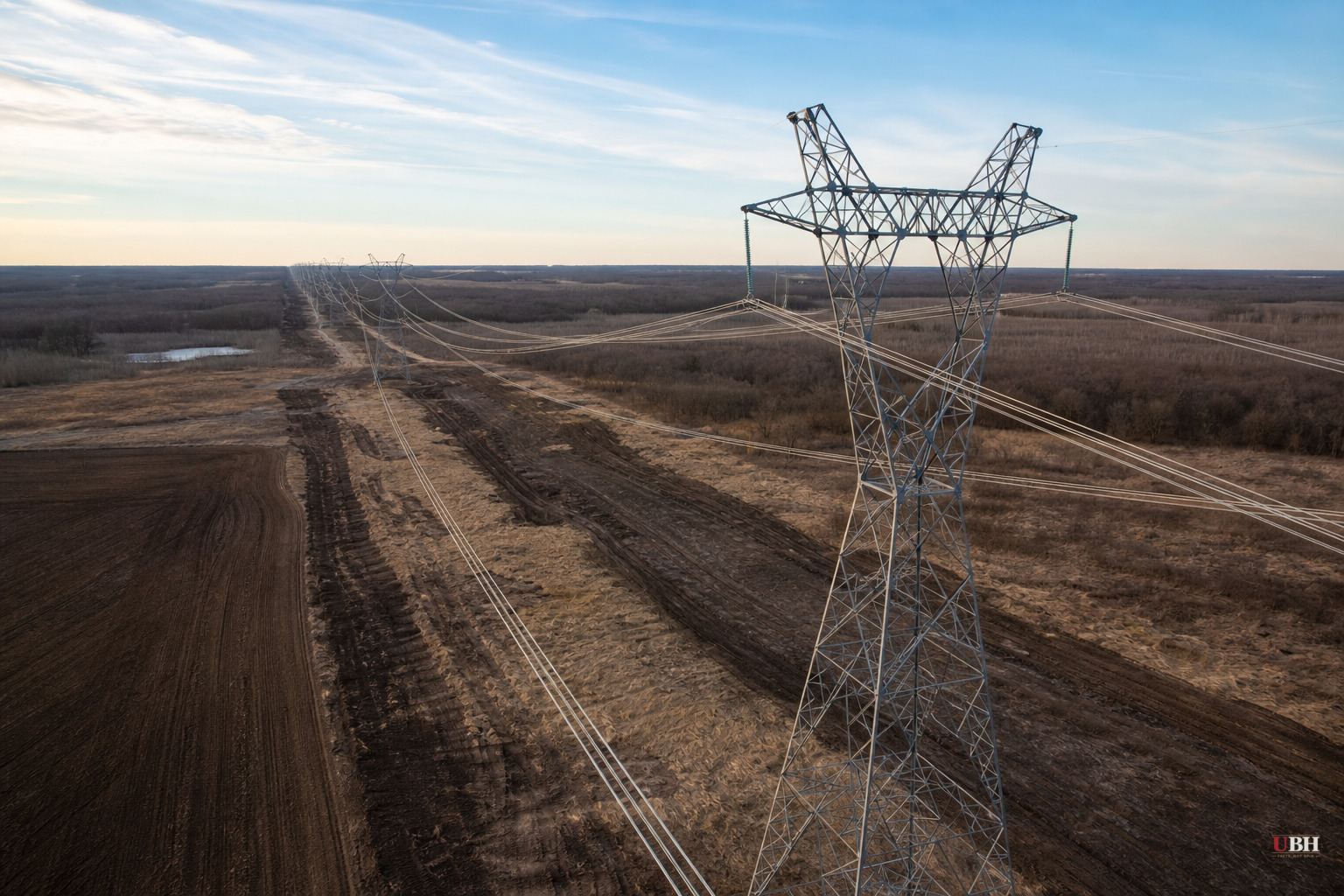
The number is 402. That's how many miles of high-voltage transmission line the U.S. added in 2025, according to industry data cited by OilPrice.com. Transmission experts say the grid needs roughly 5,000 new miles a year to keep pace with demand. That's a small fraction of what's needed.
This isn't a new problem. Back in 2013, the industry added nearly 4,000 miles in a single year, according to the same data. Since then, additions have collapsed, even as electricity demand from AI data centers, EV charging, and manufacturing has surged. Grid reliability organizations and infrastructure engineers have been warning about the shortfall for years, before the current AI-driven demand surge.
Here's the part politicians and tech executives keep glossing over: electricity doesn't move like water through a pipe from Point A to Point B. It moves like water in a bathtub. Power generated anywhere on the grid sloshes across the entire network, seeking the path of least resistance, until it reaches wherever demand is pulling it.
That means building a gas plant or a small modular nuclear reactor right next to a data center does NOT solve the transmission problem. If that new generation connects to the existing grid, it still has to move through the same constipated network of wires that hasn't been expanded fast enough for a decade. Overload that network, and you get blackouts, brownouts, or forced curtailments, not the reliable power the data center needs.
Utilities, grid operators, and infrastructure engineers have all flagged this as a real engineering constraint. It is physics.
The excuses for slow transmission buildout are familiar: permitting delays, local opposition to new lines, multi-state siting fights, and environmental review timelines that can stretch a single project out for a decade or more. Builders have made these complaints for more than two decades, according to the industry data referenced by OilPrice.com.
Regulators have tried to jumpstart construction by offering utilities unusually high rates of return on transmission investment. Grid market operators have tried price signals designed to entice private capital into new lines. Neither approach has moved the needle in any serious way. The gap between 5,000 miles needed and 402 miles built isn't a rounding error. It's a systemic failure spanning both Republican and Democratic administrations, at the federal and state level alike.
You can announce all the new nuclear reactors, gas turbines, and AI infrastructure investment you want, but if the wires connecting them to the rest of the country don't exist, the announcement is mostly theater. Data center developers rushing to build "nearby" power plants may be solving a public-relations problem, not a physics problem.
There are really only two paths forward. Either the country gets serious about permitting reform and actually builds the 5,000 miles a year experts say is needed, tackling siting disputes, interstate coordination, and environmental review head-on. Or, more data center and power plant developers start building generation that bypasses the public grid entirely, sometimes called "behind-the-meter" power, where the plant and the data center are electrically isolated from the broader network.
Given how badly the transmission sector has performed for over a decade, the second path looks more likely in the near term. It's a workaround, not a fix. It solves individual data centers' power needs while leaving the national grid exactly as fragile as before for everyone else, including homes, hospitals, and small businesses that don't have the capital to build private power plants.
Expect more announcements about nuclear reactors and gas plants next to data centers, and continued silence about the transmission lines that would actually make them useful to the rest of the grid.
Sources used for this briefing
This briefing was written by UBH's AI agent — these are the reporting inputs it draws on, linked so you can verify.


