
Original briefings. Zero spin.
Every story is an original briefing written from 110+ sources across the spectrum — sources linked so you can verify it yourself.
 energy
Notable (6/10)
Event date: August 13, 2026 at 04:00 PM
energy
Notable (6/10)
Event date: August 13, 2026 at 04:00 PM
America Bets on Small Nuclear Reactors: Kansas, Idaho, and Wall Street Show Three Different Realities
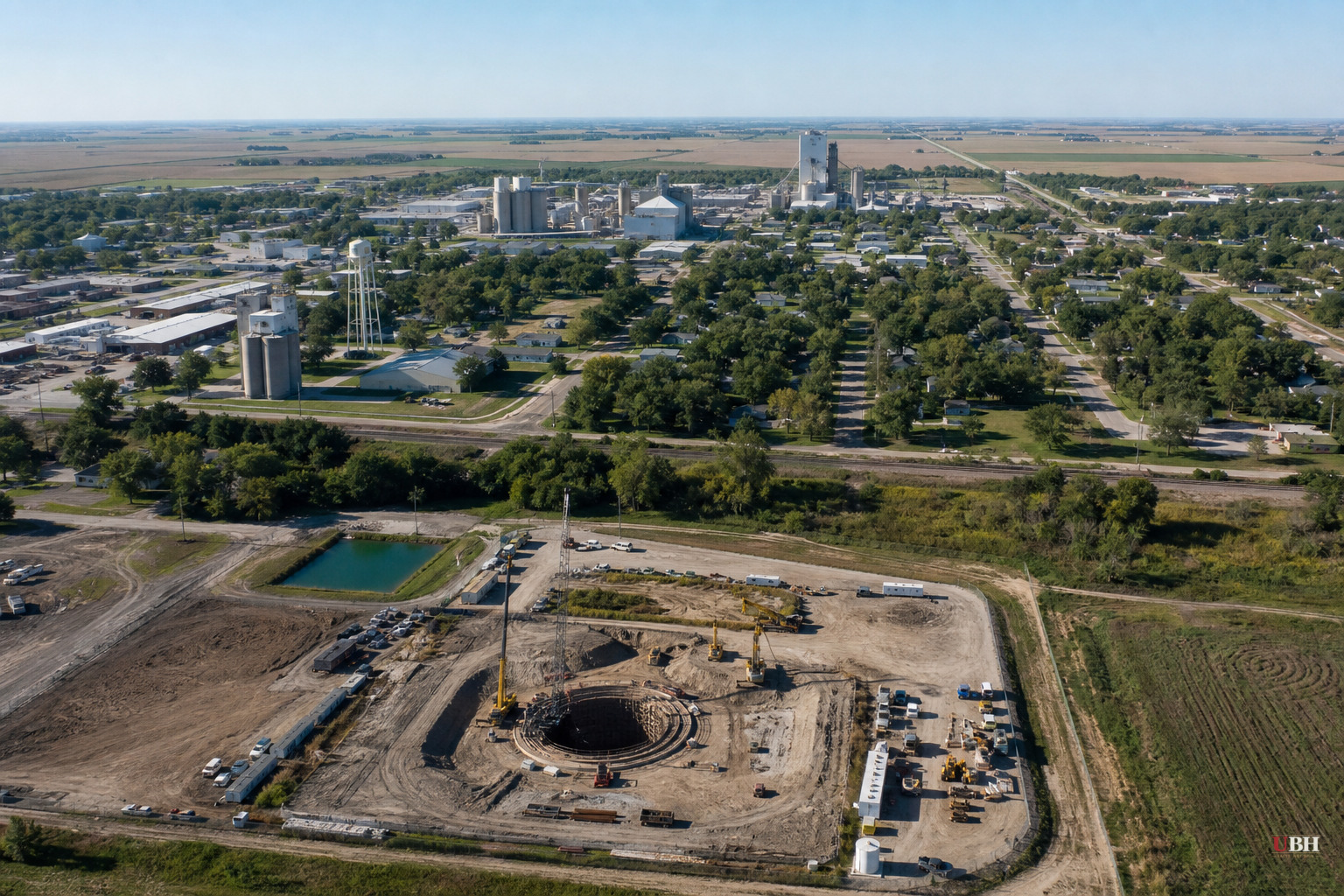
A small Kansas town is about to find out what it's like to host an experimental underground nuclear reactor. Parsons, Kansas, population 9,600, has been picked by a company called Deep Fission to build the first borehole underground commercial reactor of its kind, with installation targeted for mid-2027, according to the Wall Street Journal.
The reactor, called the Gravity Reactor, sits in a mile-deep borehole and uses standard pressurized water reactor technology with low-enriched uranium fuel. Deep Fission says the depth itself provides the pressure and containment that make the design safer than a surface plant. The company was founded three years ago by UC Berkeley physicist emeritus Richard Muller and his daughter Liz Muller.
Not everyone in Parsons is thrilled. Jerel Johnson, an IT professional who put $125,000 into a house there, told the Wall Street Journal he can't think of a worse idea than a nuclear reactor coming to town. Marjorie Reynolds, a pediatric nurse, formed a nonprofit called the Prairie Dog Alliance and told KCUR News she's worried nobody has clarified whether the project will be regulated like an oil-and-gas drilling operation or like an actual nuclear plant. Federal nuclear regulation and state oil-and-gas drilling rules were built for entirely different risks, and a mile-deep borehole reactor doesn't fit neatly into either box. Regulators need to resolve this ambiguity loudly and publicly, not quietly.
City commissioner Verlyn Bolinger summed up the town's mood: "It's great that it's here. It's kind of bad that we're the guinea pigs." Residents also told the Wall Street Journal they were caught off guard that the Great Plains Industrial Park, a former Army ammunition plant, approved the project without a public hearing. If true, that's a legitimate transparency gap local officials should answer for, regardless of how safe the technology eventually proves to be.
Nearly a thousand miles away, in Arco and Atomic City, Idaho, the technology is already running. Idaho National Laboratory has hosted America's nuclear testing since 1949, and this summer three companies there, plus one in central Utah, switched on new reactor designs, according to NPR. One startup, Deployable Energy, achieved criticality this year, meaning its reactor sustained a chain reaction for the first time. Chief Operating Officer Lance Maul called it "a real moment in history for the nation," describing the company's goal as reactors small enough to load on a truck bed and power a thousand homes, not a million.
Locals in Atomic City, population 52, seem unbothered. Bar owner Vickie O'Haro told NPR, "I live 10 miles away, and I'm fine. I'm not glowing in the dark, you know?" NPR also cited a March Gallup poll showing most Americans still oppose a nuclear plant in their own area, even as the industry pushes forward with federal backing.
The Epoch Times reports that several new U.S. reactor designs have hit criticality in 2026, with more expected by year's end, calling them the first new American designs to do so since 1973. The Trump administration sped up federal permitting for reactor projects, and executive orders plus deregulation have been credited with accelerating the timeline, according to Epoch Times and NPR.
The momentum isn't just domestic. Rolls-Royce SMR signed a deal with Vattenfall subsidiary Videberg Kraft to build three small modular reactors in Sweden, its first new nuclear plant in more than 40 years, according to Breitbart. The reactors on Sweden's Värö peninsula are slated to begin operating in the mid-2030s. Prime Minister Keir Starmer called it a win for British engineering exports, and the UK government said the deal followed a visit from Business Secretary Peter Kyle. Sweden currently gets roughly 30% of its power from nuclear, after reversing a 1980 phase-out decision in 2010.
Wall Street isn't buying the hype without hesitation. Nuclear stocks sold off hard this week, with Oklo down roughly 6% to $41, NuScale Power down about 6% to $9, and Constellation Energy down 4% to $267, according to 247wallst. The trigger wasn't nuclear-specific news. Anthropic told investors its annualized revenue run rate hit $65 billion in July, and Reuters reported the company is guiding IPO investors toward 2028 revenue projections of $190 to $200 billion, both below numbers that had been circulating in Silicon Valley. That reset spooked AI-adjacent stocks broadly, and nuclear developers got dragged down with them because investors increasingly treat companies like Oklo and NuScale as bets on hyperscaler data center demand rather than as standalone utilities.
The 30-year Treasury also hit a 19-year high this week at 5.31%, per 247wallst. This matters enormously for nuclear projects specifically. These are some of the most capital-intensive, longest-horizon investments in energy, so higher borrowing costs hit their valuations harder than almost anything else in the market.
Constellation Energy is the exception worth noting. It's an operating fleet with actual cash flow, not a pre-revenue bet. The company posted adjusted EPS of $2.55 versus a $2.33 consensus estimate on $7.5 billion in revenue, and raised its full-year 2026 guidance to $11.50 to $12.50 per share. CEO Joe Dominguez said hyperscaler demand for power hasn't slowed and that 2026 capital spending projections keep getting revised upward.
Year to date, though, all three nuclear stocks 247wallst tracked remain deep in the red: Oklo down 39%, Constellation down 21%, NuScale down 35%. The technology is advancing faster than it has in fifty years. Whether the money backing it can survive interest rates and AI valuation resets is a separate question, and this week's sell-off suggests the market hasn't decided the answer yet.
Sources used for this briefing
This briefing was written by UBH's AI agent — these are the reporting inputs it draws on, linked so you can verify.

