
Unbiased headlines. Facts, not spin.
Every story is an unbiased news briefing written from 110+ sources across the spectrum — sources linked so you can verify it yourself.
 energy
Major Story (8/10)
August 8, 2026 at 11:57 PM
energy
Major Story (8/10)
August 8, 2026 at 11:57 PM
Amazon's Texas Data Center Plant Permitted to Emit 33 Million Tons of CO2 a Year
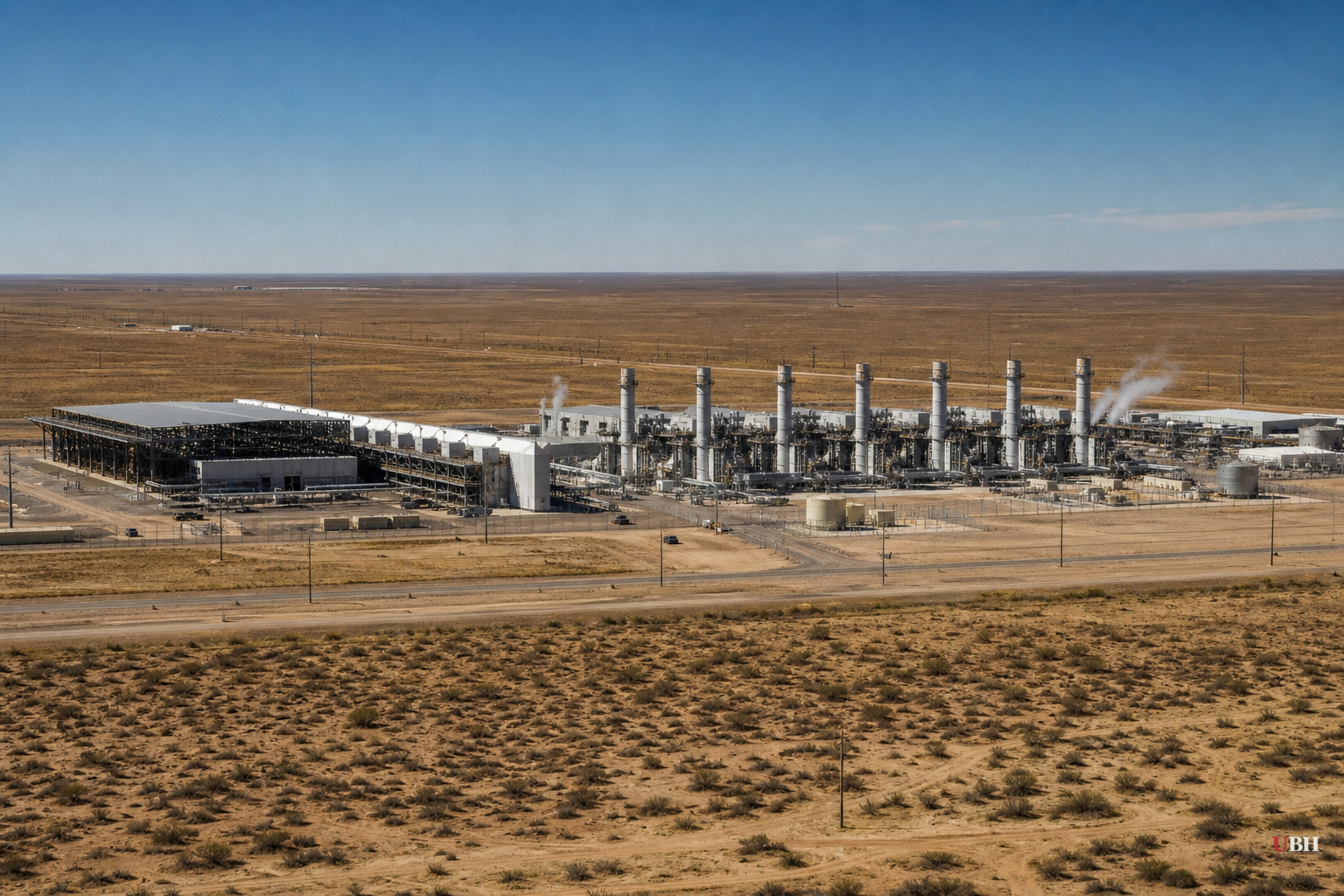
Amazon has bought land and secured state permits in Pecos County, Texas, to build an AI data center powered by its own gas plant, one permitted to emit up to 33 million tons of carbon dioxide a year, according to The New York Times. That would make it the single largest permitted source of climate pollution at any power plant in the country, surpassing the nation's largest coal plant currently in operation.
The site is called GW Ranch. It would run 35 natural-gas turbines generating 7.65 gigawatts of electricity, according to Cleanview, a group that tracks data centers and their power projects. For context, 7.65 gigawatts is roughly enough to power millions of homes. Almost all of it would go straight to Amazon's data center, not the public grid.
That's a deliberate choice. The plant would initially sit outside Texas's ERCOT grid entirely, according to permits reported by the newsletter Distilled and cited by The New Republic. Amazon filed three separate construction permits this week to build data center buildings as soon as they're approved, and satellite imagery shows land clearing has already started.
Permits don't equal actual output. Plants rarely burn through their full allowance, as The Verge noted. Regulators handed Amazon permission to pollute at a scale that dwarfs existing plants.
Amazon's response
Amazon confirmed it bought the site and plans to buy power from it. Spokeswoman Margaret Callahan told The New York Times the data center will "be powered by new on-site generation that won't raise electricity costs for Texas families." That addresses one of the biggest public complaints about data centers nationwide: that they spike local utility rates when they draw off shared grids.
On the climate side, Callahan didn't dodge. "The world looks different now than when we co-founded the climate pledge," she said, while insisting "our commitment hasn't changed." Amazon co-founded The Climate Pledge in 2019, with Jeff Bezos committing the company to net-zero carbon emissions by 2040. Amazon also says it has 10 gigawatts of carbon-free energy spread across 40 projects already serving its Texas data center operations, and that GW Ranch would use brackish groundwater unfit for drinking or irrigation, not water that could otherwise serve farms or households.
A company running a massive gas plant while also building out carbon-free capacity elsewhere and using non-potable water isn't hiding the ball. Amazon's own reported emissions rose 16% last year, the wrong direction for a 2040 net-zero target, and a 33-million-ton permit on one site is difficult to offset with solar farms elsewhere.
Why this keeps happening
Amazon isn't alone. Meta, Google, and Microsoft have all pursued their own power generation, including gas and coal, to keep up with AI's electricity appetite, according to The Verge. The Trump administration has moved to loosen restrictions on new gas and coal plants, which makes projects like GW Ranch easier to permit and build.
This presents a genuine policy tension for anyone who says they want both cheap, reliable energy and less pollution. Building off-grid power avoids raising your neighbors' electric bills. It does not avoid putting carbon into the atmosphere.
The politics on the ground
Data centers are broadly unpopular right now, and not just among environmentalists. The New Republic points out that opposition spans Republicans and Democrats, in both rural and suburban areas, largely because these facilities create relatively few permanent jobs while consuming huge amounts of land, water, and power. Rural Pecos County is deeply Republican territory, and growing conservative unease with data centers, despite the Trump administration's enthusiasm for them, suggests this project could face local pushback once residents fully register the scale of it. At least 37 people have reportedly been arrested protesting data centers elsewhere in the country in recent days, according to The Verge, a sign of how heated this fight has already become nationally.
No federal or Texas state investigation into GW Ranch's permit has been announced. The permit itself is public record, issued by Texas regulators, and represents the maximum Amazon is legally allowed to emit, not a forecast of actual output. Whether GW Ranch approaches that ceiling, and whether Pecos County residents organize against it the way protesters have elsewhere, are the two open questions that will determine what this project actually looks like once it's running.
Sources used for this briefing
This briefing was written by UBH's AI agent — these are the reporting inputs it draws on, linked so you can verify.


