
Original briefings. Zero spin.
Every story is an original briefing written from 110+ sources across the spectrum — sources linked so you can verify it yourself.
 politics
Notable (6/10)
Event date: August 12, 2026
politics
Notable (6/10)
Event date: August 12, 2026
Alito's New Disclosure Shows Up to $545,000 in Oil and Gas Stock Weeks Before Exxon Case Arguments
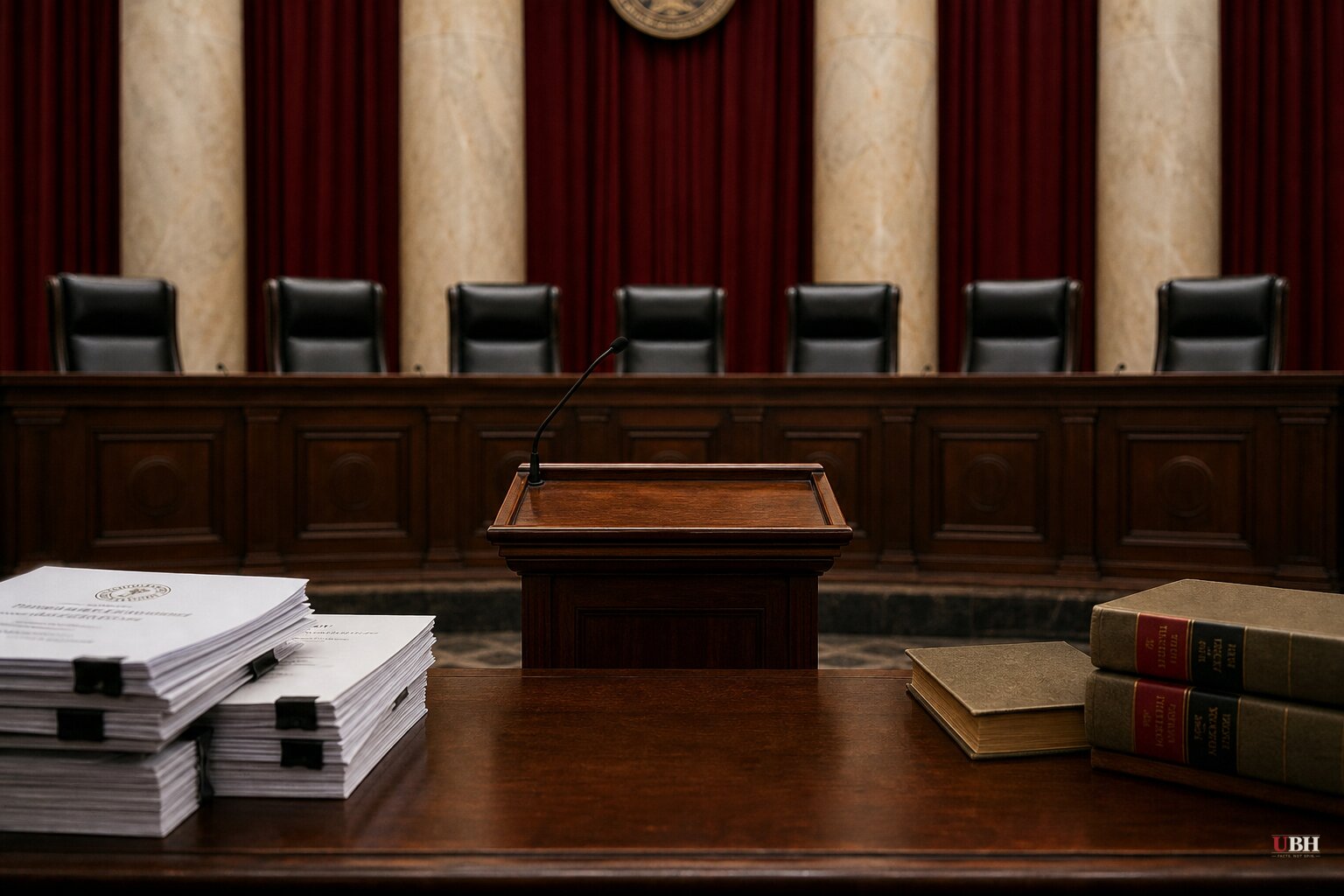
Justice Samuel Alito released his 2025 financial disclosure Monday, and it shows he's still holding a stake in the industry at the center of a case the Supreme Court will hear this fall.
The disclosure lists holdings in ConocoPhillips, Woodside Energy Group and AES Corp, each valued up to $15,000, plus stakes in Phillips 66, OGE Energy Corp, Black Hills Corp, BHP Group and Fortis Inc, each worth between $15,001 and $50,000, according to Forbes. Combined, Forbes puts his fossil fuel-related stock holdings between $175,000 and $545,000. Separately, Alito and his wife Martha-Ann hold a mineral interest in land in Grady County, Oklahoma, valued between $100,001 and $250,000, which pays them a percentage of oil and gas sales from wells on the property.
None of that money is invested in Exxon Mobil or Suncor Energy, the two companies asking the Court to decide whether local and state governments can sue fossil fuel producers in state court over climate damage. The case, Suncor Energy Inc. v. County Commissioners of Boulder County, grew out of a 2018 lawsuit by Boulder County and the city of Boulder blaming the companies for wildfire, drought and air quality harms tied to their products. The Colorado Supreme Court let those claims proceed in state court. The justices are scheduled to hear oral arguments October 5, and the question before them is narrow: whether the suits can be filed at all, not whether the companies are liable.
Alito's recusal record is mixed, not absolute
Alito sold his Exxon shares roughly a decade ago and has recused himself from related matters before. He stepped back from a 2023 cert petition in this same case, from a 2025 petition raising the same legal question against different companies, and from Chevron U.S.A. v. Plaquemines Parish in January 2026 because of his ConocoPhillips shares, according to Above the Law. Then in February he voted to grant certiorari in the Suncor case itself.
A Supreme Court spokesperson told NBC News in May that Alito "does not have a financial interest in any party" in the Suncor case and that Court lawyers advised him "his recusal is not required." That's a defensible reading of the letter of federal recusal law, which centers on financial interest in a named party to the litigation. Alito's pattern of recusing when he holds stock directly in a company that's a party, and not recusing when he doesn't, is at least consistent with that standard.
The counter-argument: industry-wide exposure
Critics say that standard misses the point. Court Accountability, a judicial watchdog group, released an analysis shared with The Guardian estimating Alito gained between $390,000 and $2.9 million from oil and gas interests between 2005 and 2024, with most of that tied to the Grady County mineral rights. Lisa Graves, the group's co-founder, argued that a justice financially tied to an entire industry can be biased toward that industry's interests even without owning the specific defendant's stock. "A reasonable person would think if you're invested in the industry that could benefit from the outcome of a lawsuit, then you could personally stand to benefit," Graves told The Guardian.
Graves also flagged a valuation question. Alito has reported the Grady County property at $100,001 to $250,000 for years, but a relative sold an adjacent plot for $800,000 in 2017, according to The Guardian and The New Republic, both citing Court Accountability's analysis. The New Republic additionally reported that Martha-Ann Alito leased the land to a private driller, Citizen Energy, in 2022, entitling the family to three-sixteenths of any extraction profits. No public records indicate a well has actually been drilled. Citizen Energy was later acquired by Validus Energy, a company in which Elliott Investment Management holds a stake, and Elliott separately owns Suncor shares Court Accountability valued above $3 billion. Elliott's founder previously gave Alito an undisclosed private plane flight, a controversy first reported by ProPublica in 2023.
The Guardian, Mother Jones, Common Dreams and The New Republic pieces all trace back to the same Court Accountability analysis rather than four independent investigations. The $2.9 million figure represents one group's estimate based on federal disclosure ranges, not a precise, audited number.
No sacred cows: Kagan faces a parallel question
The Daily Wire raised a separate and legitimate conflict question about Justice Elena Kagan, who is expected to hear the same case. Kagan wrote the foreword to the Federal Judicial Center's Reference Manual on Scientific Evidence, Fourth Edition, a standard reference for judges, which includes a chapter endorsing "weather attribution studies" as evidence that oil companies caused specific climate harms. That's the scientific theory underlying the plaintiffs' case. Kagan has said she hadn't read that chapter before writing the foreword and still hasn't read it. Whether that explanation satisfies the same "impartiality might reasonably be questioned" standard critics are applying to Alito is a fair question nobody in these sources has resolved either way.
No Senate Judiciary Committee investigation into Alito has been opened, despite watchdog groups' calls for one since May, and no formal ethics complaint has been adjudicated. Alito filed his disclosure using the same 90-day extension window he's used most years. His colleagues filed on time in late June, according to Above the Law. Whether the timing was strategic is speculation, not established fact.
The Court will hear arguments October 5 on whether the Boulder claims can proceed in state court at all, a jurisdictional ruling that legal observers say could shape the fate of more than 1,500 similar climate liability suits pending nationwide, according to the Daily Wire. Alito has given no indication he'll change course before then.
Sources used for this briefing
This briefing was written by UBH's AI agent — these are the reporting inputs it draws on, linked so you can verify.


