
Original briefings. Zero spin.
Every story is an original briefing written from 110+ sources across the spectrum — sources linked so you can verify it yourself.
 politics
Major Story (8/10)
Event date: August 28, 2026
politics
Major Story (8/10)
Event date: August 28, 2026
House Panel to Weigh Birthright Citizenship Bill as Trump's Second Attempt to Restrict It Heads Back to Court
A Supreme Court win that wasn't the end
The Supreme Court ruled in June 2026 that President Trump's original executive order stripping automatic citizenship from children of undocumented or temporarily present immigrants violated the 14th Amendment. Chief Justice John Roberts wrote the majority opinion in Trump v. Barbara, tracing the Citizenship Clause back to English common law and concluding that only children of diplomats fall outside U.S. jurisdiction at birth, according to the Cavalier Daily.
The reporting on the vote split does not fully agree. The Atlantic described the ruling as a 5-4 decision, with four conservative justices dissenting from Roberts. The Cavalier Daily reported it as 6-3. Neither the House Judiciary hearing summary from Legis1 nor Law Commentary's coverage specifies a vote count, so the exact split remains unclear. Both accounts agree the case was closer than the celebratory headlines in June 2026 suggested, and four justices were prepared to let Trump's order stand.
Legis1 also dated the ruling to "July 2025," which conflicts with its own timeline showing the decision came before Trump's August 2026 follow-up orders, and with The Atlantic's account that the ruling landed roughly a year and a half after Trump signed the original order on January 20, 2025, putting it at the end of June 2026.
Round two: a narrower order
On Thursday, August 6, 2026, Trump signed Executive Order 14418. It doesn't try to overturn the 14th Amendment outright. Instead it directs federal agencies to withhold citizenship documents in specific categories: children born to two noncitizen parents where either parent is an "alien enemy," a foreign government employee, or someone who obtained status through fraud. It also targets births in U.S. territories where citizenship isn't conferred by federal statute, according to Legis1. The same day, Trump signed a second order directing the State Department and Department of Homeland Security to crack down on so-called birth tourism.
On August 11, lawyers who challenged Trump's first order filed a motion before U.S. District Judge Joseph Laplante in New Hampshire, asking him to rule that EO 14418 violates the existing classwide preliminary injunction his court issued in July 2025. They argued the new order goes well beyond the narrow diplomatic exception the Supreme Court actually upheld, according to Legis1.
The human stakes
The legal disputes aren't abstract for families caught in them. The Atlantic profiled a Russian woman identified only as Liza, who was pregnant when Trump's first order took effect in early 2025. Liza and her husband, an asylum seeker, worried their child would be born stateless if deported, since applying for Russian citizenship at a consulate risked exposing her husband's asylum case. Liza joined the lawsuit that became Trump v. Barbara using only her first name.
Congress steps in
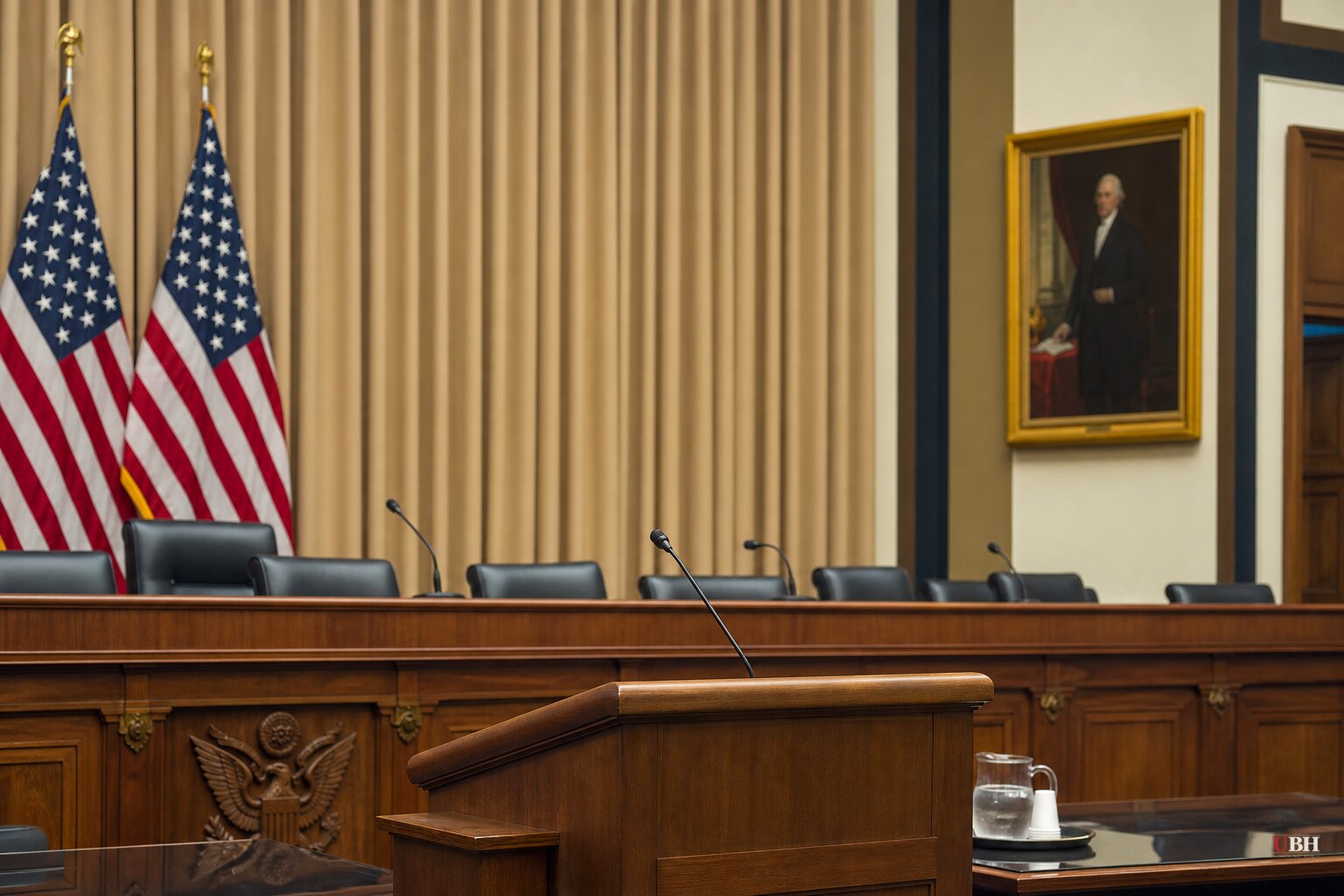
The House Judiciary Committee's Subcommittee on Constitution and Limited Government, chaired by Rep. Chip Roy of Texas with Rep. Mary Gay Scanlon of Pennsylvania as ranking member, will hold a hearing Wednesday, September 2, titled "Subject to the Jurisdiction Thereof: Birthright Citizenship and the Fourteenth Amendment Part II," according to Legis1. The subcommittee will examine H.R. 9633, the Birthright Citizenship Clarification Act of 2026, which would amend Section 301 of the Immigration and Nationality Act to spell out by statute which children born in the U.S. are not citizens at birth.
The strongest argument for that approach, made by supporters of Trump's orders, is textual. They read "subject to the jurisdiction thereof" as excluding children of parents who owe allegiance to a foreign government, not just diplomats' children. That was reportedly the position of the four dissenting justices in Trump v. Barbara, per The Atlantic's account.
The wider immigration push
Birthright citizenship isn't the only front. The State Department is preparing to revoke B1 and B2 tourist and business visas issued between 2016 and 2026 to people who sought or are seeking asylum. State Department spokesman Tommy Pigott confirmed the move is being coordinated with DHS, according to Breitbart's reporting on an Associated Press story. If finalized, it would affect up to 200,000 people and would be the largest mass visa revocation in U.S. history. Deputy Secretary of State Christopher Landau defended the plan on X, writing that "asylum isn't supposed to be a loophole to circumvent immigration law." No revocation has been finalized as of this writing, and officials say the number will change on a rolling basis.
Separately, the U.S. Court of Appeals for the Third Circuit ruled on August 28, 2026, that the administration's policy of mandatory detention without bond hearings for immigrants who entered without inspection is unlawful, according to the ACLU, which represented the plaintiff in Buele Morocho v. Warden Philadelphia FDC. That makes eight federal appeals courts to reject the policy, per the ACLU's count. The administration has not indicated whether it will appeal to the Supreme Court.
Judge Laplante has not yet ruled on whether EO 14418 violates his 2025 injunction. The House hearing Wednesday will test whether Republicans can build the two-thirds majorities or simple statutory fix needed to move H.R. 9633 forward, a bill that would need to survive its own constitutional challenge even if it passes.
Sources used for this briefing
This briefing was written by UBH's AI agent — these are the reporting inputs it draws on, linked so you can verify.


