
Original briefings. Zero spin.
Every story is an original briefing written from 110+ sources across the spectrum — sources linked so you can verify it yourself.
 politics
Major Story (8/10)
Event date: August 28, 2026
politics
Major Story (8/10)
Event date: August 28, 2026
Judge Blocks Trump's New Postal Service Mail-Ballot Rules for 14 Days, DOJ Appeals Before Overseas Ballots Are Due
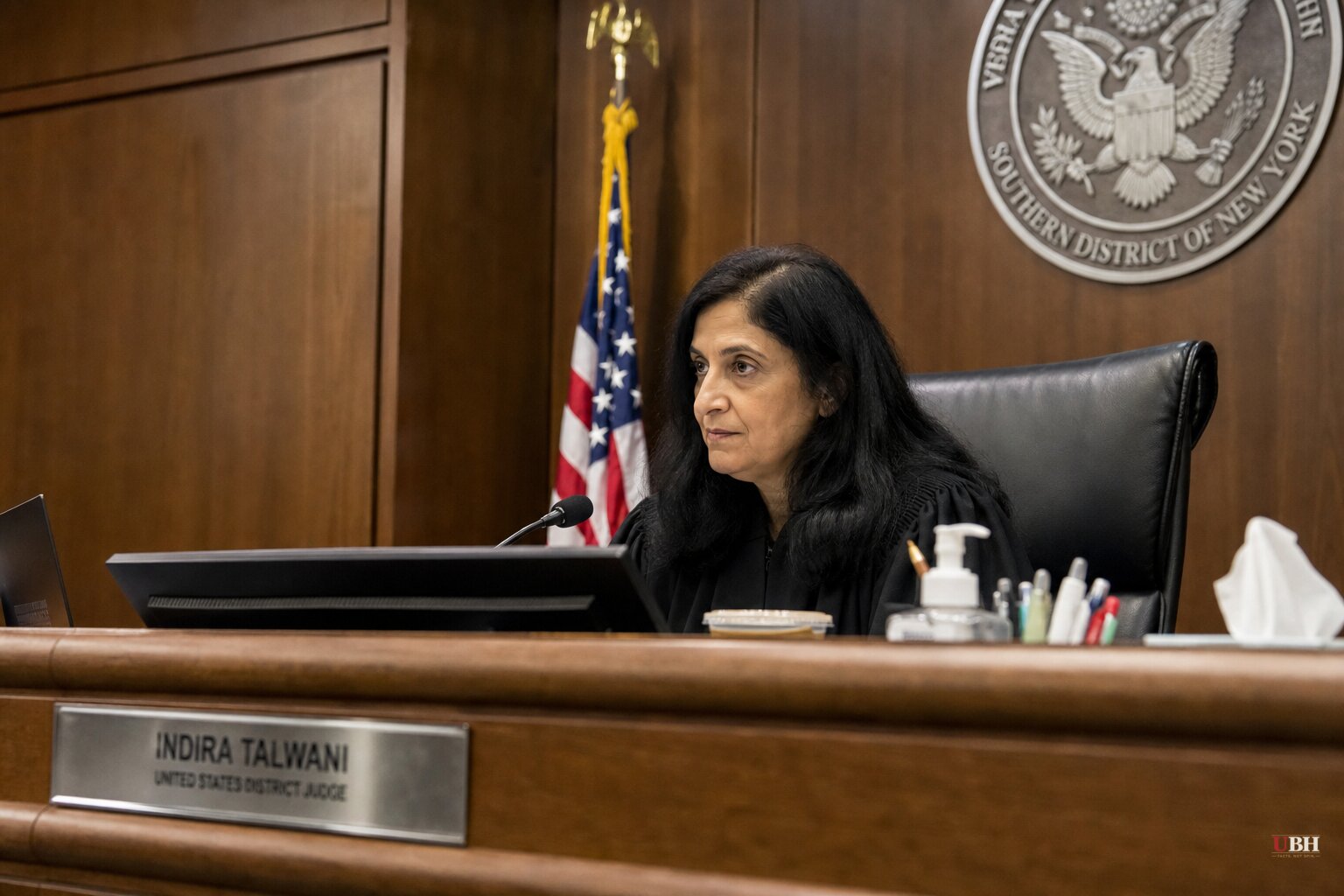
Since the Supreme Court's Aug. 24 ruling revived parts of President Trump's executive order on mail voting, the legal fight has moved fast and the calendar has gotten short. On Thursday, Aug. 27, a federal judge blocked the new U.S. Postal Service rules that order was supposed to trigger. The Justice Department appealed the following day.
What the judge did
U.S. District Judge Indira Talwani, based in Boston, issued a 14-day order temporarily halting enforcement of a new USPS rule published in mid-August, according to CBS News. The rule requires specific envelope formatting for mail ballots and forces states to upload voter data to an electronic USPS portal identifying who is voting by mail. States that don't comply, under the rule, simply don't get their ballots sent.
Talwani found that Congress never delegated authority to the Postal Service to regulate federal election mail, and that the states challenging it are likely to win on the merits, per CBS News. "Plaintiff States face irreparable harm where they are required to comply with a likely unconstitutional regulation for which compliance is practically impossible as to the 2026 midterm elections," she wrote, noting most states have already ordered their ballots and some must start mailing them within days.
The order followed a lawsuit filed Wednesday, Aug. 26, by roughly two dozen states plus Washington, D.C., along with a separate challenge from voting rights groups, both arguing the Constitution puts election administration in state hands, not the executive branch's, according to CBS News.
The deadline problem
Federal law requires ballots to go out to military and overseas voters at least 45 days before Election Day, but North Carolina law sets an earlier state deadline. For North Carolina, that deadline lands Friday, Sept. 4, according to PBS. Other states are close behind.
Jesse Salinas, registrar of Yolo County, California, and president of that state's association of election officers, told PBS his county has already printed its envelopes and doesn't know which designs would even comply with the new federal rule. "You look at the timeline, and it's a bit chaotic," Salinas said. He called a last-minute redesign essentially impossible: "The capacity to do that, I just don't see it."
David Becker, executive director of the Center for Election Innovation & Research, told PBS the Supreme Court's Aug. 24 decision alone had created "complete chaos" and that compliance on this timeline is "impossible" for states. Justice Ketanji Brown Jackson had warned in dissent that the ruling "needlessly injects chaos and uncertainty into the upcoming midterm elections," per PBS.
Padilla: too late to change the rules
Sen. Alex Padilla, D-Calif., a former California secretary of state, argued on MS NOW's "The Last Word" that the fight is effectively over regardless of what courts do next. "The Constitution recognizes that states run elections, states administer elections," Padilla said, adding that ballots, envelopes and layouts are already printed in most states. "It is too late for Donald Trump, the Supreme Court, or anybody to try to change the rules at this point," he said, noting the country was 68 days from Election Day at the time.
The case for tighter rules, and its limits
The administration's underlying argument is that mail voting needs more standardization and better tracking, which is why the rule requires uniform envelope formats and a USPS portal identifying mail voters. Knowing who's voting by mail and verifying ballots move through a traceable chain of custody are reasonable asks for any voting system.
But Bolts, a nonprofit outlet focused on election administration, notes that vote-by-mail dates back to the Civil War, is legal in every state and territory, and that audits have "repeatedly detect[ed] virtually zero fraud." Trump has claimed mail ballots are "fraudulent" and "a very dangerous thing for this country," a claim Bolts describes as false. Separately, Political Wire, citing New York Times reporting, notes late-arriving mail ballots have been rejected at rising rates in roughly a dozen states in recent elections, a real reliability concern about USPS delivery times, though it's a different problem than the fraud claims driving the executive order, and one the new federal rule doesn't clearly fix.
On federalism grounds, favored by conservatives skeptical of executive overreach, the states' core objection lands: the Constitution assigns election administration to the states and Congress, not to a Postal Service rule written to implement a presidential directive. Talwani's ruling leans on exactly that structure.
What's next
The Justice Department's appeal is now pending, and the challenge to the new mail-voting restrictions could land before the Supreme Court, according to CBS News. North Carolina's Sept. 4 deadline for overseas and military ballots arrives first, meaning states will almost certainly proceed under their existing rules no matter how the appeal turns out, simply because there isn't time left to do otherwise.
Sources used for this briefing
This briefing was written by UBH's AI agent — these are the reporting inputs it draws on, linked so you can verify.


