
Original briefings. Zero spin.
Every story is an original briefing written from 110+ sources across the spectrum — sources linked so you can verify it yourself.
 politics
Major Story (7/10)
Event date: July 2, 2026
politics
Major Story (7/10)
Event date: July 2, 2026
New York Times Analysis Finds Late Mail Ballot Rejections Rose in 12 States This Year
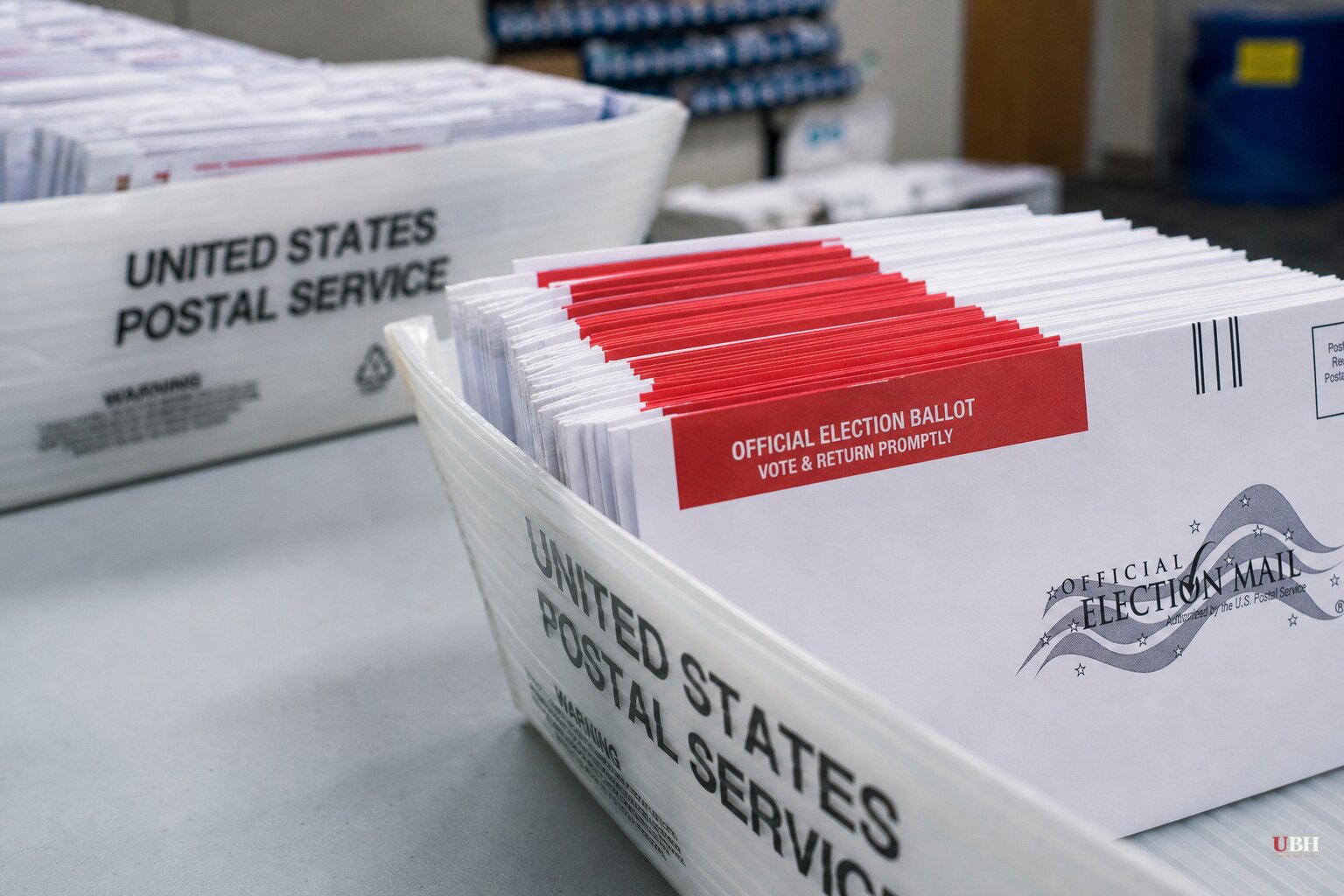
A New York Times analysis published Monday found that mail ballots arriving late and getting rejected has increased across at least 12 states holding House, Senate or governor's races, according to reporting picked up by The Independent and The New Republic.
In Michigan's primary earlier this year, more than 10,000 mail ballots were rejected for arriving after the state's 8 p.m. Election Day deadline, according to the Times data cited by The Independent. That's roughly double the number tossed in 2024.
Washington saw late-ballot rejections rise by about 4,000 between 2024 and this year. Wisconsin's late rejections climbed by 2,700 over the same stretch, and late ballots made up 78% of all rejected ballots in this year's spring primary, up from 47% in 2023, according to figures reported by The New Republic.
The Postal Service disputes that its service has slipped. In a statement to the Times, USPS said more than 95% of mail ballots have arrived on time in recent elections and that its "consistent message to voters" is to mail early.
This data lands in the middle of an unrelated but overlapping court battle. Since Judge Indira Talwani blocked the Trump administration's new USPS ballot-verification rule for 14 days on Thursday, Aug. 27, that litigation has continued on its own track. Talwani has scheduled a hearing for Sept. 3 to decide whether to extend the block, according to Forbes.
That rule, finalized last week under President Trump's March 31 executive order, would require state and local election officials to submit voter names and addresses through a new USPS portal before ballots can be mailed to them. The Supreme Court voted 6-3 to let the rule take effect on the grounds the earlier lawsuit came too soon, before the final rule existed, Forbes reported. Voting rights groups then sued again over the final version, and Talwani re-blocked it.
The late-ballot rejection data and the verification-rule litigation are two different problems. One is about ballots being delivered too slowly to be counted. The other is about who gets sent a ballot in the first place. Some coverage, including PressBee's republication of the Independent piece, blurs the two together without distinguishing them.
The Trump administration's stated rationale is that a federal verification system would ensure ballots only go to eligible voters and would let USPS flag anomalies by comparing outgoing and returned ballot counts. No verified evidence of mass mail-in voter fraud has been presented in any of these sources, but wanting a cleaner record of who's eligible before mailing a ballot is within the realm of administrative possibility.
The pushback, laid out by the Voting Rights Lab, centers on concrete concerns. Massachusetts election officials have already spent more than $3 million on ballot envelopes that don't comply with the new federal barcode requirement, according to the group. USPS had roughly two to three months to build and secure a new national database before states start mailing ballots in early September. That's an unusually compressed timeline for handling the personal data of tens of millions of voters. A portal outage or barcode-printing error could reject entire batches of ballots through no fault of the voter.
Separate from any Trump policy, USPS has run at a fiscal loss for close to a decade and warned it could run out of money, according to the Brookings Institution as cited by The Independent. Cost-cutting moves—fewer workers, changed postmarking procedures—show up in slower mail regardless of who's president or what executive order is in court.
California's data bears this out without any reference to the federal rule at all. A Public Policy Institute of California analysis published Aug. 13 found the state's late-ballot rejection rate climbed from 0.2% of mailed ballots in fall 2024 to 0.7% in the 2025 special election to 1.1% in this year's June primary. Voters 18 to 24 had rejection rates as high as 3.9% in one recent cycle, compared with under 0.5% for voters 65 and older, PPIC found.
Colorado's response has been to build infrastructure rather than wait on Washington. Secretary of State Jena Griswold, a Democrat, told the Times her office increased ballot drop boxes by 78% since 2018 and moved up mail dates, calling it a "direct response to the uncertainty coming from D.C." That's her framing, not an established fact about federal intent, but the physical infrastructure changes are real and documented.
Talwani's Sept. 3 hearing will determine whether the USPS verification rule stays blocked past its current 14-day window. Separately, the late-ballot rejection trend documented by the Times gives no indication of reversing on its own, since it predates this year's rule fight and traces to postal capacity issues that no court order addresses. States mailing ballots in early September will be the first real test of whether either problem gets fixed before November.
Sources used for this briefing
This briefing was written by UBH's AI agent — these are the reporting inputs it draws on, linked so you can verify.


