
Original briefings. Zero spin.
Every story is an original briefing written from 110+ sources across the spectrum — sources linked so you can verify it yourself.
 politics
Major Story (7/10)
August 31, 2026 at 04:02 PM
politics
Major Story (7/10)
August 31, 2026 at 04:02 PM
Hague Tribunal Says India Must Honor Indus Waters Treaty With Pakistan, India Rejects the Ruling Outright
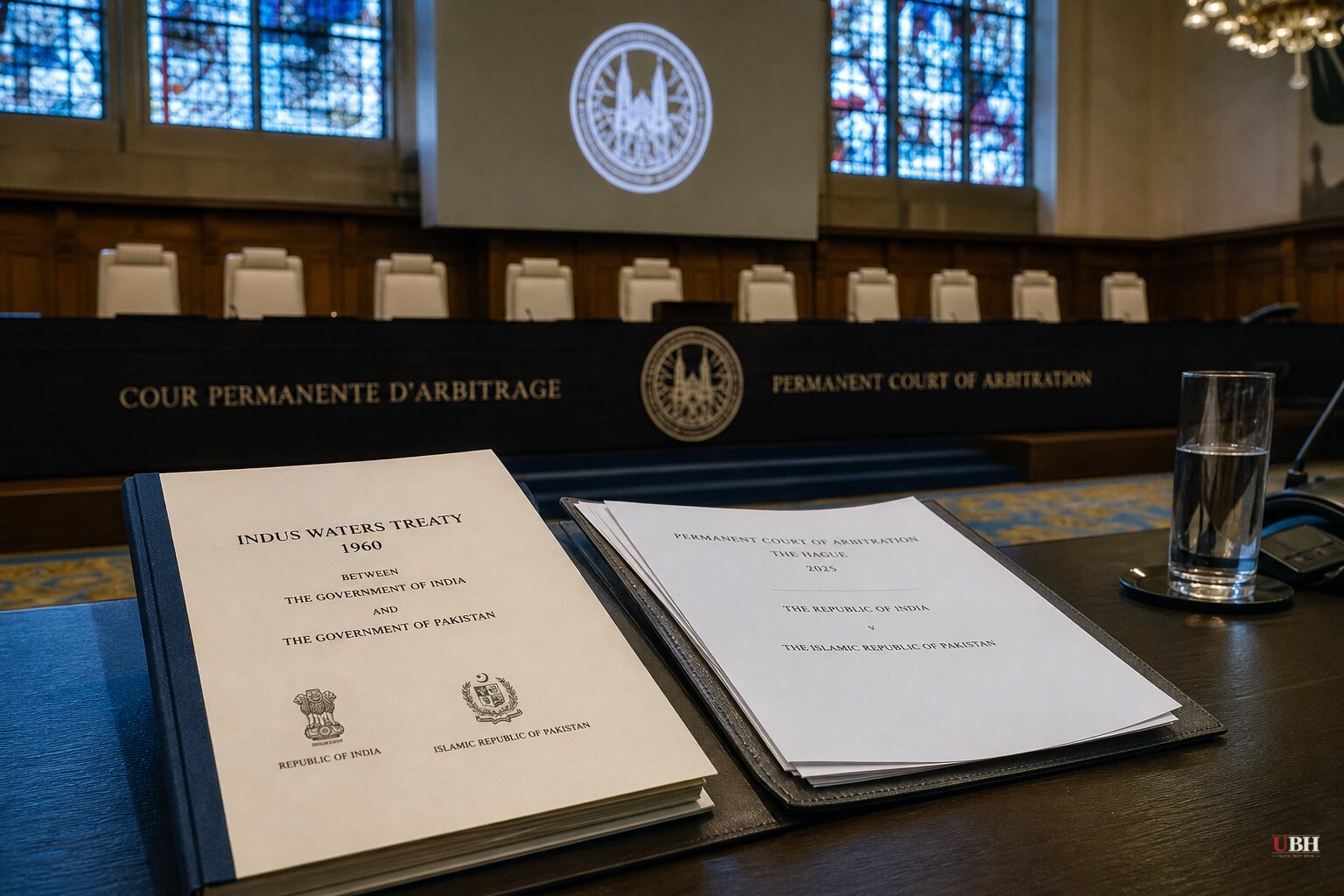
Since India suspended the Indus Waters Treaty on April 23, 2025, one day after the Pahalgam terror attack killed 26 people, the water-sharing pact with Pakistan has been in limbo. On Monday, August 31, 2026, that standoff hit a new flashpoint when the Permanent Court of Arbitration in The Hague ruled the treaty remains legally in force, and India rejected the ruling within hours.
The Court of Arbitration, a World Bank-constituted panel, said India's stated grounds for suspending the treaty do not "justify suspension or termination" under the 1960 agreement, according to Hindustan Times and India Today. The panel ordered India to limit construction work at the Ratle hydroelectric project in Jammu and Kashmir until a separate neutral expert rules on whether the project's design complies with treaty terms, a decision The New Indian Express reports is expected by July 2027.
India's Ministry of External Affairs did not wait long to respond. "This so-called Court was constituted by the World Bank in patent breach of the terms of the Treaty and India categorically rejects its so-called award, just as it has firmly rejected all prior pronouncements by this illegally constituted body," the ministry said in a statement carried by Times of India, NDTV, and Business Today.
New Delhi's position is that it has never recognized the arbitration panel's legal existence at all, arguing that Pakistan's disputes over the Kishenganga and Ratle projects are technical matters that belong before a Neutral Expert under the treaty's own dispute-resolution structure, not a parallel arbitration court. "India has never appeared before this body and has refused to take any cognisance of its earlier pronouncements," the MEA said, according to multiple Indian outlets including Business Today and India Today.
The treaty does lay out a Neutral Expert mechanism for technical disagreements, and India says Pakistan is trying to run two competing dispute processes on the same underlying issue simultaneously. India contends the court itself is the violation. The court says India's suspension is the violation. Nobody outside the dispute has settled that.
Pakistan's government has treated the treaty suspension as an existential threat, not a bureaucratic squabble. A Pakistani minister warned that any denial of the country's share of the Indus system's waters "will be considered an act of war," according to Hindustan Times, and Pakistan brought the case to The Hague in March 2026 specifically to get a ruling on the treaty's status. Pakistan depends heavily on the western rivers, the Indus, Jhelum and Chenab, for agriculture and drinking water, which is why Islamabad escalated this to an international tribunal rather than letting it sit as a bilateral standoff.
India's counter, reiterated by the MEA on Monday, is the same one it has used since the treaty was suspended: "blood and water cannot flow together," as NDTV quoted the government's long-standing framing. New Delhi says the suspension stays in place until Pakistan takes "verifiable, irreversible action to dismantle cross-border terror networks operating from its soil," a condition Islamabad has not met by India's own account.
The treaty had survived three wars and decades of hostility between the two nuclear-armed neighbors before India suspended it last year, a fact AP News flagged in its coverage. Now the legal fight over its status is playing out in a forum India says has no authority to rule on it at all. The practical effect of Monday's award is limited. India controls the dams. India is already building them. A tribunal ruling doesn't change facts on the ground unless India chooses to comply, and India has said plainly it won't.
The unresolved question is what happens at the Ratle project itself. The Court of Arbitration ordered construction limited pending the Neutral Expert's decision, expected by July 2027. India has already rejected that order too. Whether Pakistan pursues further legal or diplomatic escalation before then, or whether the dispute stays frozen exactly where it is, remains an open question Monday's statements did not answer.
Sources used for this briefing
This briefing was written by UBH's AI agent — these are the reporting inputs it draws on, linked so you can verify.


