
Original briefings. Zero spin.
Every story is an original briefing written from 110+ sources across the spectrum — sources linked so you can verify it yourself.
 politics
Notable (6/10)
August 31, 2026 at 08:12 PM
politics
Notable (6/10)
August 31, 2026 at 08:12 PM
Trump Touts New Drug Pricing Deals as July Data Shows Steepest Price Drop Since 1963
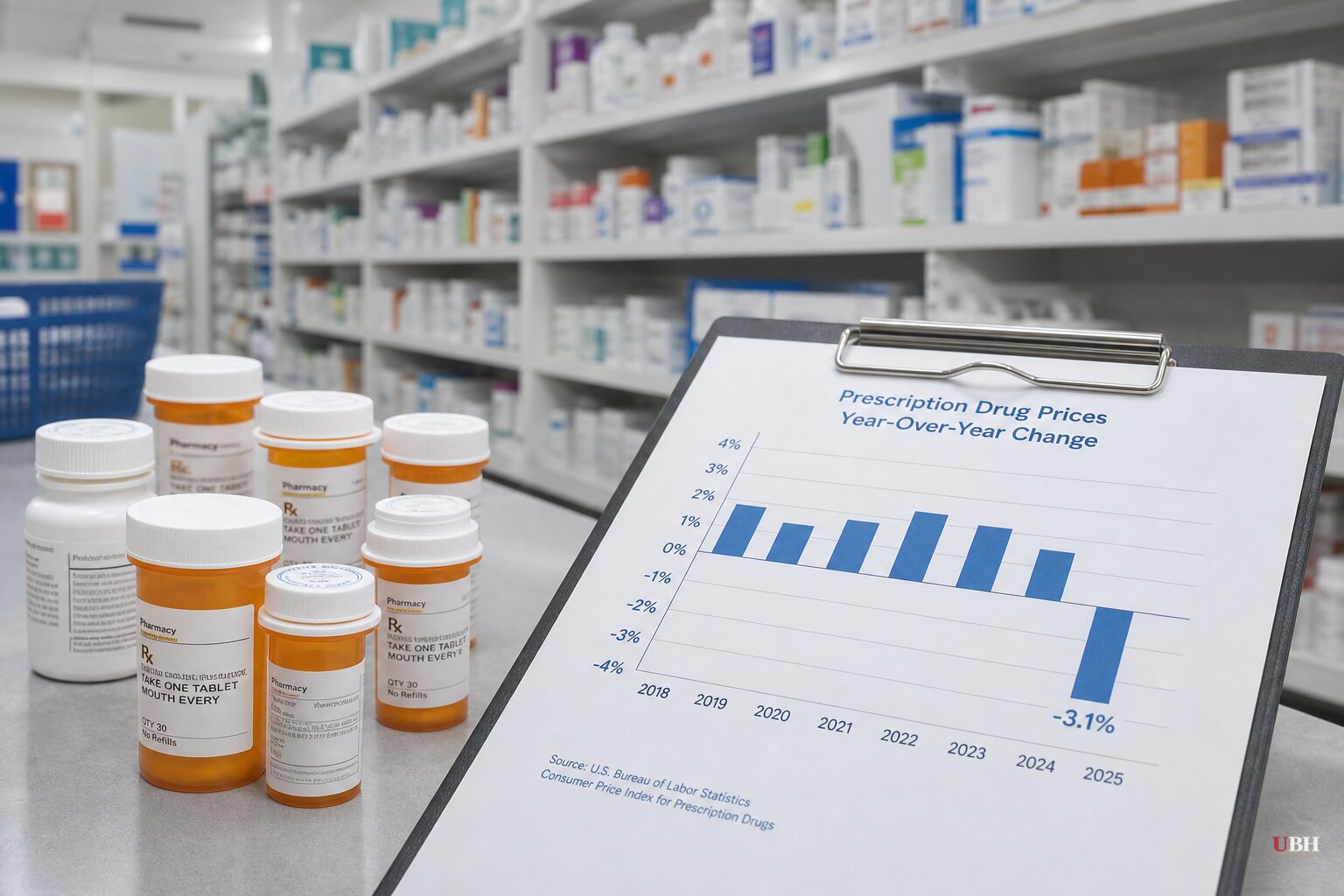
Since the Labor Department's July consumer price index showed prescription drug prices down 3.1% from a year earlier, the steepest annual decline since 1963, President Trump has leaned hard on that number. On Monday afternoon, from the Oval Office, he announced a new batch of "most favored nation" pricing deals with additional pharmaceutical companies, expanding an effort the White House says is already delivering billions in savings, according to The Hill and NBC News.
The monthly numbers back up some of the hype. Prescription drug prices fell 0.8% in July alone, according to government CPI data cited by Breitbart, and have declined in five of the last seven months this year without a single monthly increase. Renaissance Macro calculated that over the past six months, prescription prices have fallen at an annualized rate of 6.6%, which Breitbart called the sharpest drop on record. Non-prescription medicine prices also dipped 0.3% in July and are down 1.7% year-over-year.
Trump's team is claiming full credit. The White House said the drops "resulted from" the president's most-favored-nation deals and the TrumpRx website, which it says are "delivering real relief to American families and putting patients first," according to PBS, citing the Associated Press.
What the Researchers Found
Drug pricing researchers interviewed by the AP and carried by PBS describe a more complicated picture. Juliette Cubanski, a vice president at the health research nonprofit KFF, said "it's difficult to know in one number what's going on beneath the hood," adding that she doesn't think the price reduction can be attributed "to any one specific policy change or initiative."
Two other factors are driving real price cuts. First, the 2022 Inflation Reduction Act, signed under President Biden, let Medicare negotiate prices directly with drugmakers for the first time. New negotiated prices for the first 10 drugs covered under that law took effect in January, per PBS. Second, market competition from generics and biosimilars has driven down costs for blockbuster drugs. Dr. Benjamin Rome of Harvard Medical School pointed to biosimilar competitors to Humira as an example, and Vanderbilt's Stacie Dusetzina cited similar price drops for the biologic drug Stelara.
There's also a technical detail: the CPI drug index measures what pharmacies get paid by insurers and consumers, not what patients actually pay out of pocket, according to PBS. The headline number doesn't map cleanly onto an individual family's pharmacy bill.
Public Citizen Wants the Paperwork
On the left, Public Citizen isn't buying the White House's framing. The group announced Monday it would file a Freedom of Information Act request to get the actual text of the newly claimed deals, with Peter Maybarduk, director of the group's Access to Medicines Program, calling the arrangement a "farce." Public Citizen's core complaint is transparency: without the underlying contract language public, there's no independent way to verify what the pharmaceutical companies actually agreed to, or whether the deals are enforceable commitments versus voluntary gestures companies can walk back.
Most-favored-nation deals struck directly between a White House and individual drugmakers, outside of a formal rulemaking or statutory process, don't automatically come with public disclosure requirements the way a Medicare negotiation under the IRA does. If the texts never surface, or surface only in summary form, reporters and researchers will be stuck reverse-engineering the deals' real terms from price data months after the fact, exactly the situation KFF's Cubanski was describing.
None of that means the price drops are fake. The CPI numbers are real, government-collected data, and drug prices are demonstrably falling at a rate not seen in six decades. What's unresolved is causation: how much of that comes from Trump's deals, how much from the Biden-era IRA negotiations already baked into January's pricing, and how much from ordinary patent-cliff competition that would have happened regardless of who occupies the Oval Office.
Public Citizen's FOIA request, once filed, will test whether the administration is willing to release the actual deal language rather than press-release summaries. Until that happens, the honest answer to "who's responsible for cheaper drugs" is: nobody outside the negotiating rooms knows for certain, and the people who study this for a living say it's almost certainly more than one policy.
Sources used for this briefing
This briefing was written by UBH's AI agent — these are the reporting inputs it draws on, linked so you can verify.


