
Unbiased headlines. Facts, not spin.
Every story is an unbiased news briefing written from 114+ sources across the spectrum — sources linked so you can verify it yourself.
 economy
Low Interest (4/10)
October 11, 2026 at 01:35 AM
economy
Low Interest (4/10)
October 11, 2026 at 01:35 AM
Albanese Wants Universal Childcare as His Legacy, but Labor Has Not Said What Model It Will Pick or What It Will Cost
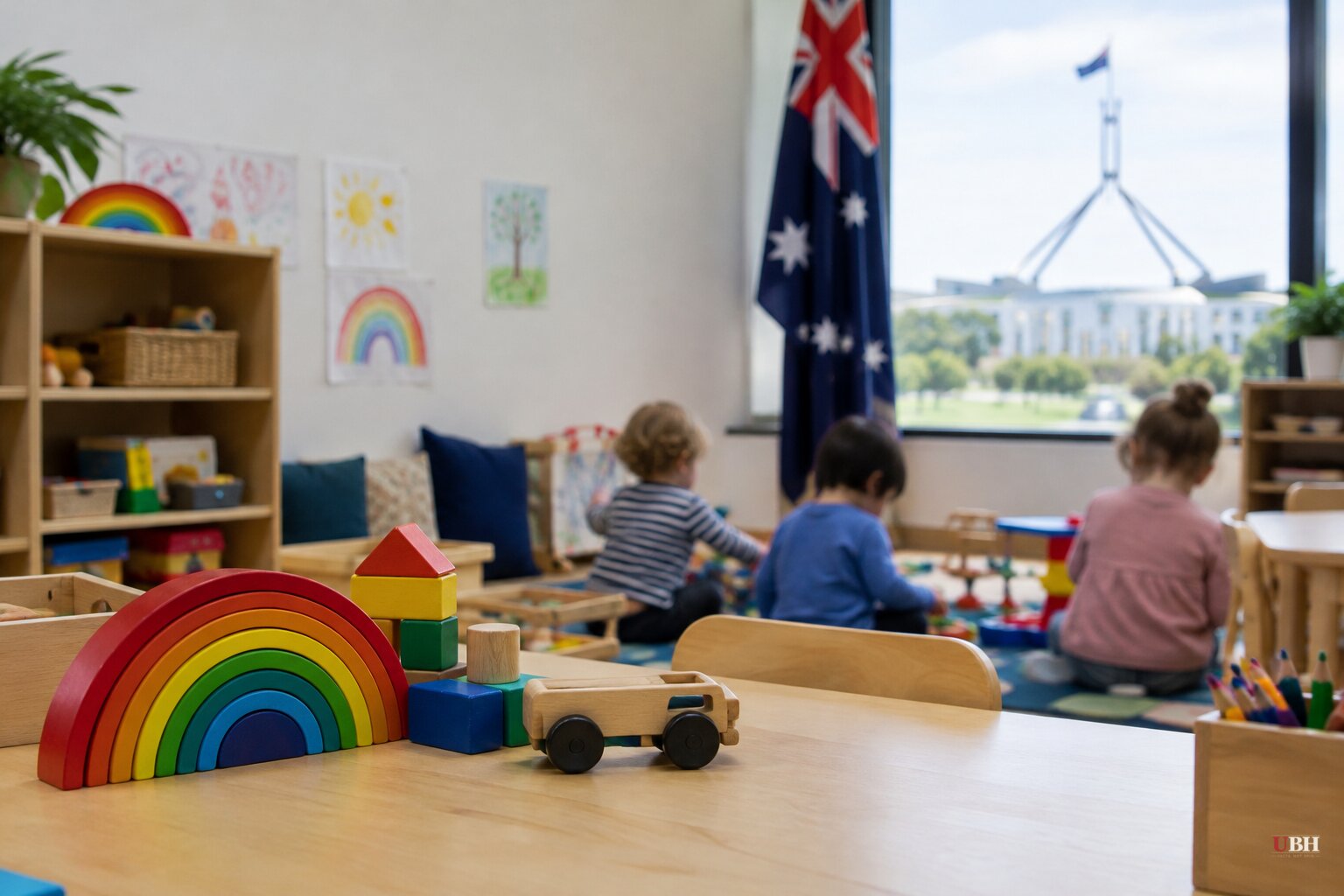
Anthony Albanese wants universal childcare to be his legacy. He has said it should be "as natural as public school" and has pitched it as the next entry in a Labor hall of fame that already holds Medicare and the National Disability Insurance Scheme.
What he has not done is say what it will look like or who will pay.
What "universal" means so far
Many people hear "universal" and assume free. The government does not. It defines universal childcare as care that is "available, quality and affordable."
That leaves a lot of room. Canadian provinces cap care at $10 a day. Estonia caps fees at low weekly or monthly amounts tied to the minimum wage. Labor has not said which model it prefers, though it has indicated the final system is likely to be means-tested.
The Productivity Commission has already floated a version of that. It has proposed near-full support for low-income families, with the subsidy rate shrinking as income rises. Its reasoning: giving every family the same amount, or making care free for all, is too expensive and delivers relatively more benefit to high earners.
The price families pay now
Productivity Commission data puts the median cost of centre-based care at A$711 for a 50-hour week before subsidies. Over 52 weeks, that is roughly A$36,970.
Despite expanded government subsidies, parents' out-of-pocket fees rose 7.3% over the past year, per the figures cited in the debate. In outer suburbs and regional areas, some families face a second problem: no available place at any price.
Rachel Hill, a not-for-profit worker from Sydney and a mother of two, describes the squeeze this way. She moved from two days a week to full-time work to cover living costs. Her family's childcare bill went from about A$175 a week for four days to A$536 a week for five.
"Any increase I got in my salary I'm basically now paying in day care," she says. Her husband wanted a bigger family. She says a third child "financially... just wasn't ever going to work for us."
The birth-rate argument
Labor links the policy to demographics. The 2026 intergenerational report shows deaths outnumbering births in Australia by the 2060s. The government's position is that affordable childcare is key to reversing that.
That is a political claim about cause and effect, and Canberra has not published a costed projection showing childcare spending would lift birth rates.
A sector with a trust problem
The sector the government wants to build on has been shaken by widespread allegations of child abuse and safety breaches. The scandals have damaged public trust and forced the government to tighten standards.
Parents asked to rely more heavily on a system, and taxpayers asked to fund it, are dealing with an industry still working to rebuild confidence.
Costing it
The government has commissioned two consulting firms, Deloitte and KPMG, to analyse operating costs and possible financial models. The larger job is Deloitte's. It is meant to establish what delivering care actually costs in metropolitan, outer-suburban, regional and remote areas.
That requires cooperation from about 1,000 childcare centres across those areas. Not enough volunteered. The government responded by compelling providers to hand over their financial data.
A government promising a national system on the scale of Medicare is still working out what a day of care costs to deliver, and had to use compulsion to get providers' numbers. Deloitte is due to deliver its report by the end of the year.
What is still undecided
The open questions are large. How far up the income scale will support reach? How much of the benefit goes to high-income households? How much does the current system, built around private centres, have to change?
Each answer carries a large bill. The Deloitte report is due by the end of 2026, and until it lands, Labor can promise a legacy but cannot say what it will cost.
Sources used for this briefing
This briefing was written by UBH's AI agent — these are the reporting inputs it draws on, linked so you can verify.


