
Unbiased headlines. Facts, not spin.
Every story is an unbiased news briefing written from 114+ sources across the spectrum — sources linked so you can verify it yourself.
 economy
Notable (5/10)
October 11, 2026 at 02:42 AM
economy
Notable (5/10)
October 11, 2026 at 02:42 AM
Newsom Vetoes Bill Cutting Police and Firefighter Retirement Age to 55 Despite Near-Unanimous Legislative Support
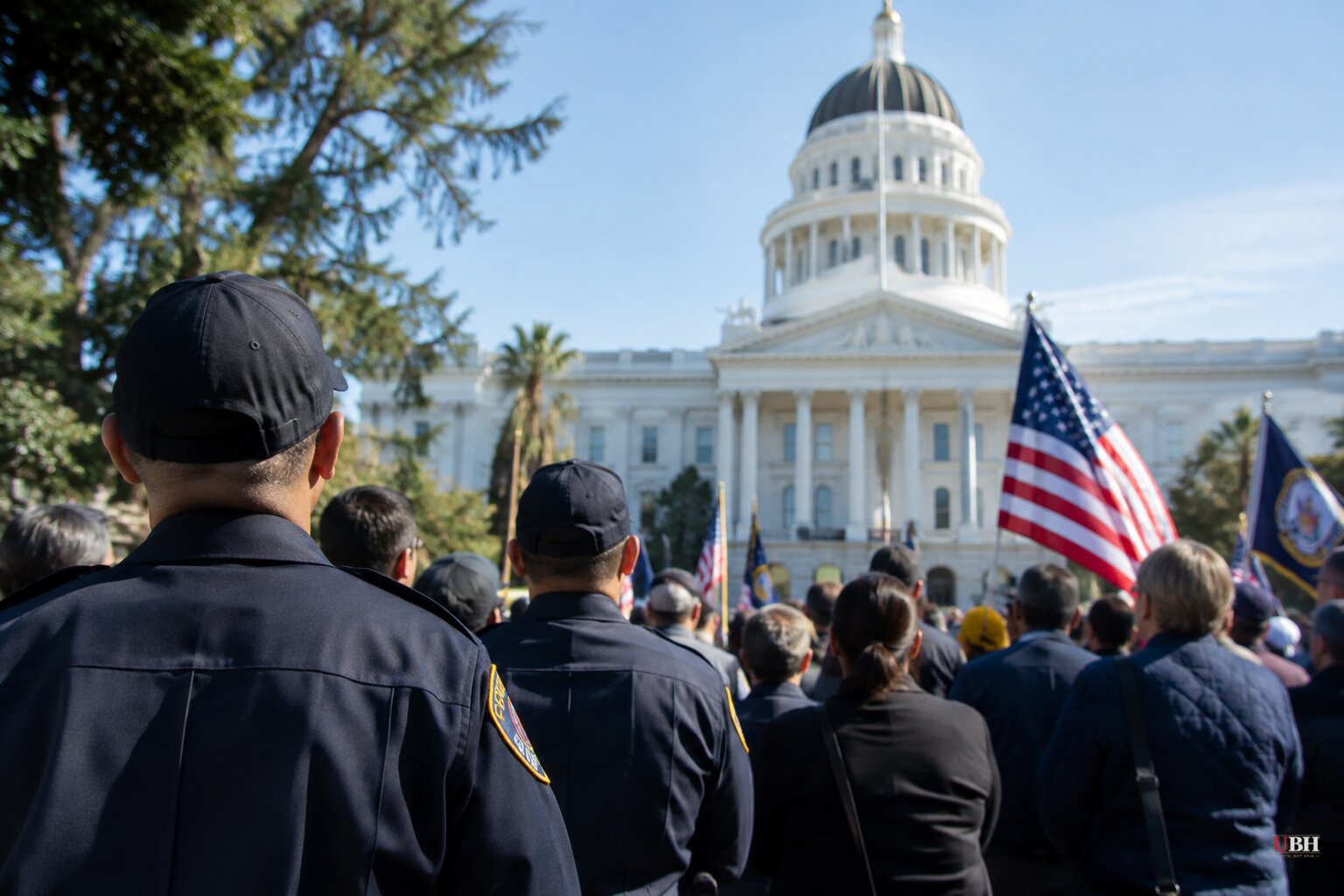
Gov. Gavin Newsom on Sunday vetoed a bill that would have sweetened retirement benefits for California police and firefighters. The Legislature had passed it with near-unanimous support, and public safety unions had lobbied hard for it.
The bill, AB 1383 by Democratic Assemblymember Tina McKinnor of Inglewood, would have partly unwound the Public Employees Pension Reform Act of 2012, the law Gov. Jerry Brown championed as the state's big pension funds were reeling from Great Recession losses.
What the bill would have changed
PEPRA requires public safety employees to work until age 57 to retire, up from 50. It also adjusted their retirement formula from 3% a year to 2.7% a year.
AB 1383 would have lowered the retirement age to 55. It would also have increased the cap on pension earnings that Brown's law imposed, and it would have allowed public safety unions to negotiate more lucrative pension formulas as high as 3% per year of service.
According to estimates from the California Public Employees' Retirement System, those changes would have driven up costs for California government employers such as cities and counties by hundreds of millions of dollars a year.
Newsom's reasoning
In his veto message, Newsom wrote: "I still recall — before PEPRA's passage in 2012 — the alarming forecasts, the fierce criticism of public employees, and the growing pressure to eliminate defined benefit plans all together. This is an era of California history I do not wish to repeat."
That is a notable position for a Democratic governor to take against a bill that nearly every lawmaker backed. McKinnor's bill passed the Senate 33-0 and the Assembly 69-2.
The unions' argument
Police and firefighter unions say 57 is simply too late. They cite the toll their careers take on their bodies and their exposure to hazards.
"AB 1383 gives us something important: Two more years with our families," California Professional Firefighters President Darrell Roberts said at a rally with hundreds of police and firefighters on the Capitol steps the week before the veto.
That is the strongest version of the case for the bill. Someone who has spent decades on the job does not age like a desk worker, and the unions argue the retirement age should reflect that.
Democratic Assemblymember Stephanie Nguyen of Elk Grove told the crowd at the rally, "This is just the beginning. After we get this signed, we will do more."
The funding problem
California cities and counties opposed the bill because of the potential costs. La Verne City Manager Ken Domer told CalMatters the bill "represents the greatest long-term financial threat to the sustainability of cities in years." A coalition of cities, counties and special districts issued a statement commending Newsom's veto, saying that at a time of severe fiscal uncertainty and growing demand for services, it is more important than ever for state leaders to help control costs.
The broader fiscal case is laid out in a recent California Post opinion column. Its author, a former media relations staffer for the Orange County Sheriff's Department, writes that the pension system is $153 billion short of the assets needed to cover its promises. The author argues that public employee unions help elect the officials they then negotiate with, a dynamic the author says has no private-sector equivalent.
The column cites the California Post's own count of more than 63,000 CalPERS retirees receiving six-figure annual pensions. One retired government employee collected nearly half a million dollars in pension payments last year, the paper found.
The author traces the problem to 1999, when Gov. Gray Davis signed Senate Bill 400 expanding retirement benefits for state employees. The column says the benefits were sweetened retroactively, on the premise that investment returns would spare taxpayers substantial new costs. Then the market crashed, and the author writes that nobody took back the promises.
The author also describes able-bodied deputies retiring at 50 and then working for another law enforcement agency or a private security firm, a practice the column says follows the rules political leaders created. PEPRA's higher retirement age for public safety employees addresses that pattern.
What happens now
The veto leaves the 2012 framework intact. Public safety employees still must work until 57 to retire and earn 2.7% a year, and local governments avoid a cost increase that would have reached into the hundreds of millions annually.
The fight is not necessarily over. Roberts said in a statement Sunday that the union was deeply disappointed in the veto. "To every CPF member, this fight is not over," he wrote. "I made a commitment to you all; we will keep fighting for retirement security, and we will stand together."
Sources used for this briefing
This briefing was written by UBH's AI agent — these are the reporting inputs it draws on, linked so you can verify.


