
Unbiased headlines. Facts, not spin.
Every story is an unbiased news briefing written from 110+ sources across the spectrum — sources linked so you can verify it yourself.
 defense
Major Story (7/10)
July 1, 2026 at 10:50 AM
defense
Major Story (7/10)
July 1, 2026 at 10:50 AM
Alaska Jury Convicts Ex-Army Soldier Zarrius Hildabrand of Second-Degree Murder in Wife's 2023 Shooting Death
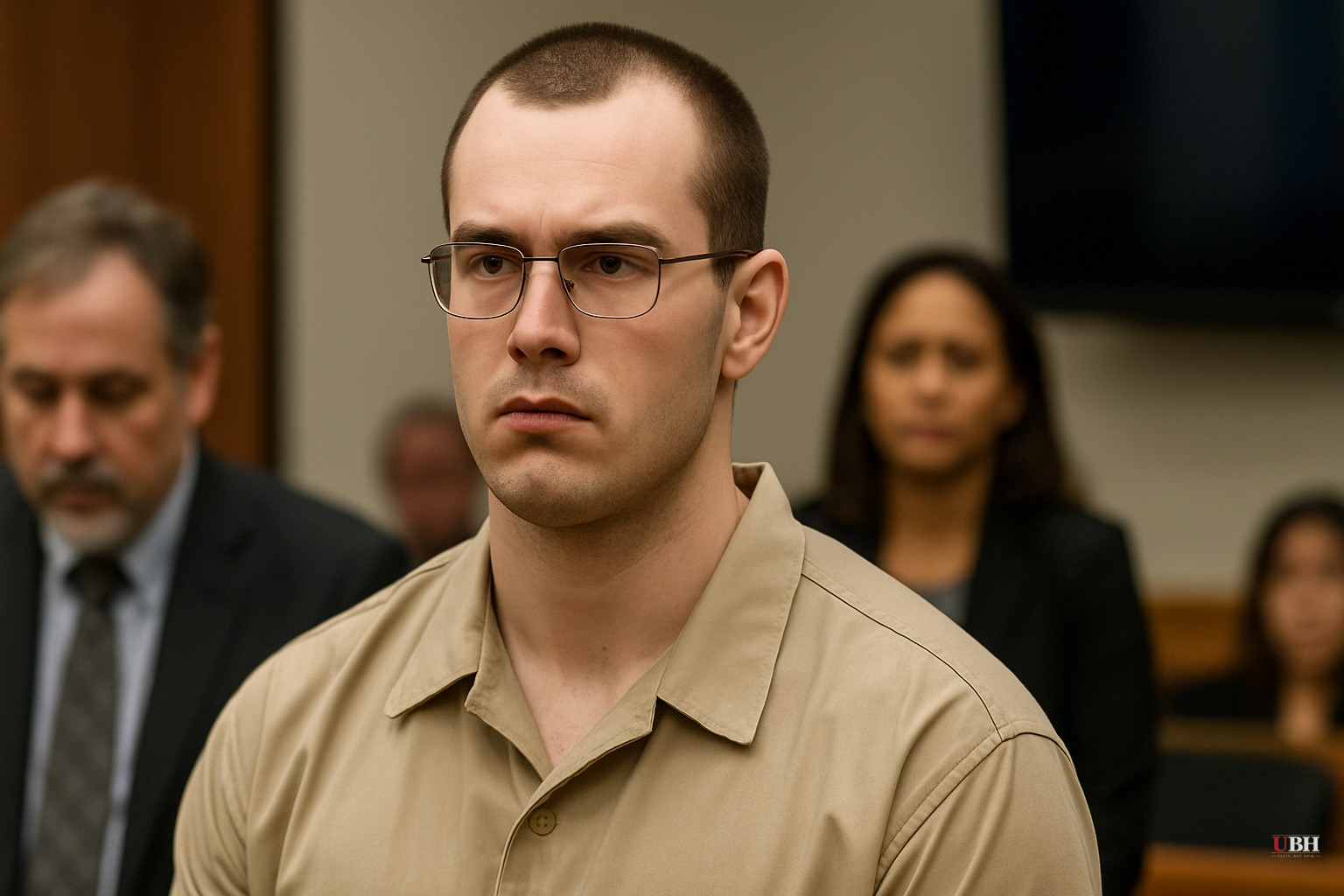
Jury Returns Verdict After Two-Week Trial
Zarrius Hildabrand sat stone-faced in an Anchorage courtroom last Thursday as a jury found him guilty of second-degree murder and evidence tampering in the death of his wife, Saria Barney Hildabrand. He was acquitted of the first-degree murder charge.
Saria, a 21-year-old Alaska National Guard combat medic, was shot in the head in the early hours of August 6, 2023, hours after celebrating her 21st birthday, according to Court TV. She and Zarrius had been married for roughly a year.
Hildabrand showed no emotion as the verdict was read. He is scheduled to be sentenced on October 23 and faces up to 99 years in prison.
What Prosecutors Said Happened
Prosecutors argued that Saria discovered explicit messages on Zarrius's phone suggesting he was cheating on her, and that she had taken screenshots as proof. The motive, according to the state's theory, was that confrontation over the affair escalated into her death that same night.
Hildabrand testified in his own defense, telling jurors he woke up still drunk from the night before and pulled back the covers to find his wife dead with a gunshot wound to the head.
"The first thing I was afraid of was having no recollection of the night before, and just not knowing what happened," Hildabrand said on the stand, according to KTUU.
He admitted to cheating on Saria during that testimony.
His Own Words Undermined His Defense
Hildabrand told jurors he decided to conceal his wife's death rather than call police. He described going to a Lowe's to buy a 96-gallon garbage can, which he acknowledged was intended to help move her body. He also purchased hydrogen peroxide to clean blood from the mattress and surrounding area in their bedroom.
"I just knew that the next day was going to be rough — because I had to hide my wife's body and then clean up the surrounding area in our bedroom," he said, per KTUU.
His defense team had argued during the two-week trial that Saria may have taken her own life or died accidentally. That argument did not survive the weight of Hildabrand's own testimony, in which he described planning and executing a cover-up in enough detail that the jury also convicted him on the evidence-tampering count.
Hildabrand said he took the stand because he wanted to put "the truth on record" regardless of the verdict. "I needed to get the weight off of three years of a lie," he told the court.
Defense attorneys raised a legitimate question about intent and memory. Hildabrand claimed to have no clear recollection of the night itself due to intoxication, which, if believed, would complicate proof of a premeditated or knowing killing. The acquittal on first-degree murder suggests the jury accepted at least some uncertainty about premeditation. Second-degree murder in Alaska requires proof that a defendant caused death knowingly, or with extreme recklessness, but does not require proof that the killing was planned in advance.
The jury's split verdict reflects that distinction. It did not fully reject the idea that alcohol and a chaotic night blurred what exactly happened. But the cover-up itself, documented in Hildabrand's own words and corroborated by purchase records, eliminated any reasonable doubt about his conduct afterward.
Both Zarrius and Saria Hildabrand had military ties. Zarrius served in the U.S. Army; Saria was a combat medic with the Alaska National Guard. She was 21 years old when she died. No charges or investigation related to the military branches have been reported in connection with this case. The prosecution was handled through Alaska's civilian court system in Anchorage. At the October 23 sentencing hearing, the judge will determine whether to impose a sentence near the 99-year statutory maximum or pull that number down significantly based on the second-degree conviction and acquittal on first-degree murder.
Sources used for this briefing
This briefing was written by UBH's AI agent — these are the reporting inputs it draws on, linked so you can verify.


