
Unbiased headlines. Facts, not spin.
Every story is an unbiased news briefing written from 110+ sources across the spectrum — sources linked so you can verify it yourself.
 defense
Low Interest (3/10)
August 10, 2026 at 12:16 PM
defense
Low Interest (3/10)
August 10, 2026 at 12:16 PM
Alaska Airlines Flight Returns to Miami Gate After Passengers Allegedly Threatened to "Take Over" Plane
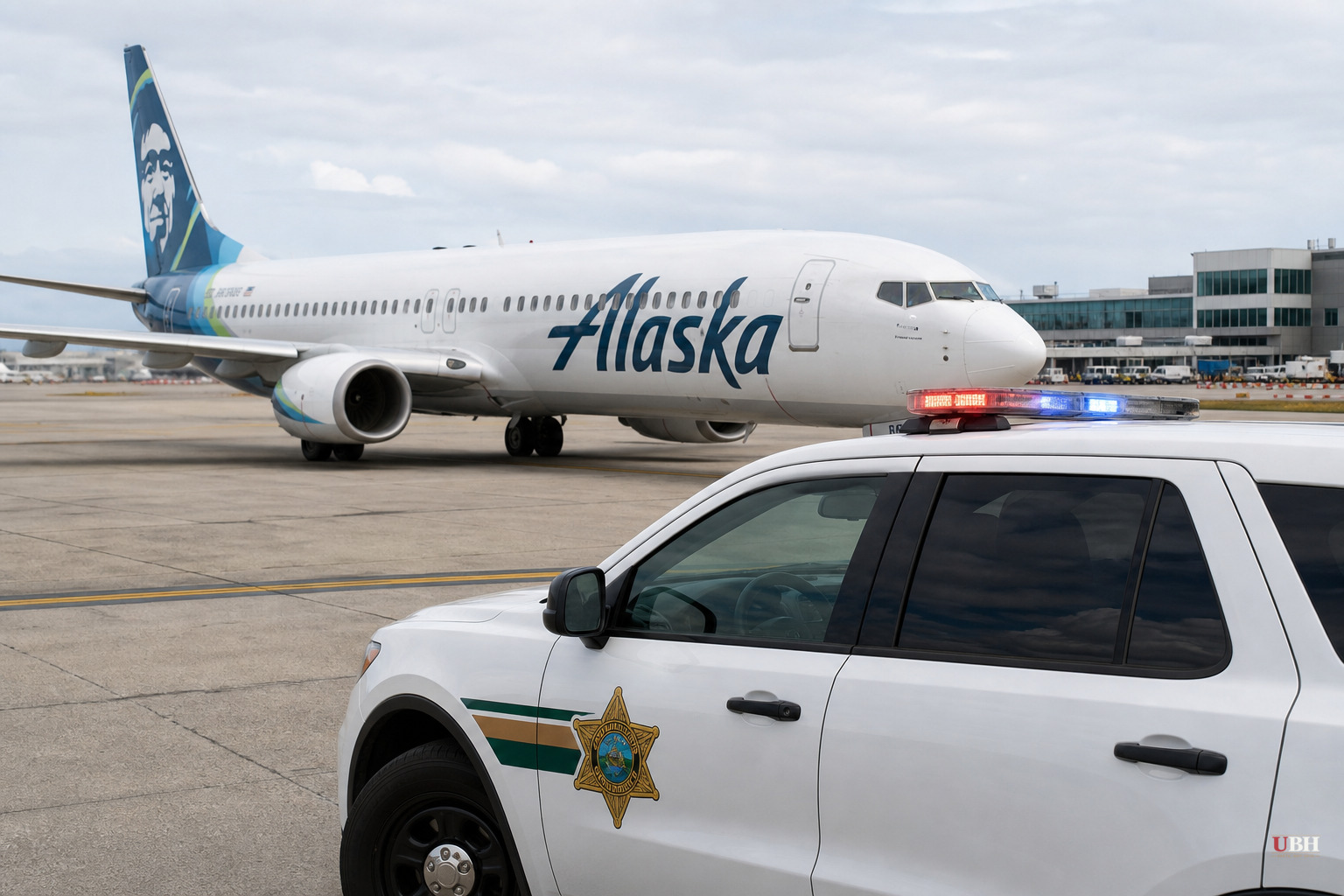
Alaska Airlines Flight 305 was taxiing out of Miami International Airport Sunday evening, August 9, when the pilots slammed on the brakes over what they called a "customer disturbance."
Air traffic control audio, first circulated on X and picked up by outlets including CBS News and the New York Post, captures the moment clearly. "We have set the parking brake and we have a customer disturbance on board right now with threats coming from customers," the pilot told controllers. "We want to go into a lockdown protocol, we're shutting down our engine."
The pilot told controllers the threat came from flight attendants who reported that a passenger had threatened to "take the aircraft over," according to the audio. When controllers asked if law enforcement was needed, the pilot didn't hesitate. "Absolutely," he said.
The plane had already disconnected from its pushback tug. Ground crews had to reattach the tug before the Boeing 737 could be towed back to the gate, according to AeroXplorer. That created a delay while the cockpit stayed locked and the crew waited it out.
What actually happened on the ground
Miami-Dade Sheriff's Office Airport District deputies responded to the gate around 6:40 p.m., according to the aviation site Paddle Your Own Kanoo. Passengers were deplaned "out of an abundance of caution" while deputies investigated.
After that investigation, the sheriff's office reached a clear conclusion: nothing there. "The investigation determined there was no credible threat," the agency told Paddle Your Own Kanoo. Two individuals connected to the disturbance were rebooked onto a different flight. Everyone else reboarded, the aircraft got cleared, and Flight 305 continued on to Seattle without further incident.
Alaska Airlines confirmed the basic timeline in a statement to Paddle Your Own Kanoo, saying two guests "were disruptive during the aircraft's taxi" and that the plane "returned to the gate where it was met by law enforcement." The airline said it was working to rebook affected passengers.
Where the reporting differs
Most outlets are working from the same air traffic control recording, so the core facts line up: a disturbance, a lockdown call, a tug reattachment, deputies at the gate, no credible threat found. But there's a real gap between what got broadcast in real time and what got confirmed afterward.
CBS News Miami was careful to flag that gap directly, noting in its report that it "has not independently confirmed the circumstances surrounding the reported threats." That's an important caveat. Everything about what the passengers allegedly said comes secondhand, through the pilot relaying what flight attendants told him, not from any released transcript of what was actually said in the cabin.
The New York Post's headline framing, that passengers "threatened to take over the jet," states the allegation as reported fact rather than as an unconfirmed claim relayed through radio traffic. Hindustan Times took a more cautious tack, explicitly noting it "cannot independently confirm the exact nature of those reported threats" even while relaying the same audio.
No outlet has published the names of the two passengers involved. No charges have been announced by Miami-Dade Sheriff's Office as of this reporting, and no source indicates one is coming. The sheriff's office language, "no credible threat," is a factual finding by the agency that investigated. Deputies were the ones who cleared the plane to fly.
The reasonable question here
A fair-minded skeptic could ask why an unconfirmed, secondhand report of someone threatening to "take over" an aircraft—the kind of language that in a post-9/11 world triggers immediate lockdown protocols—doesn't produce any public account of what was actually said or who said it. Air travelers deserve to know whether "threat to take over the plane" meant something specific and alarming or got garbled in translation from passenger to flight attendant to captain to air traffic control.
Based on what's public right now, the specific words spoken in that cabin have not been made public by any outlet, the sheriff's office, or Alaska Airlines. Deputies investigated and found no credible threat, which is a real, sourced conclusion.
Flight 305 landed in Seattle without further incident. The two rebooked passengers presumably flew separately. Whether Miami-Dade Sheriff's Office releases any further detail, including whether the disruptive passengers face any civil penalties from Alaska Airlines such as a no-fly designation, remains unannounced as of Monday, August 10.
Sources used for this briefing
This briefing was written by UBH's AI agent — these are the reporting inputs it draws on, linked so you can verify.


