
Unbiased headlines. Facts, not spin.
Unbiased Headlines is an independently owned news organization. We bring you the facts, not opinions, written fresh from 110+ named sources. Sources linked so you can verify it yourself.
 energy
Notable (5/10)
Event date: November 6, 2026 ·
Alabama Regulators Vote 3-0 to Ask Alabama Power to Stop Billing Customers for Ads
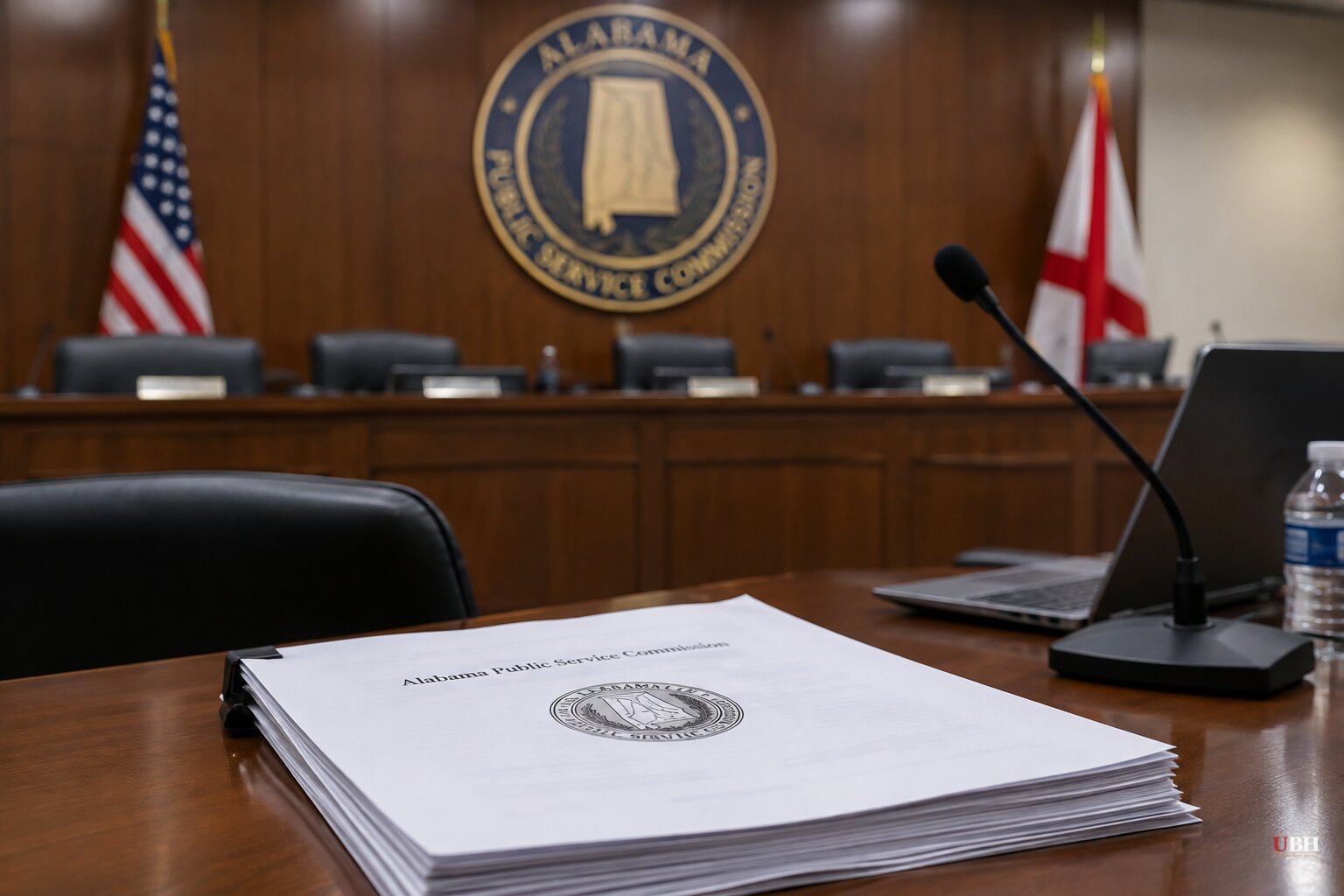
The Alabama Public Service Commission wants Alabama Power to stop charging customers for its advertising. It cannot make the company do it yet.
On Tuesday, Nov. 3, the commission voted 3-0 to request that the utility voluntarily exclude all advertising expenses from retail rate setting until after Dec. 31, 2028. A state law taking effect Jan. 1, 2029 will bar the practice anyway.
A motion that was not on the agenda
PSC President Cynthia Lee Almond made the motion after the regular report from the commission's electricity division. It was not on the published agenda. Commissioners Jeremy Oden and Chris Beeker IV voted yes after a brief discussion.
"I don't see any reason why we shouldn't go ahead and take steps now to begin that process, rather than waiting until Jan. 1, 2029," Almond said.
If Alabama Power consents, the exclusion would show up in its Rate Stabilization and Equalization filings for 2027 and 2028. Those filings help set the company's retail rates.
What customers pay now
Alabama Power is the state's largest electricity provider and covers about two-thirds of Alabama. It is a monopoly for that territory, yet it still buys television spots and other ads.
Under current rules, the company may bill customers for half of its non-public-safety advertising costs. The charge is folded into rate calculations. It does not appear as a separate line on a bill.
Federal Energy Regulatory Commission filings show Alabama Power spent more than $6 million on general advertising in 2025, roughly $4 per customer. The filings do not show how much of that was passed to customers or how much the new restrictions would affect.
In recent months the company has run a series of TV commercials promoting a rate freeze it announced in late 2025, amid heavy criticism over rising electricity prices.
The 2029 law
The law is HB 475, the Power to the People Act, passed earlier this year. Starting Jan. 1, 2029, regulated electric utilities may not include advertising costs when calculating new or changed rates. The exception is public-safety advertising approved by the PSC. The law also excludes certain lobbying costs and outside funding or grants that affect rates.
Utilities must affirm that their rate filings leave out the barred costs. Without that statement, the rate or service rule is void. If the PSC finds prohibited costs in a rate calculation, the law requires an investigation.
The commission's request goes further than the statute for the interim period. It seeks to exclude all advertising expenses, not just the categories the law will cover.
The backdrop
Inside Climate News reported earlier that Alabama Power earned $1.4 billion in profit in 2024, nearly double the $712 million it made in 2013. In the same analysis of the 100 largest U.S. electric utilities, none had a higher average total residential electric bill than Alabama Power in 2024. Its average residential rate of 16.77 cents per kilowatt-hour compared with a national average of 16.48 cents.
Daniel Tait, executive director of Energy Alabama, praised the vote. "We are grateful for the leadership of President Almond and the full commission for acting to end customers paying for Alabama Power's advertising," he said. In a Facebook post, the group noted the company can keep advertising if it consents. "It just has to pay for the advertising out of its other money and not charge it to customers."
Alabama Power did not immediately respond to a request for comment. No public acceptance of the request had been reported as of Nov. 6.
A commission about to change
The vote comes as the commission prepares for a major shake-up. In January 2027 it expands from three members to seven, with four newly appointed commissioners joining. Oden and Beeker are due to leave after losing Republican primary races. Almond will be the only member of the current commission who remains.
That timing leaves the request resting on the company's cooperation. It is also an open question whether the incoming seven-member commission will press the issue if Alabama Power says no.
The next concrete marker is the company's 2027 Rate Stabilization and Equalization filing. It will show whether advertising costs were left out of customer rates before the law required it.
Sources used for this briefing
8 links from 8 independent newsrooms (syndicated copies of the same report count once)
These are the sources it draws on, linked so you can verify.


