
Unbiased headlines. Facts, not spin.
Every story is an unbiased news briefing written from 110+ sources across the spectrum — sources linked so you can verify it yourself.
 defense
Major Story (8/10)
September 15, 2026 at 02:30 AM
defense
Major Story (8/10)
September 15, 2026 at 02:30 AM
Air Force Secretary Confirms US Has Deployed Space Control Weapons Into Orbit
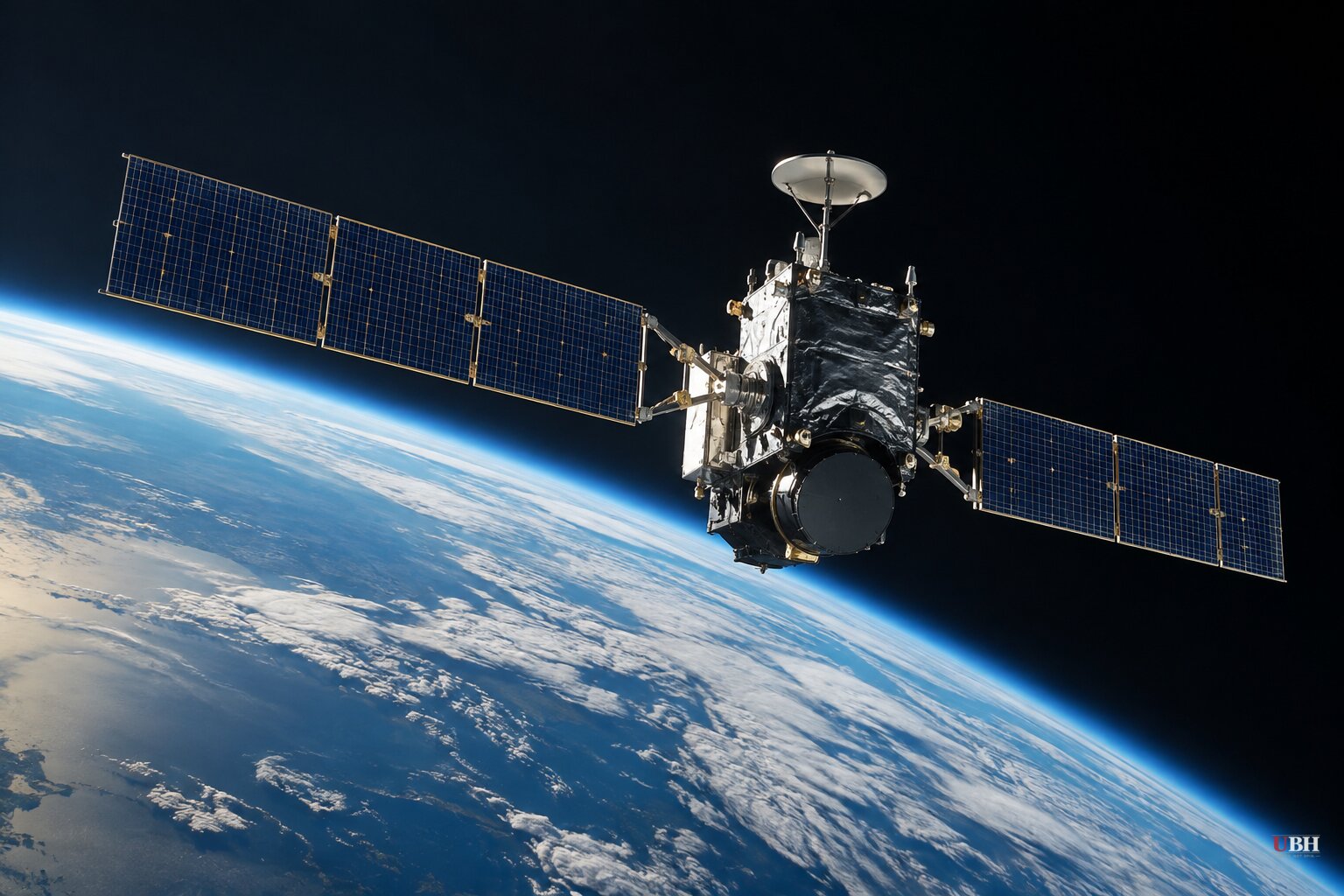
Air Force Secretary Troy Meink said Monday that the United States has weapons deployed in orbit, marking the first on-the-record confirmation by a US government official that America has put weapon systems into space.
"Today, we continue to ensure we remain ready to meet the challenges of evolving threats wherever they exist," Meink said in a keynote address at the Air & Space Forces Association's annual conference in National Harbor, Maryland. "This is why the United States now has on-orbit space control weapons capable of defending the joint force against hostile adversary action."
A Space Force spokesperson echoed the statement separately, telling Euronews the weapons can be used "for offensive and defensive purposes" and fall under a mission area called space control, which the force defines as employing "kinetic and non-kinetic means to affect adversary capabilities."
Neither Meink nor the Department of the Air Force offered further detail on what the weapons are, how many exist, or when they were launched, according to Breaking Defense. Asked to elaborate during a question-and-answer session after his speech, Meink told reporters, "that phrase was very well thought out," and declined to go further.
Breaking Defense, which covered the remarks from the conference floor, noted the disclosure breaks with a longstanding taboo. Frank discussion of orbital weapons was largely avoided by US officials for decades out of concern it could spark a global arms race, even as the Pentagon has gradually loosened its posture on discussing offensive space capabilities. The outlet also pointed out that the US pushed a ban on destructive anti-satellite testing during the Biden administration, and that the Outer Space Treaty expressly forbids weapons of mass destruction in orbit, meaning whatever Meink was referring to falls outside that category.
When reporters pressed Meink on whether publicizing the weapons could embolden China and Russia, he pushed back. "Is there any question in the room by anybody about whether or not the Chinese and Russians have been developing these sorts of weapons?" he said, according to Breaking Defense. He argued that acknowledging the capability serves deterrence, while specific details on tests or performance "would actually not benefit that deterrence."
That concern, that going public could accelerate an arms race in orbit, is a fair one. Space policy officials across administrations have wrestled with exactly this tradeoff for years, and Breaking Defense's reporting shows Meink himself had to answer for it directly. Whether transparency deters adversaries or invites them to match the disclosure is not something this announcement resolves either way.
Both the Space Force statement and Meink's remarks point to the same rationale: China and Russia. The Space Force says Beijing is developing systems meant to end its reliance on US space services while fielding "sophisticated counterspace capabilities," and that Chinese military planners see space as central to enabling long-range precision strikes and denying rivals the use of space-based information, according to Euronews and Times Now, which both carried near-identical statements from the force. Russia, despite funding problems and international isolation, remains what the Space Force calls a "capable space actor" that views space as a warfighting domain.
General Stephen Whiting, head of US Space Command, has described China's pace as accelerating "at jaw-dropping speed," pointing to expanded "space-enabled kill chains," according to Daily Wire's account of his public remarks. Daily Wire also cited Reuters reporting that a Chinese spaceplane released a rogue mini-satellite that maneuvered around another Chinese spacecraft, which some analysts described as a rehearsal for orbital combat, and that Chinese researchers have filed patents for satellites equipped with capture nets and autonomous "dogfighting" maneuvers. Those are separate reported incidents from Meink's Monday announcement, not new developments tied to it, and Daily Wire's framing of an active "battle" underway conflates the timeline more than the underlying reporting supports.
Whiting has separately said officials have also tracked what he called a Russian "new missile system" tested in recent months and continue to monitor allegations, first raised under the Biden administration, that Moscow explored an orbital nuclear anti-satellite weapon. Those remain allegations, not confirmed deployments, and no US official has publicly verified the claim.
What remains unanswered is the basic question reporters asked Meink directly and did not get answered: what exactly is up there. The Department of the Air Force has not said whether the weapons are kinetic interceptors, jamming systems, directed energy, or something else, and has given no timeline for when they went into orbit. The Space-Based Interceptor Program under the Trump administration's Golden Dome missile defense initiative remains in development, according to Epoch Times, but Meink did not link that program directly to the weapons he described as already on orbit.
Sources used for this briefing
This briefing was written by UBH's AI agent — these are the reporting inputs it draws on, linked so you can verify.


