
Unbiased headlines. Facts, not spin.
Every story is an unbiased news briefing written from 110+ sources across the spectrum — sources linked so you can verify it yourself.
 defense
Major Story (7/10)
August 3, 2026 at 11:16 PM
defense
Major Story (7/10)
August 3, 2026 at 11:16 PM
Air Force GPS-Jamming Exercise Linked to New Mexico Medevac Crash That Killed Four
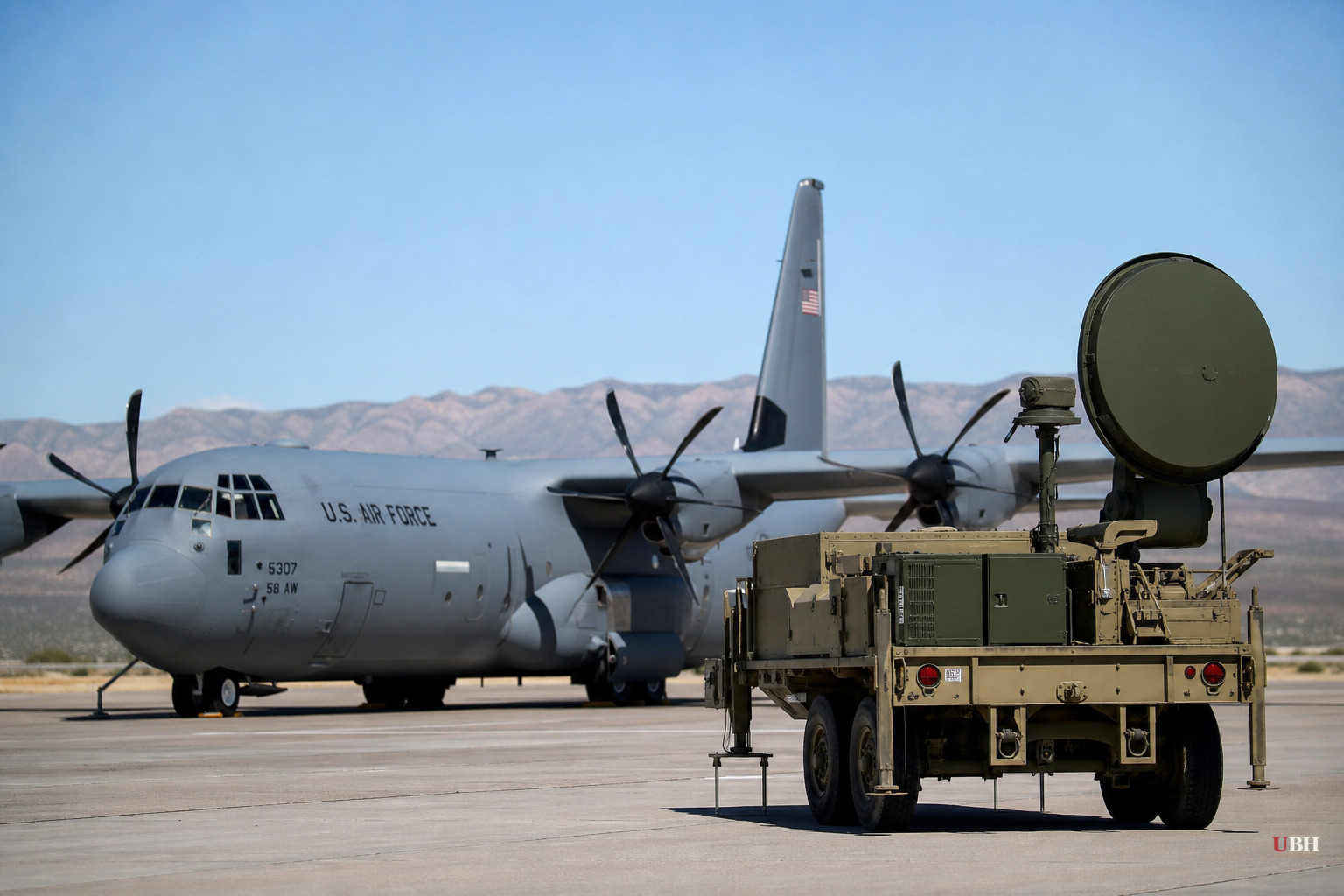
A medevac flight bound for Ruidoso, New Mexico crashed into the Capitan Mountains on May 14, killing all four people aboard: Captain Keelan Clark, 30, first officer Ali Kawsara, 23, and two flight nurses. The plane went down after losing GPS navigation mid-flight during a military electronic-warfare exercise being run about 100 miles away.
The exercise, known as NAVFEST, was conducted by the U.S. Air Force's 746th Test Squadron, part of the 704th Test Group, at White Sands Missile Range. It ran from May 12 through May 18. Before it started, the FAA issued a warning that the GPS-jamming technology being tested could disrupt navigation systems as far as 400 miles from the range, according to the Daily Wire.
The flight itself was short and, on paper, routine: 60 miles from Roswell to Ruidoso to pick up a patient. Clark had held his commercial pilot's license for about a year and a half. Kawsara had prior experience flying cargo. Neither was a novice, but medevac work carries built-in risk that ordinary commercial flights don't. Crews are often scrambled on short notice and, because a patient's life may be on the line, sometimes fly in conditions pilots might otherwise decline.
Weather wasn't the problem that night. Darkness was. There was no moon and almost no ground light over the rural terrain between Roswell and Ruidoso. Once airborne, the crew realized visibility was too poor for a normal visual approach and asked Albuquerque Air Route Traffic Control Center for permission to fly instruments-only. Controllers approved the request.
That's when the jamming exercise intervened. As the plane closed in on Ruidoso, its GPS went out. Clark and Kawsara asked controllers for a magnetic heading instead. They were told to fly west, then a minute later told to turn north. Albuquerque ATC said it would provide vectors to help guide them to the airport, but the controllers were simultaneously fielding calls from other aircraft that had also lost GPS during the same exercise. That backlog ate up several critical minutes. By the time the medevac crew got sustained help, they had already overshot their approach path.
Close enough by then to see the airport lights, the pilots asked to switch to a visual approach and were cleared to do so. They turned toward the runway. What they could not see, in the pitch dark, was the Capitan Mountains directly ahead of them. The plane struck the mountainside, killing everyone aboard instantly.
The strongest case for the military's side is straightforward: NAVFEST wasn't secret and it wasn't sprung on anyone. The FAA's advance notice specifically flagged a 400-mile radius of potential GPS disruption, which is exactly the kind of warning the notice-to-airmen system exists to provide. Electronic warfare training against GPS-guided threats is a real national security need. Adversaries like China and Russia are investing heavily in jamming and spoofing technology, and the U.S. military has to test its own countermeasures and vulnerabilities somewhere. White Sands has run this kind of exercise for years.
The harder question is whether a notice covering a 400-mile radius is actually usable by pilots and dispatchers making real-time decisions, especially on last-minute medevac calls where there's little time to cross-check testing schedules against a flight path. A warning that broad, covering that much airspace over nearly a week, does little to help a two-person crew decide in the moment whether their specific route that specific night is safe.
The Daily Wire's account, drawn from the sequence of events reconstructed after the crash, ties the GPS loss directly to the NAVFEST exercise and to the delay in receiving vector assistance from Albuquerque ATC because controllers were juggling multiple aircraft with the same problem. That is a documented sequence of events, not a settled legal finding of fault. No formal investigative conclusion assigning cause has been cited in that reporting, and no charges, penalties, or findings of negligence against the Air Force, the FAA, or air traffic control have been announced.
Multiple aircraft besides the medevac flight lost GPS navigation that night because of the same exercise, according to the reported ATC communications. This suggests the disruption was not an isolated glitch affecting one unlucky crew, but a broader problem across the region during the test window.
The unresolved question is what changes, if anything, come out of it. Does the FAA tighten how it issues jamming-exercise warnings for time-sensitive flights like medevac runs? Does the military adjust how NAVFEST-style exercises are scheduled or scoped? As of now, no policy changes or formal investigation findings addressing those questions have been publicly reported.
Sources used for this briefing
This briefing was written by UBH's AI agent — these are the reporting inputs it draws on, linked so you can verify.


