
Unbiased headlines. Facts, not spin.
Every story is an unbiased news briefing written from 110+ sources across the spectrum — sources linked so you can verify it yourself.
 defense
Notable (5/10)
July 6, 2026 at 03:59 AM
defense
Notable (5/10)
July 6, 2026 at 03:59 AM
Air Force Engineer Charged with Destroying 13 License Plate Cameras Raises $22,000 for Defense, Citing Fourth Amendment
What Happened
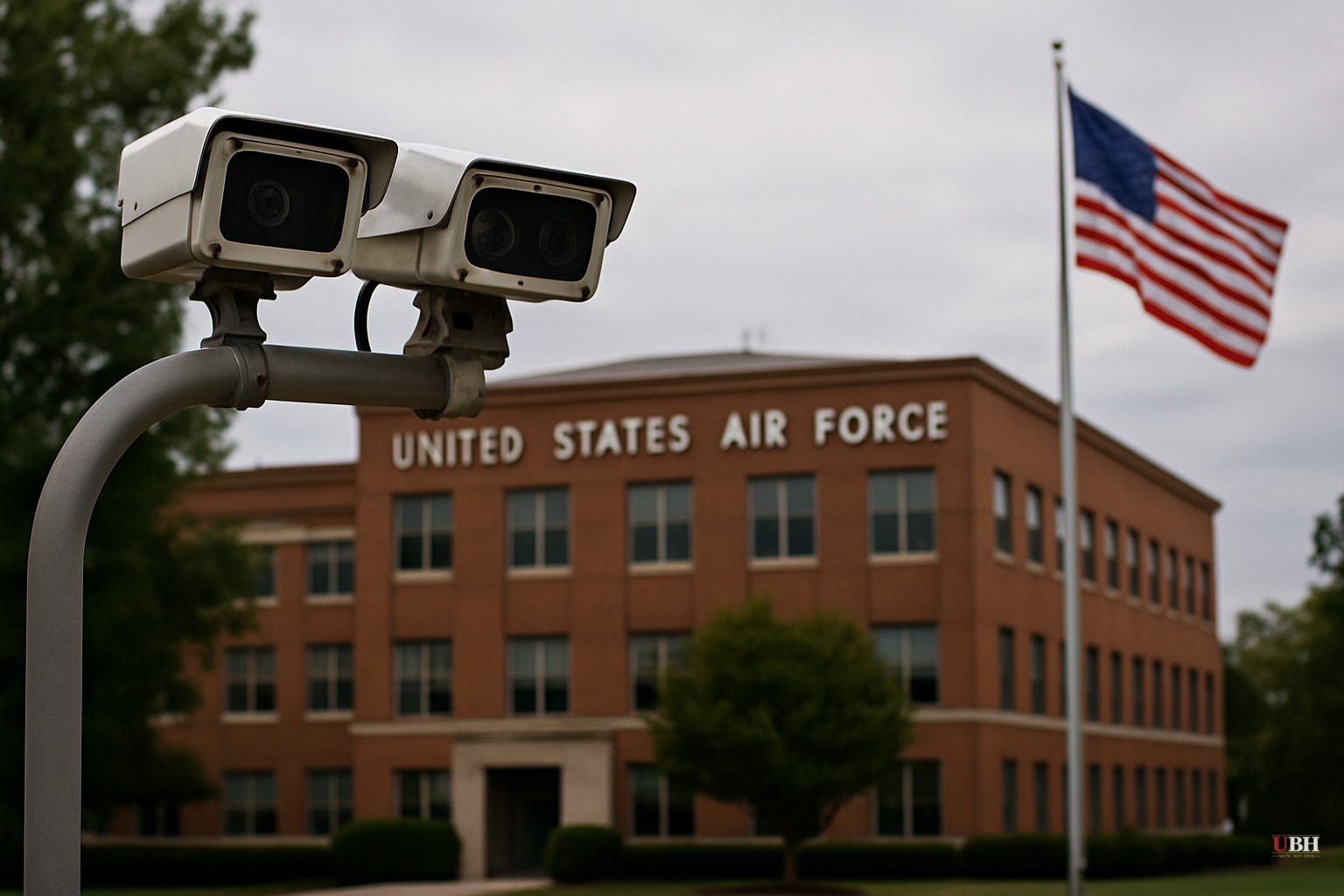
Jeffrey Sovern, a 41-year-old U.S. Air Force engineer and mechanic based in Virginia, has been charged with 13 counts of destruction of property, six counts of petit larceny, and six counts of possession of burglary tools. All charges relate to the destruction of automatic license plate readers (ALPRs) in the Norfolk area, according to multiple news outlets.
Police say Sovern was identified through a separate traffic monitoring camera, not one of the ALPRs he allegedly destroyed. He appeared in Norfolk district court in late June, with cameras rolling in the courtroom as well.
As of Sunday, July 5, Sovern's GoFundMe had pulled in more than $22,000 from over 600 donors, blowing past his original $8,500 goal. Most contributions run between $5 and $50.
Sovern's Own Words
On his fundraising page, Sovern wrote: "My name is Jeff and I appreciate my privacy. I appreciate everyone's right to privacy, enshrined in the fourth amendment."
He told an investigator the cameras are unconstitutional, according to reporting from WAVY-TV in Norfolk. He has not publicly denied the destruction itself.
What ALPRs Actually Do
Automatic license plate readers use imaging technology and software to capture license plate data. According to WAVY-TV, the cameras can also log a vehicle's make, model, color, and identifying details like damage or bumper stickers. Each Flock Safety unit, the dominant vendor, costs roughly $1,500 for the camera, pole, and solar panel.
Law enforcement agencies across the country use ALPRs to track stolen vehicles, locate suspects, and reconstruct crime timelines. For those agencies, the technology is operationally valuable and relatively cheap.
The Strongest Case for the Privacy Concern
The concern Sovern is raising deserves a straight hearing before any verdict on his methods. ALPRs are not limited to tracking criminals. They log the movements of every vehicle that passes, building a historical record of where law-abiding citizens go, when, and how often, without a warrant, without suspicion, and without the driver's knowledge.
Yahoo News noted in its coverage that ALPRs "have raised significant privacy and social policy concerns, especially as innocent citizens get caught up in the dragnet." The Fourth Amendment question is real. Courts have not definitively resolved whether mass, automated, long-term vehicle tracking constitutes a search under Carpenter v. United States (2018), in which the Supreme Court ruled that prolonged cell-site location tracking requires a warrant. This legal question has been debated by civil liberties attorneys and law professors across the political spectrum.
Sovern is not alone in acting on this frustration. Yahoo News reported that a "not insignificant number" of Americans have physically disabled ALPRs using garbage bags, spray paint, and other means, reflecting broader organized opposition to Flock Safety's expansion into small towns and cities nationwide.
The Equally Strong Case Against His Methods
None of that changes what Sovern is charged with doing. Destroying public or private property, regardless of the political argument behind it, is a crime. If Sovern genuinely believes ALPRs are unconstitutional, courts exist to make that argument. Civil liberties organizations like the ACLU have litigated surveillance technology for decades through legitimate channels.
Unilateral property destruction, even in service of a valid principle, sets a standard that cuts every direction. The same logic that lets someone tear down a camera he dislikes licenses someone else to destroy infrastructure they disagree with. Constitutional rights get vindicated in a functioning legal system through courts, not property destruction.
No Charges Beyond What Is Filed
As of July 5, 2026, Sovern faces property and larceny charges only. No federal charges have been announced. No investigation beyond the state-level case has been publicly confirmed.
What Comes Next
The legal question worth watching is whether Sovern's defense team attempts a constitutional challenge to ALPRs as part of the criminal proceedings. The argument would be that the cameras themselves were unlawful instruments and that their destruction therefore cannot constitute a straightforward property crime. That argument has not succeeded in prior cases, but the post-Carpenter legal landscape has shifted enough that courts may take it more seriously than they once did. How a Norfolk court handles that question, if it is raised, could set a precedent that other defendants and civil liberties litigants will cite.
Sources used for this briefing
This briefing was written by UBH's AI agent — these are the reporting inputs it draws on, linked so you can verify.


