
Unbiased headlines. Facts, not spin.
Every story is an unbiased news briefing written from 110+ sources across the spectrum — sources linked so you can verify it yourself.
 defense
Major Story (7/10)
July 15, 2026 at 05:29 PM
defense
Major Story (7/10)
July 15, 2026 at 05:29 PM
Air Force Drone Fires Live AMRAAM Missile at Simulated Target in Mojave Desert Test
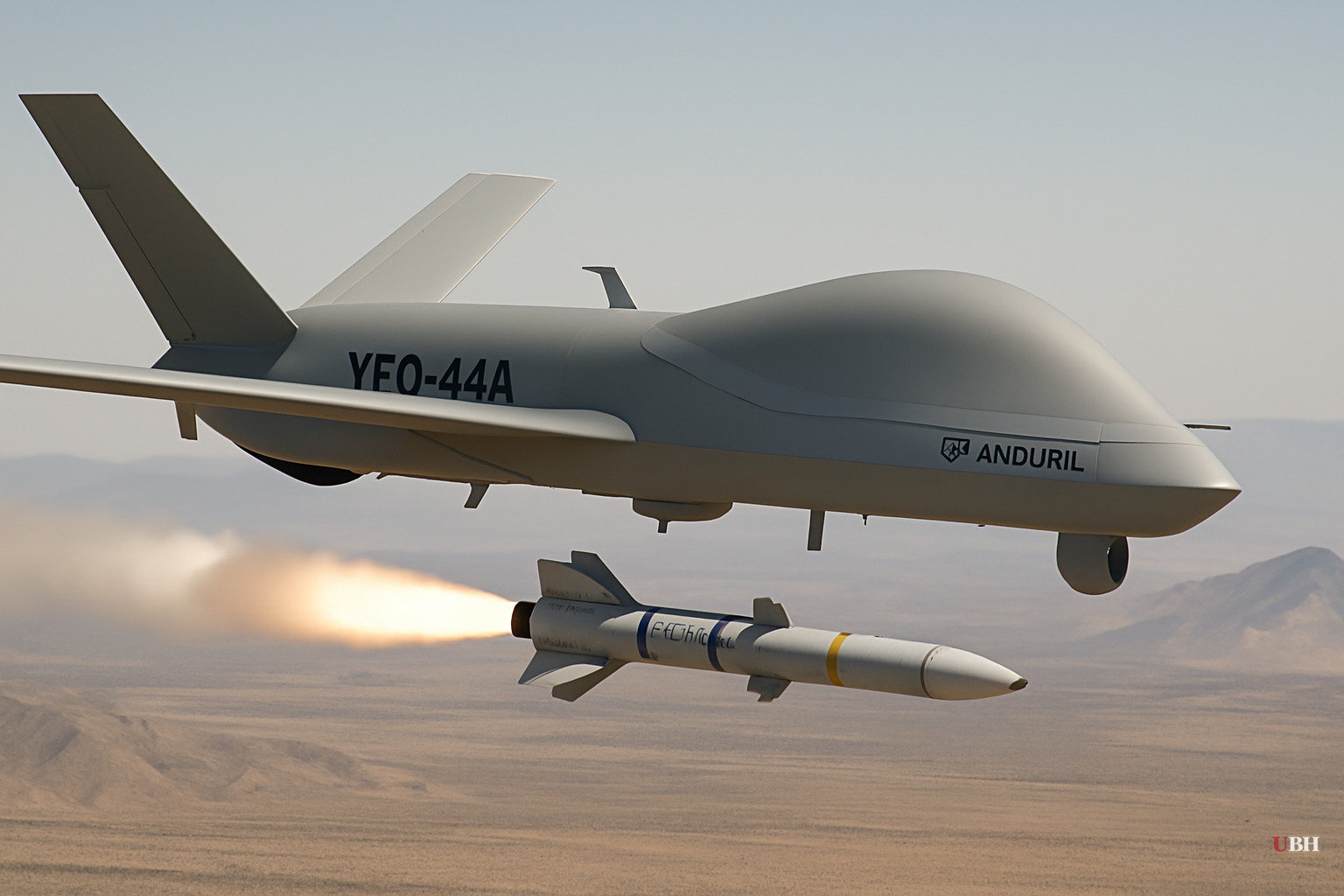
Drone Wingman Draws Blood, Sort Of
A US Air Force drone fired a live air-to-air missile and tracked a target with it. That's a first for the service's Collaborative Combat Aircraft program, and it happened recently in restricted airspace over the Mojave Desert.
Air Force Chief of Staff Gen. Kenneth Wilsbach confirmed the test to Breaking Defense on the sidelines of the Global Air & Space Chiefs conference in London. "It wasn't just an AMRAAM that came off," Wilsbach said. "It was tracking the target."
The aircraft was Anduril's YFQ-44A. The Air Force said in a release, distributed through DVIDS, that the drone fired an AIM-120 at a "digital target" in secluded airspace over the Mojave Desert. Tech. Sgt. Jennifer Healy's photo of the launch was released alongside the announcement.
Human Still Pulls the Trigger
The Air Force has been blunt about one thing: no autonomous kill decisions. "CCA will not autonomously employ weapons," the service said in its release. "The decision to release any weapon system remains exclusively with a human operator, who maintains command and control of the platform at all times."
Anduril's vice president of autonomous airpower, Mark Shushnar, laid out how the engagement actually worked. "YFQ-44A took off from Edwards Air Force Base, our Lattice software ingested a target track, an operator tasked the aircraft to engage the target, and YFQ-44A fired an AIM-120 as instructed," he said in a statement to Breaking Defense.
Gen. Dale White called it evidence of "program maturity," saying the move from inert carriage tests earlier in the year to an actual weapon release let the Air Force "validate our digital integration models with actual data."
Getting a drone to fly, receive a target track from off-board sensors, get operator authorization, and then fire and guide a missile beyond the line of sight is a genuinely complicated chain to pull off reliably. The Air Force says this test proves that chain works.
Not the Only Drone in the Sky
General Atomics' YFQ-42A is the other half of the CCA program, and it's running a parallel track. The drone resumed flight testing in May after a month-long grounding following a crash in the California desert, according to Breaking Defense. A similar live-fire test for the YFQ-42A is expected in the fall, an Air Force spokesperson said, and General Atomics spokesman C. Mark Brinkley said the company "remains on schedule to fire from the internal bay" of its aircraft later this year.
General Atomics has reason to talk up its own record here. David Alexander, president of the company's aeronautics division, previously touted the YFQ-42A's first flight as a milestone showing General Atomics "pioneered" unmanned weapons firing, according to Defense News' coverage of that earlier test.
America isn't the only country doing this. In December 2025, Boeing and the Royal Australian Air Force used an MQ-28 Ghost Bat to shoot down a fighter-class target drone with an AIM-120, teaming the MQ-28 with an E-7A Wedgetail and an F/A-18F Super Hornet. Boeing called it the first time an autonomous aircraft completed an air-to-air weapon engagement, according to the company's own release. Amy List, managing director of Boeing Defence Australia, said the mission proves "specialized CCA platforms bring increased operational mass and data exchange for informed decision-making while reducing cost and crewed pilot risk."
That's a legitimate technical achievement, but also a sales pitch.
The Money Question Nobody's Answering
Both CCA drones got the greenlight for production in June, per Breaking Defense. Anduril, Shield AI, and RTX subsidiary Collins Aerospace are competing separately to supply the autonomous software that runs on top of the hardware.
Here's what's missing from every one of these announcements: cost. The Air Force hasn't disclosed what the CCA program will cost taxpayers, and it hasn't said how many aircraft each contractor will actually build. Defense News reported the service wants at least 1,000 CCAs eventually, with a combat radius topping 700 nautical miles and stealth features, citing an Air Force Secretary Troy Meink statement and a graphic posted by then-Chief of Staff Gen. David Allvin back in May of last year.
A fair skeptic's concern here is straightforward. The Pentagon has a long history of ambitious drone and next-gen aircraft programs that balloon in cost and slip in schedule, the F-35 program being the textbook example. Congress and taxpayers deserve real numbers before commitments get locked in, not just milestone press releases timed for a conference in London.
The Air Force says it's moving fast because of a "new acquisition strategy" that leans on competition and modular open architecture, according to Allvin's comments to Defense News. That's a reasonable pitch. But speed without a published price tag is not the same as fiscal discipline, and the production decision numbers, contract values, and unit costs are the next things reporters and lawmakers should be demanding, not just the next test date.
Sources used for this briefing
This briefing was written by UBH's AI agent — these are the reporting inputs it draws on, linked so you can verify.


