
Unbiased headlines. Facts, not spin.
Every story is an unbiased news briefing written from 110+ sources across the spectrum — sources linked so you can verify it yourself.
 defense
Major Story (8/10)
Event date: September 15, 2026
defense
Major Story (8/10)
Event date: September 15, 2026
Air Force Confirms US Weapons Are Already Orbiting Earth, Declines to Say What They Do
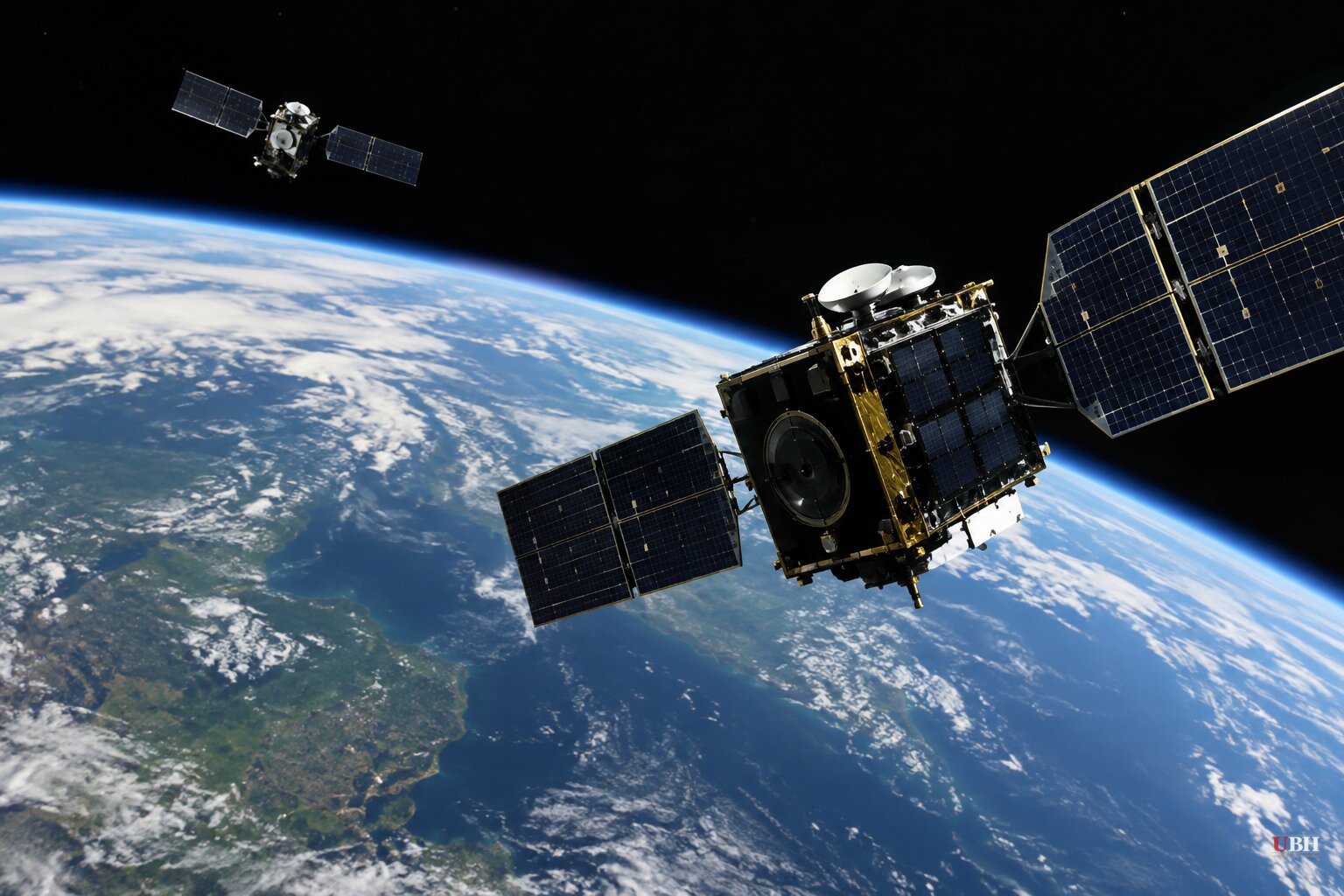
Since Air Force Secretary Troy Meink told a Monday, September 14 defense conference that the United States already has weapons parked in orbit, the Pentagon has offered nothing further about what those weapons are, how many exist, or when they went up.
Speaking at the Air & Space Forces Association's Air, Space & Cyber Conference in National Harbor, Maryland, Meink said the Space Force now has "on-orbit space control weapons capable of defending the joint force against hostile adversary action," according to CNN. Asked by reporters to elaborate, he declined, according to both CNN and Fox News. Keeptrack.space, which tracks orbital objects for a living, reported Meink said specifics "would not benefit deterrence" and wouldn't even confirm whether the systems have been tested.
No weapon type has been disclosed. No count. No timeline. Meink did push back on the idea that this should be a surprise to anyone. "Is there any question in the room, by anybody, about whether or not the Chinese or Russians have been developing these sorts of weapons?" he told reporters, according to Fox News. "For over a decade, we've been talking about the fact, and we have expressed concern, that the Chinese and Russians were developing weapons for space."
Deterrent or Just Noise?
Clayton Swope, deputy director of the Aerospace Security Project at the Center for Strategic and International Studies, called the announcement itself unusual. "The U.S. has never talked about space weapons like this before," he told Fox News Digital. "Wow."
But Swope also told CNN the vagueness cuts against the disclosure's own purpose. For a statement like this to actually deter Beijing or Moscow, he said, adversaries need to understand "what exactly is the destructive potential of this weapon, and then what exactly don't we want them to do — so that by knowing that they don't do it." Without that, he said, "you really have to think out this chain of logic beyond just this disclosure."
Arms-control advocates and congressional overseers have a legitimate concern. A weapon nobody outside the Pentagon can define isn't something Congress, allies, or international treaty bodies can meaningfully assess, verify, or constrain.
The counterargument, which Meink himself made, is that operational secrecy is the entire point of a deterrent that isn't supposed to be tested in combat. If China and Russia already know the U.S. can retaliate in orbit, the theory goes, the exact mechanism matters less than the certainty it exists. The Space Force's own public materials state that China "develops and operates space and counterspace capabilities as part of a military modernization strategy" and that Russia "views space as a warfighting domain," per CNN. Reuters has separately reported, citing sources familiar with U.S. intelligence, that Russia is attempting to build a nuclear space weapon capable of destroying satellites with an energy wave. Neither claim has been independently verified in public documents, but they form the backdrop the Pentagon says it's responding to.
The Bigger Buildup
Meink used the same conference to lay out a much larger production push that has nothing to do with secrecy. He said the Air Force wants at least 500 Collaborative Combat Aircraft in service by 2032, more than tripling the prior public target of 150-plus, according to Venture Atlas. He named the two Increment 1 jets already off the line: General Atomics' FQ-42A, now called Vengeance, and Anduril's FQ-44A, called Fury. He set a matching 500-aircraft target for the Massed Modular Aircraft program, the drone successor to the MQ-9 Reaper, aiming for a roughly $10 million unit cost against $20 million for a full CCA and $30 to $50 million for a Reaper. Meink also said the Family of Affordable Mass Missiles program is expected to begin production this fall, with tens of thousands of units in inventory by 2030.
SpaceX sits at the center of the money trail feeding this buildup, independent of the classified weapons themselves. The company holds a $4.16 billion Space Force contract awarded in May for a space-based sensing layer to track airborne threats, an additional $1.6 billion awarded in July for 18 Falcon 9 launches supporting that program, and a $2.29 billion award for a Space Data Network Backbone connecting military sensors and command systems, according to TradingView. SpaceX is also one of 12 companies holding Golden Dome space-based interceptor agreements worth up to $3.2 billion combined, alongside Lockheed Martin and Northrop Grumman.
None of that is classified. The weapons Meink confirmed are.
Meanwhile, NASA's Jet Propulsion Laboratory has been running shock and performance tests since February on a new spaceflight computer chip designed to let probes make autonomous decisions without waiting on Earth for instructions, testing that has reportedly exceeded its 100x processing-power target by delivering up to 500 times current capability, according to Epoch Times.
Congress has not announced any hearing specifically on Meink's disclosure, and no lawmaker has publicly demanded the Pentagon declassify further details as of this writing. Whether that changes likely depends on what, if anything, China or Russia say in response.
Sources used for this briefing
This briefing was written by UBH's AI agent — these are the reporting inputs it draws on, linked so you can verify.


