
Unbiased headlines. Facts, not spin.
Every story is an unbiased news briefing written from 110+ sources across the spectrum — sources linked so you can verify it yourself.
 defense
Notable (6/10)
July 28, 2026 at 02:57 PM
defense
Notable (6/10)
July 28, 2026 at 02:57 PM
Air Force Commander Says Pacific Exercises Are Getting Cut to Save Readiness for Middle East, Global Demands
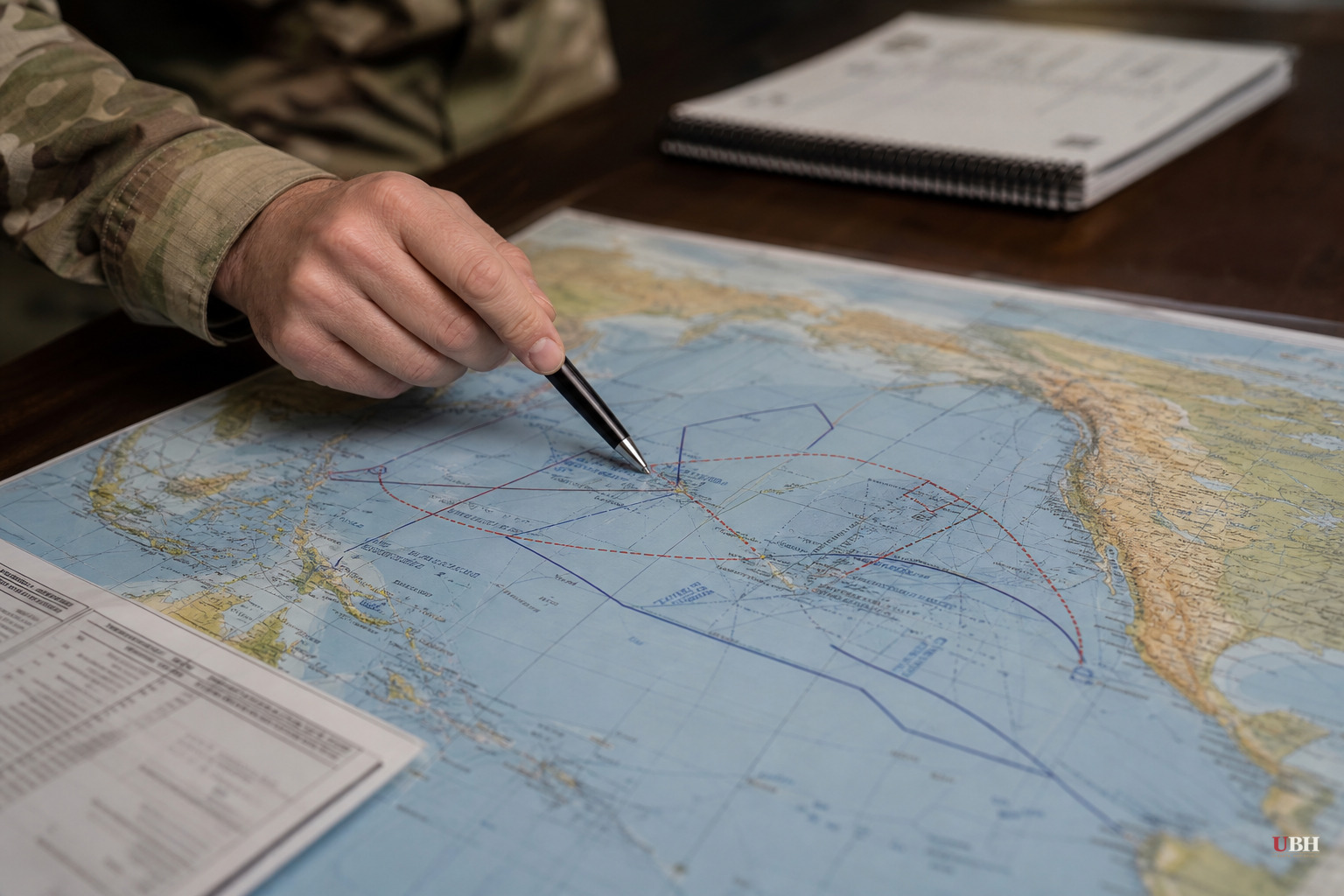
Gen. Kevin Schneider, the four-star commander of US Pacific Air Forces, says his command is cutting back on regional military exercises to protect what he calls "readiness" as American forces get stretched thinner across multiple theaters.
Schneider laid out the thinking Monday during a Mitchell Institute for Aerospace Studies event in Washington, according to Breaking Defense. He said PACAF typically issues task orders for about 45 exercises a year, ranging from Valiant Shield, which includes Australia, Canada, Japan and New Zealand, to the sprawling Rim of the Pacific exercise that draws dozens of participating nations.
"That's a lot," Schneider said. He said his staff is now sorting exercises by whether they actually build readiness for airmen or just eat up time and resources without much payoff. Some will continue as-is. Others will get cut or scaled back.
"We're looking at how we manage [readiness] against all the other things that are going on around the world," Schneider said, according to Breaking Defense. He credited commanders with already identifying where the Air Force can "take risk" in the Indo-Pacific to free up capacity elsewhere, particularly for US Central Command's area of operations covering the Middle East.
Why the squeeze is happening now
Schneider's comments landed more than a year after the United States and Israel carried out a series of strikes on Iran in June 2025. That conflict has cooled and flared repeatedly since, and Breaking Defense noted widespread reporting about US officials worried over shrinking weapons stockpiles.
The bill for that conflict is still an open question on Capitol Hill. The White House has asked for $67.1 billion in supplemental funding tied to Iran operations, part of a larger $90 billion supplemental request. Defense Secretary Pete Hegseth told Senate appropriators last week that he expects "certain aspects" of the Iran campaign to cost $37.5 billion through the end of September, according to Breaking Defense.
None of that money has been approved by lawmakers yet. In the meantime, the Pentagon has asked Congress for permission to redirect about $4.3 billion from fiscal year 2026 accounts to cover what it calls "higher priority items," including added personnel and operational costs tied to deployments around the world.
The tradeoff Schneider is describing
The Air Force has a finite number of flying hours, maintenance crews and airmen. When the Middle East demands more of those assets, something in the Pacific has to give, unless Congress funds both simultaneously, which hasn't happened.
The strongest case for trimming exercises is Schneider's own: not every exercise builds meaningful readiness. Multinational drills often involve heavy logistics, planning cycles and diplomatic coordination that consume airmen's time without necessarily sharpening combat skills. If some of PACAF's 45 annual exercises are lower-value training events, cutting them to preserve flying hours for higher-value missions is a defensible use of limited resources.
The counterargument, which Schneider did not directly address in his remarks, is that exercises like Valiant Shield and Rim of the Pacific do more than train pilots. They signal to China and America's Indo-Pacific allies, including Japan, Australia, Canada and New Zealand, that Washington remains committed to the region even while attention is pulled toward the Middle East. Allied officials and regional security analysts have long argued that reduced US exercise presence in the Pacific creates room for Beijing to expand its own military activity and test the durability of American alliances. Schneider's framing, that PACAF forces need to be ready to "absorb" risk elsewhere in the Air Force enterprise, doesn't resolve whether a scaled-back exercise calendar undercuts that deterrent signal.
Breaking Defense's report focuses narrowly on Schneider's readiness rationale and the funding fight in Congress. It does not include comment from PACAF allies, from US Indo-Pacific Command, or from China hawks in Congress who have previously pushed back on any perception of reduced US military presence in the region. Those reactions, if and when they come, will shape whether this is treated as prudent triage or a strategic misstep.
What happens next
Schneider did not name which specific exercises PACAF plans to cut or scale back, and Breaking Defense's report did not include a timeline for when those decisions will be finalized or announced publicly.
Congress has not yet acted on either the $67.1 billion Iran-related supplemental request or the Pentagon's $4.3 billion reprogramming request from fiscal 2026 accounts. Until lawmakers move on one or both, PACAF and other combatant commands will keep making these tradeoffs internally, without new money to ease the strain.
Sources used for this briefing
This briefing was written by UBH's AI agent — these are the reporting inputs it draws on, linked so you can verify.


