
Unbiased headlines. Facts, not spin.
Every story is an unbiased news briefing written from 110+ sources across the spectrum — sources linked so you can verify it yourself.
 energy
Notable (6/10)
July 29, 2026 at 09:43 PM
energy
Notable (6/10)
July 29, 2026 at 09:43 PM
Air Conditioning Emissions Projected to Triple by 2050 as Global Cooling Demand Surges
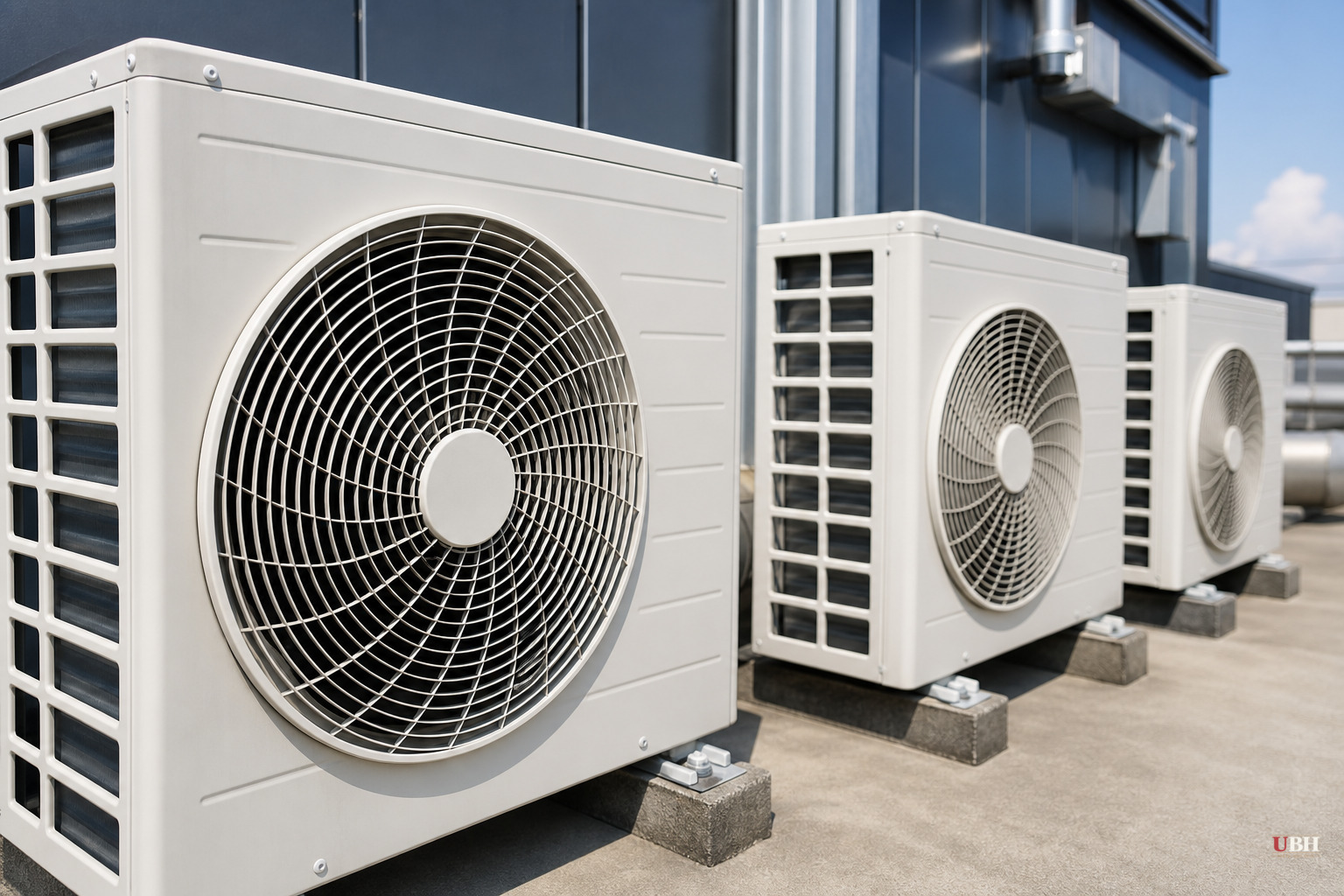
Heat kills more people than any other type of extreme weather. A Lancet study found nearly half a million people died from heat exposure annually between 2000 and 2019, most of them elderly. Air conditioning is the obvious fix, and it works, preventing an estimated 190,000 deaths per year.
But cooling comes with a cost. Refrigeration and air conditioning already account for about 7% of global greenhouse gas emissions, according to figures reported by OilPrice.com. Those emissions are projected to double by 2030 and triple by 2050 as more of the world's hottest, most populated regions demand mechanical cooling.
AC-driven emissions shouldn't be used as an argument against air conditioning itself. The real issue is that nobody has a serious plan for the electricity demand headed our way.
The Efficiency Problem Nobody Wants to Talk About
Mat Santamouris, a professor of high-performance architecture at UNSW Sydney, put it bluntly in a statement referenced by OilPrice.com: "Air conditioning saves lives and will remain essential during extreme heat. But we cannot air-condition our way out of climate change. If every building depends entirely on mechanical cooling, we create enormous pressure on electricity systems while adding even more heat to our cities."
That last part matters. AC units dump waste heat outside as a byproduct of cooling the inside. Cram enough units into a dense city and you're adding measurable heat back into the environment, forcing everyone else to run their units harder. It's a feedback loop baked into the physics, not politics.
The common-sense fix isn't banning air conditioners or slapping new mandates on homeowners. A study published in Nature Reviews Clean Energy, cited by OilPrice.com, found that passive cooling technologies, ventilative cooling and solar control among them, can cut demand for air conditioning by up to 80% and lower ambient temperatures by more than 4°C (7.2°F). Many of these approaches are already technologically mature and could be scaled quickly. The study's authors argue that policy is what's missing to actually push that deployment forward, rather than leaving mechanical cooling to do all the work alone.
The Access Gap Is the Bigger Story
Access to cooling is wildly unequal, and the people who need it most have the least of it. More than 80% of the world's population regularly experiences heat severe enough to need cooling, but only 40% of those people actually have access to air conditioning, according to reporting by The Economist cited in the OilPrice.com piece.
The worst gaps are in the poorest, hottest countries, places with the least capital to expand power grids or subsidize AC units for their populations. And when poor households do get a unit, it's often the cheapest, least efficient model available, which strains already-fragile electric grids further and costs more to run. The Economist reported that the poorest households can spend as much as 8% of their income just keeping a cheap AC unit running, compared to a global average of 0.2 to 2.5% among wealthier households.
This is a genuine equity problem, and it deserves to be treated as one instead of getting flattened into a simple "cooling equals climate villain" narrative. A family in a poor, hot country running an inefficient window unit isn't the reason emissions are climbing. The absence of affordable, efficient cooling technology in those markets is.
What the Skeptics Get Right
Some critics of aggressive climate-emissions framing argue that focusing on air conditioning specifically risks punishing the exact technology that's keeping people alive during heat waves, while doing little to address the actual largest emissions sources. The fix for AC-driven emissions isn't fewer air conditioners, it's cleaner electricity generation feeding those units, plus better-designed buildings, using the kind of passive cooling measures researchers point to, that need less mechanical cooling to begin with.
What Happens Next
Whether governments and builders actually deploy the passive cooling technologies researchers say could cut AC demand by up to 80%, alongside serious investment in grid capacity for the world's poorest and hottest regions, will determine whether the projected tripling of emissions by 2050 actually happens or gets slowed down. Right now, the trajectory described by OilPrice.com and The Economist points toward the former.
Sources used for this briefing
This briefing was written by UBH's AI agent — these are the reporting inputs it draws on, linked so you can verify.


