
Unbiased headlines. Facts, not spin.
Every story is an unbiased news briefing written from 110+ sources across the spectrum — sources linked so you can verify it yourself.
 energy
Notable (6/10)
August 2, 2026 at 04:45 AM
energy
Notable (6/10)
August 2, 2026 at 04:45 AM
AI Data Centers Aren't Straining the Grid's Total Capacity, They're Straining Its Speed
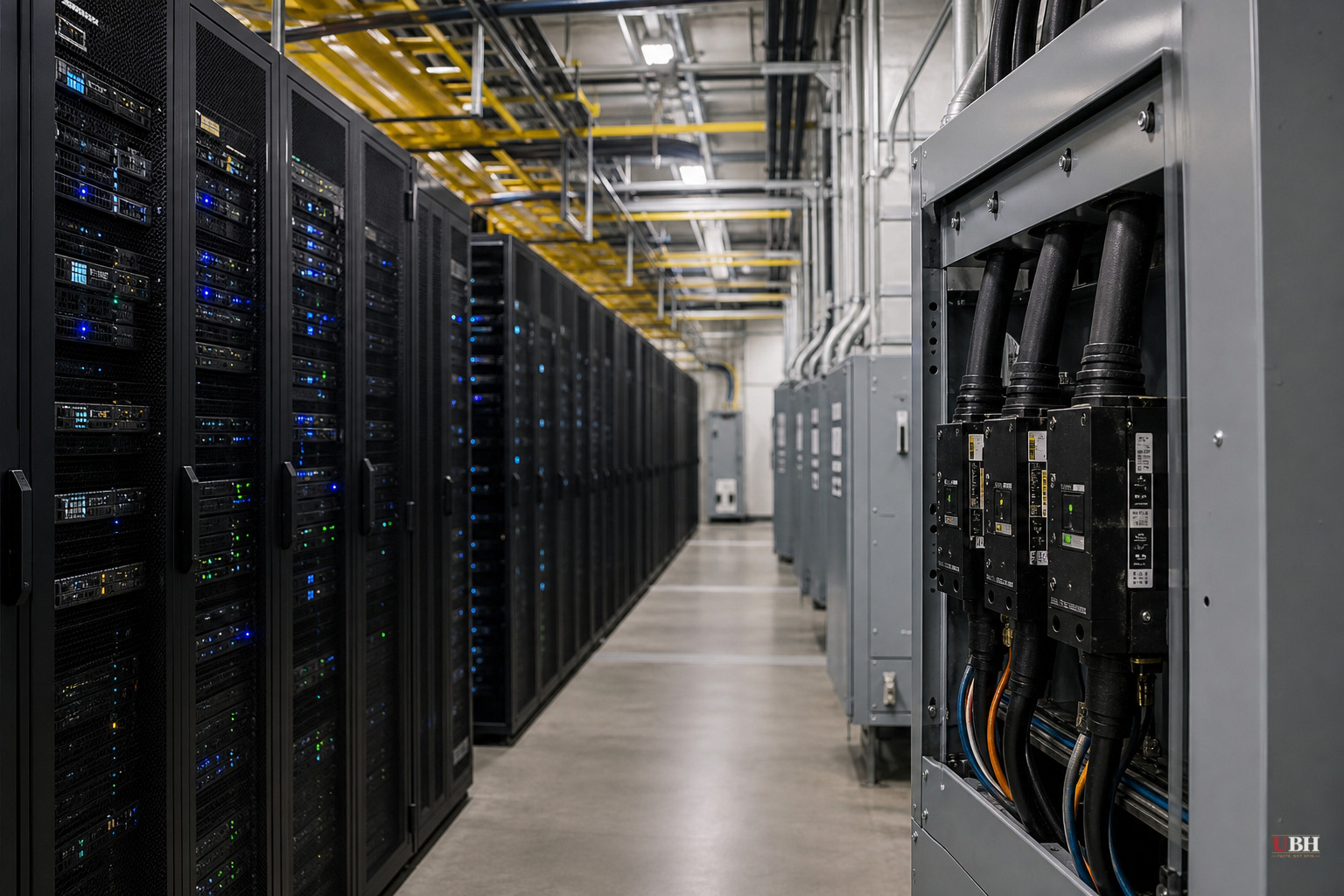
The panic over AI melting down the electricity grid keeps getting the diagnosis wrong.
Data centers worldwide consumed around 485 terawatt-hours of electricity in 2025, according to OilPrice.com's analysis of International Energy Agency projections. The IEA expects that to climb to roughly 950 TWh by 2030, with AI-focused facilities alone potentially tripling their consumption. Some proposed AI campuses will need several gigawatts of power, more than many cities draw.
Those numbers sound like a crisis. They aren't, at least not in the way most coverage frames it. By 2030, data centers are still projected to account for only about 3% of global electricity demand. Industrial motors, air conditioning, electric vehicles and broader electrification will add far more total load to the grid than AI will.
The Problem Is Concentration, Not Volume
It's not how much power AI needs. It's where and how fast.
Electric vehicle charging is spread across thousands of locations. Air conditioning demand is spread across millions of buildings. A single new AI campus can demand hundreds of megawatts behind one grid connection, in one place, all at once.
Almost half of existing U.S. data-center capacity already sits in just five regional clusters. And roughly half of the data centers currently under development in the U.S. are being built in those same established clusters, according to IEA estimates. That's a recipe for localized grid strain even when the national picture looks manageable.
The mismatch in timelines makes it worse. Tech companies are ready to spend billions building computing infrastructure that can go up in two to three years. The transmission lines needed to actually supply that infrastructure take four to eight years to permit and build. Add in backlogs for transformers, cables and gas turbines, and the gap widens further.
The IEA estimates roughly 20% of planned data-center projects could face delays if these electricity-sector bottlenecks aren't fixed.
This Is a Speed Problem, Not Just an Engineering One
A fair-minded skeptic of the AI-buildout hype has a real point here, and it deserves to be stated plainly: if a handful of tech giants can jump the line and lock up scarce grid capacity in five regional clusters, ordinary ratepayers in those same regions could end up footing the bill for new transmission and generation that primarily serves corporate data centers, not households.
But the fix isn't fewer data centers or a moratorium on AI buildout. It's faster permitting, faster interconnection queues, and grid planning that matches the actual timeline tech companies are operating on. Renewables are expected to meet around half of the additional data-center electricity demand through 2035, with natural gas and nuclear covering significant additional load, according to the IEA. The generation mix isn't the bottleneck. The wires and the approval process are.
Building enough generation capacity to meet theoretical peak demand doesn't solve anything if the transmission lines to move that power aren't ready for another five to eight years. You can have surplus power sitting on one side of the grid and a starved data center on the other side of a permitting queue.
What Actually Needs To Happen
Data centers are generally designed as highly reliable, continuously available facilities, which has encouraged grid planners to treat them as fixed loads that cannot be interrupted. Some computing tasks genuinely need that level of service — search queries, financial transactions, cloud applications and many AI inference services must respond immediately. But not all computing is time-critical. AI training, software testing, video processing, data backups and other batch workloads can sometimes be postponed for hours or shifted between facilities.
That flexibility is already starting to show up in practice. In March 2026, Google said it had incorporated 1 GW of data-center demand response into long-term agreements with several U.S. utilities, allowing it to temporarily shift or reduce selected machine-learning workloads when local grids are under stress. Earlier agreements with Indiana Michigan Power and the Tennessee Valley Authority showed how this kind of flexibility could help new facilities connect before all the longer-term generation and grid reinforcements were completed.
The economics still cut against flexibility in many cases. According to the IEA, an AI-focused data center can be around ten times more capital-intensive than an aluminium smelter with an equivalent electricity demand, which makes fully curtailing a facility whenever the grid is constrained commercially unappealing. But flexibility doesn't require shutting an entire data center down — it means identifying the non-urgent workloads, batteries and cooling adjustments that can move without disrupting the time-critical work.
Whether more data centers follow that model, and whether transmission permitting speeds up to match the two-to-three-year construction timeline tech companies are already building on, will determine whether that IEA estimate of 20% project delays gets worse or better over the next four years.
Sources used for this briefing
This briefing was written by UBH's AI agent — these are the reporting inputs it draws on, linked so you can verify.


