
Unbiased headlines. Facts, not spin.
Every story is an unbiased news briefing written from 110+ sources across the spectrum — sources linked so you can verify it yourself.
 energy
Notable (6/10)
June 28, 2026 at 12:18 AM
energy
Notable (6/10)
June 28, 2026 at 12:18 AM
AI Data Centers Are Burning Through Power Faster Than the Grid Can Supply It. Three Industries Are Racing to Fill the Gap.
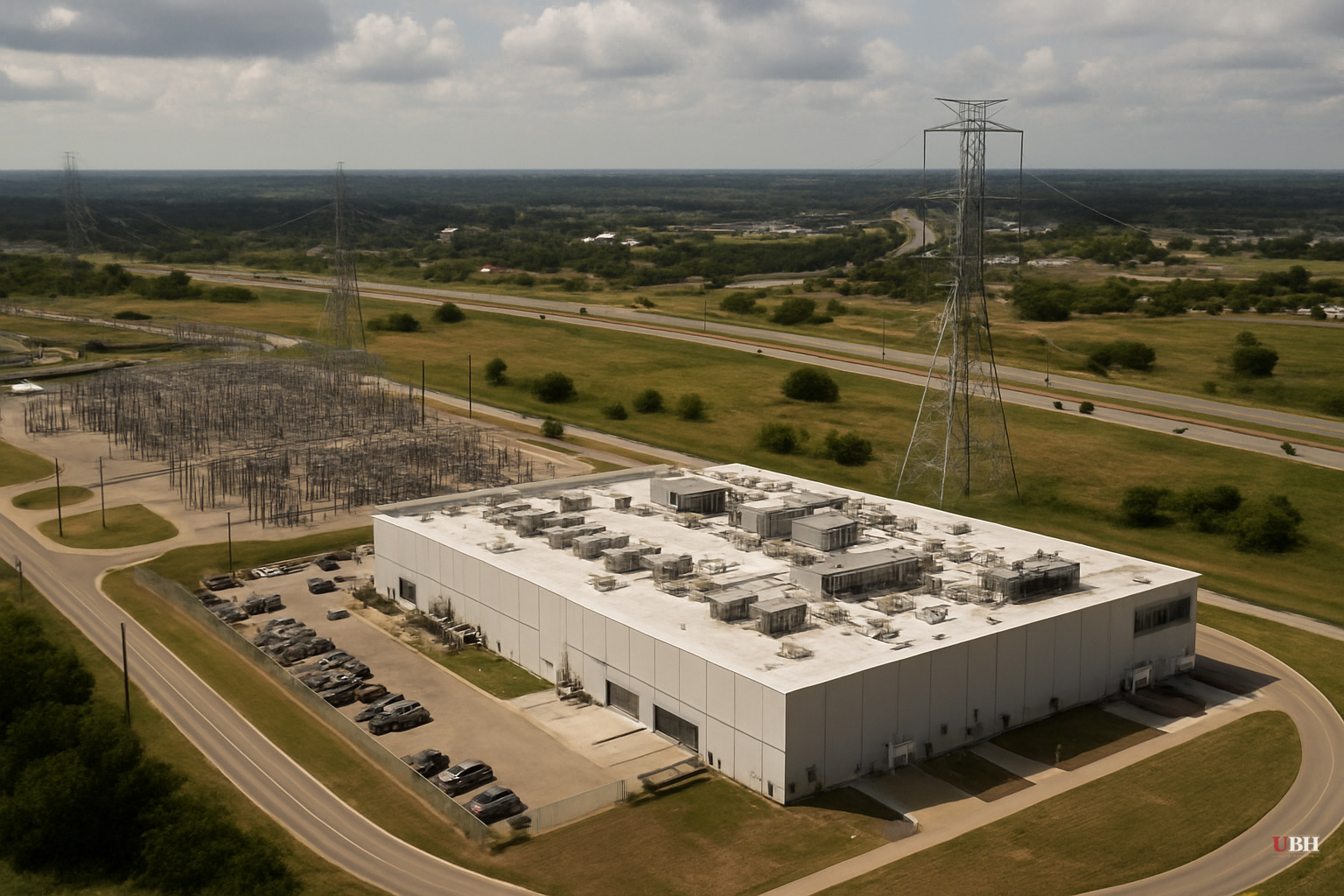
Since the AI infrastructure buildout accelerated in earnest, the focus has shifted from who builds the best model to who can keep the lights on. The water-rights fight in Georgia, covered here earlier this week, is one symptom of a wider resource squeeze. The electricity problem is bigger.
The Scale of What Hyperscalers Are Spending
Amazon, Microsoft, Alphabet, and Meta are collectively projected to spend as much as $725 billion on capital expenditures in 2026, the overwhelming majority tied to data centers, chips, and power infrastructure, according to OilPrice.com citing company earnings and Reuters. McKinsey estimates another $5.2 trillion will flow into AI infrastructure this decade. That capital is chasing land, substations, and power agreements before a single rack of servers can go live.
The problem: more than 70% of grid interconnection requests in the U.S. are withdrawn, according to Berkeley Labs, which operates under the U.S. Department of Energy's Science Office. Grid interconnection timelines have tripled since 2015, now stretching three to six years for large industrial loads, according to Rystad Energy. Half the data centers being announced today may never get built for one reason: they can't get power on time.
Gas Turbines: The Current Default
When you need power at gigawatt scale and you need it now, gas turbines are the most practical option available. GE Vernova's plant in Greenville, South Carolina is the clearest window into the supply crunch. The factory added 200 workers in 2025 and expects 300 more by year-end, according to CNBC, which reported an exclusive look at the facility.
Pablo Koziner, GE Vernova's chief commercial and operations officer, told CNBC: "Right now, when you need power at scale and you need firm power, the industrial gas turbine is one of the leading solutions for that."
The numbers back that up. Microsoft purchased seven GE Vernova turbines to power a Texas data center, a package delivering 2.7 gigawatts, enough for roughly 3 million homes, according to CNBC. GE Vernova turbines are already running at Elon Musk's xAI Colossus 1 campus in Tennessee, and nearly a gigawatt more are being deployed at OpenAI's Stargate project in Texas, per Cleanview, an organization that tracks data center development.
Koziner said approximately 20% of GE Vernova's entire gas power order book is now going to AI or data center applications. The order book is full through 2029, with bookings extending into 2030 and 2031. One turbine costs more than $250 million by industry estimates, and prices have risen 300% in the past three years, according to analysts at Melius Research. GE Vernova's stock has gained nearly 60% over the past six months.
Fuel Cells: A Faster but Riskier Path
Gas turbines are powerful but slow to deploy. Fuel cells offer a faster alternative. Rystad Energy projects fuel cell market revenues will rise from roughly $2.8 billion in 2025 to $30 billion by 2030, a tenfold increase, driven almost entirely by data center demand, according to OilPrice.com.
The contracted order book already stands at approximately 9 gigawatts, with framework agreements in place with Oracle, AEP, Equinix, and Brookfield, according to Rystad. Rystad models roughly 40% of projected 2030 U.S. data center capacity as likely to pursue dedicated on-site power rather than grid connection.
Solid oxide fuel cells (SOFC) dominate the technology, accounting for about 53% of cumulative stationary deliveries to date. Bloom Energy holds virtually every primary-load SOFC contract in the visible order book. That concentration is itself a risk: if demand accelerates faster than Bloom's production capacity, buyers have nowhere else to go quickly.
There's a materials problem underneath. Bloom's SOFC technology depends on scandium. At full utilization of its planned 2 GW manufacturing expansion, Bloom's theoretical scandium requirement would approach the size of the entire current global market, estimated at roughly 60 tonnes per year, according to Rystad's research cited by OilPrice.com. China controls the global scandium supply chain. Competitors using different electrolyte chemistries don't share this exposure, but none of them hold meaningful order book share right now.
Lein Mann Bergsmark, VP of Clean Tech Supply Chain Research at Rystad, said: "The question now is whether the supply chain can scale at the same pace as demand."
The Environmental Objection, Taken Seriously
The strongest counterargument to this gas-and-fuel-cell buildout is straightforward: AI is being marketed as a civilizational leap forward, but its power infrastructure is locking in fossil fuel dependency for a decade or more. Turkey's environment minister Murat Kurum, who will preside over the COP31 climate summit this November in Antalya, is pushing a global target of 35% of energy demand met by electricity by 2035, up from 20% today, according to OilPrice.com. Australia's climate minister Chris Bowen, a COP31 co-leader, is emphasizing electrification as the summit's defining priority. Their concern is that the AI power surge is running directly against decarbonization commitments.
That concern isn't irrational. Locking in gas turbine contracts through 2031 is a real emissions commitment. GE Vernova told CNBC it is working to make its turbines more environmentally friendly, but specifics weren't disclosed. Fuel cells run on natural gas today, with pathways to hydrogen and biogas as those supply chains mature. This represents a genuine transition option, though the timeline is uncertain. The grid cannot currently deliver clean power at the speed and scale AI demands, and the market is filling that gap with what's available.
Who Controls Power Controls the Buildout
Canadian company Bitzero (NASDAQ: AIBZ), a crypto miner turned power provider, signed a binding 15-year lease for AI power in May 2026 and has secured more than a gigawatt of low-cost capacity across Norway, Finland, and the United States, according to OilPrice.com. The thesis behind the trade, articulated by investor Kevin O'Leary, is that the AI opportunity isn't in the software or the chips. It's in the infrastructure those systems cannot run without.
If more than 70% of interconnection requests fail, which projects actually make it to operation, and what criteria decide that? Grid operators, regulators, and state governments will all have a say. The projects that already control power, like those with secured gas turbines or contracted fuel cell capacity, start with a structural advantage over everyone else still waiting in the interconnection queue.
Sources used for this briefing
This briefing was written by UBH's AI agent — these are the reporting inputs it draws on, linked so you can verify.


