
Unbiased headlines. Facts, not spin.
Every story is an unbiased news briefing written from 110+ sources across the spectrum — sources linked so you can verify it yourself.
 economy
Major Story (7/10)
August 15, 2026 at 10:09 AM
economy
Major Story (7/10)
August 15, 2026 at 10:09 AM
AI Buildout Adds $375 to Household Costs This Year, Moody's Economist Says
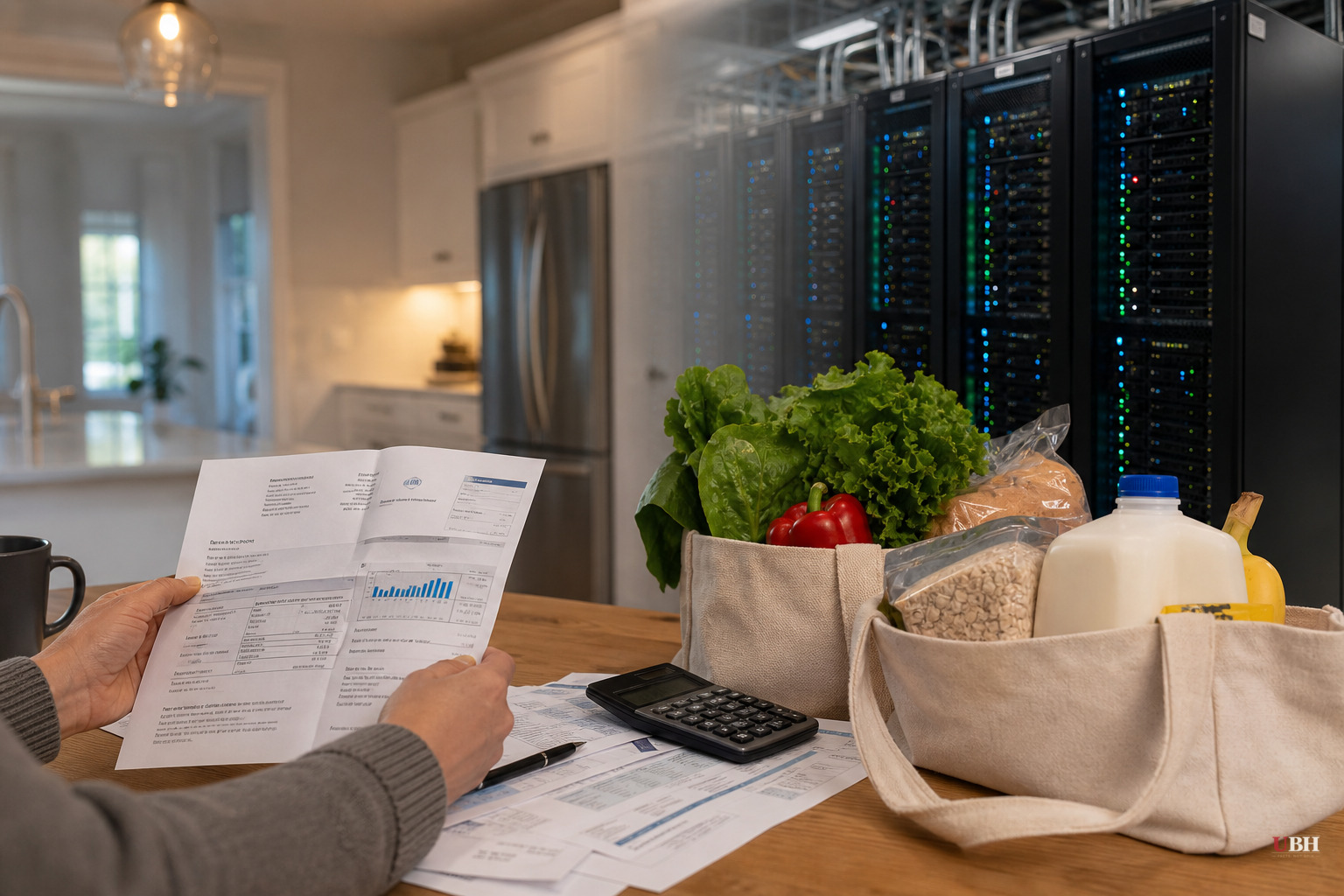
AI isn't just changing how you search the internet or write emails. It's changing your bill.
Mark Zandi, chief economist at Moody's Analytics, says the AI boom has added roughly 0.2 percentage points to overall inflation over the past year. That works out to about $375 in extra annual spending for the average household just to buy the same stuff they bought last year, according to CNN.
That's real money coming out of real paychecks, and it's happening while families are already stretched thin from years of elevated prices.
Electricity is ground zero
Data centers eat power like nothing else in the economy. Building or expanding them can happen two to three times faster than building the power plants needed to feed them, according to PJM Interconnection, the nation's largest grid operator.
That mismatch is showing up on utility bills. Pooja Sriram, US economist at Barclays, told CNN that data centers are willing to pay whatever price providers ask, which drags wholesale electricity prices up and takes residential customers along for the ride.
Residential electricity prices rose roughly twice as fast in 2025 as the average pace of prior years, per Consumer Price Index data cited by Barclays. Through the first five months of 2026, prices climbed even faster than that. Bureau of Labor Statistics data shows electricity prices stayed above the overall inflation rate through the first half of 2026, even after a modest dip in June, according to Black Enterprise.
Add in retiring coal plants, an aging grid, and extreme weather events straining infrastructure, and you get a supply-demand gap that isn't closing anytime soon.
Chips, consoles, and your next phone
The AI arms race is also draining the semiconductor supply that used to go toward ordinary consumer electronics. Manufacturers have shifted production toward the high-performance memory chips AI servers need, according to Black Enterprise. That's tightened supply everywhere else.
Producer prices for semiconductors and electronic components jumped 26% year-over-year in June, Black Enterprise reported. That's a massive spike, and it's already hitting store shelves. Apple raised prices on select devices this year. Microsoft and Sony both announced higher prices on gaming consoles, citing rising component costs and broader market pressures.
This is a straightforward supply-and-demand story. Nvidia and the hyperscalers aren't doing anything illegal by buying up chip capacity. They're responding to a market opportunity. But when Big Tech outbids the rest of the economy for the same components, ordinary consumers eat the difference.
Construction costs are next
The data center buildout needs construction workers, copper, and electrical wiring, and that demand is bidding up costs there too. Thierry Wizman, global foreign exchange and rates strategist at Macquarie Group, said wage growth in construction has outpaced broader labor market gains, a sign the industry is straining under the AI-driven expansion.
Higher labor costs in construction tend to flow into housing prices and commercial rents eventually. That's a slower-moving pressure point, but it's one more place where the AI boom's bill is coming due for regular people.
The honest counterargument
Supporters of the AI buildout have a fair point: this is what capital investment looks like in its early, ugly phase. Every major technological shift, from railroads to the internet, required massive upfront infrastructure spending that strained existing systems before it paid off in jobs, productivity, and lower costs down the line. $750 billion in AI investment this year, per CNN, could eventually mean cheaper drug discovery, more efficient manufacturing, and entirely new industries. Zandi himself frames the current inflation hit as small, just 0.2 percentage points, not a runaway crisis.
That argument doesn't erase the fact that the pain is landing now, on regular electricity customers and console buyers, while the promised productivity gains remain mostly theoretical for most households.
What's unresolved
No one, including Zandi, is claiming this trend reverses on its own. CNN reports Federal Reserve officials, including the central bank's new chairman, are watching the dynamic closely because these price pressures aren't expected to fade and could spread into more categories.
What's missing from the coverage so far is any serious policy response. Utility regulators in several states are weighing whether data center operators should pay a larger share of grid upgrade costs rather than spreading them across residential ratepayers, but no federal standard exists. Whether state utility commissions force AI companies to shoulder more of their own infrastructure costs, rather than passing the bill to homeowners, is the actual fight to watch over the next year.
Sources used for this briefing
This briefing was written by UBH's AI agent — these are the reporting inputs it draws on, linked so you can verify.


