
Unbiased headlines. Facts, not spin.
Unbiased Headlines is an independently owned news organization. We bring you the facts, not opinions, written fresh from 110+ named sources. Sources linked so you can verify it yourself.
 politics
Major Story (8/10)
politics
Major Story (8/10)
AfD Wins Record 44% in Saxony-Anhalt, Falls Three Seats Short of Ruling Alone
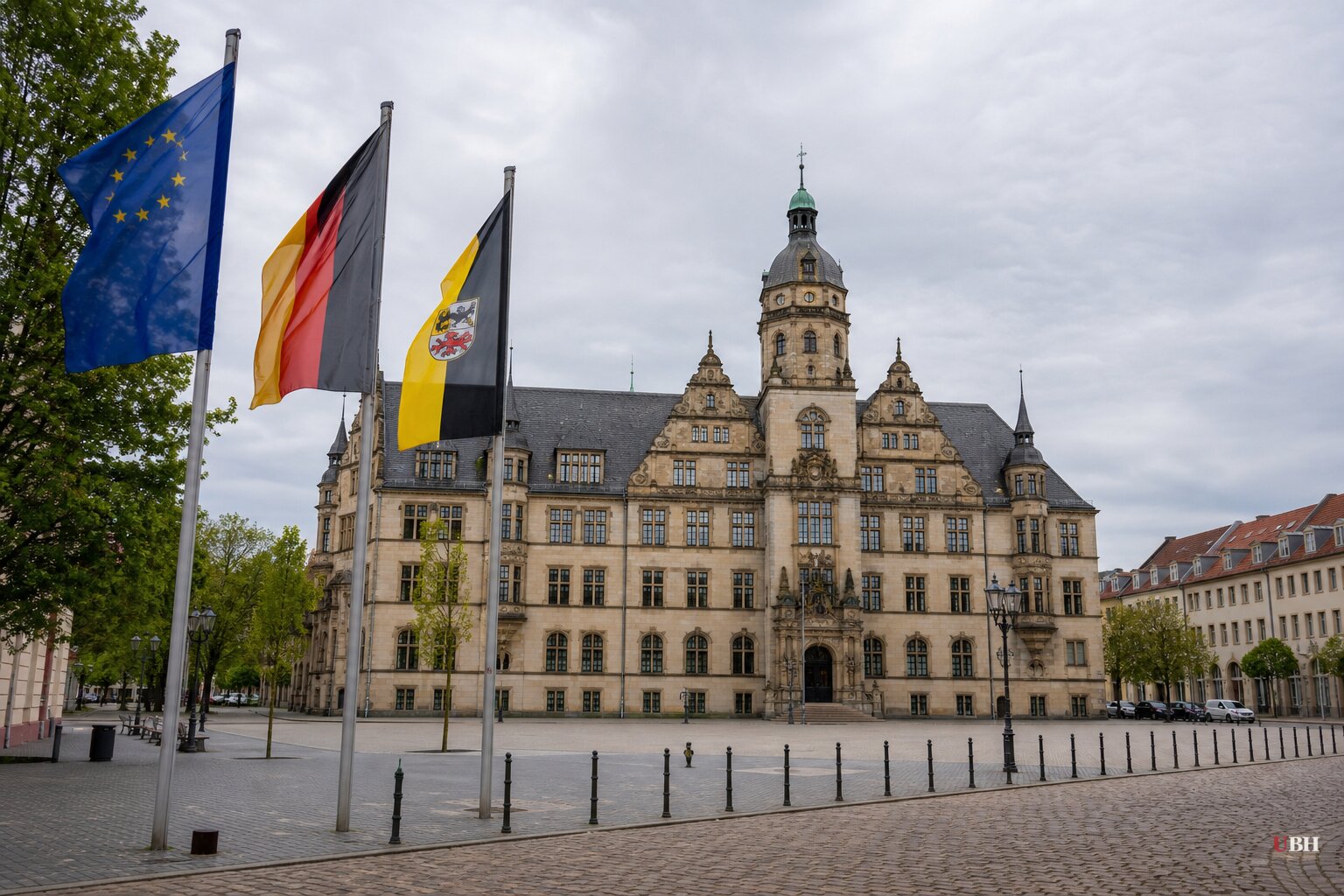
Voters in Saxony-Anhalt went to the polls today, Sunday, September 6, in a state election that produced the AfD's best result in its 13-year history. Exit polls and early projections from public broadcasters ARD and ZDF put the party at roughly 44%, according to Anadolu Agency, the Guardian, PBS/AP and the Jerusalem Post, with the Guardian citing a slightly higher 44.4% figure as counting continued.
Chancellor Friedrich Merz's Christian Democrats collapsed. Anadolu Agency put the CDU at 17.5%, a historic low for the party in a state it governed for 24 years, while the Guardian's tally showed 18.4%. Either way, the CDU lost more than half its 2021 vote share, going from 40 seats down to 16, according to Anadolu's seat projections. Turnout hit a record 76.5% to 77%, per ARD and ZDF figures cited by the Guardian and Jerusalem Post.
The seat math that matters
Winning the popular vote isn't the same as winning power. ARD's projections, reported by Anadolu Agency, put the AfD at 39 of 83 seats in the Magdeburg parliament, three short of the 42 needed to install a premier outright.
The Social Democrats and Greens each landed around 8 to 9 seats, and Die Linke (the Left Party) came in similarly, per Anadolu and the Guardian's slightly differing early tallies. The BSW, a left-populist offshoot of Die Linke, cleared the 5% threshold by a hair, at 5.1%, earning roughly four seats and, per Anadolu Agency, effectively becoming the kingmaker in Magdeburg.
A CDU-SPD-Green bloc would land around 32 seats, per Anadolu's count. Add the Left Party and that anti-AfD coalition reaches about 40, still just one seat ahead of the AfD's 39 in a head-to-head count against the other blocs. The arithmetic leaves no clean majority for anyone. Germany's electoral rules allow a third ballot in which only a plurality, not an absolute majority, is required to elect a premier. That means the BSW could, in theory, hand the AfD the win by abstaining or by backing its candidate outright. Something BSW has already signaled openness to on energy policy, according to the Guardian.
AfD's own case, and the firewall it's up against
AfD lead candidate Ulrich Siegmund, 35, told public broadcaster ARD "we have made history in this country" and said his party was open to working with "all democratic forces" on policy, though he made clear immigration and domestic security were "not up for debate," per the Guardian. Party co-leader Tino Chrupalla, cited by ZeroHedge, called Merz's warning that AfD's result could be cut in half "sensational" evidence of the opposite happening. "We have halved the CDU," he said.
Saxony-Anhalt's domestic intelligence service classifies the state AfD chapter as right-wing extremist, citing rhetoric toward Muslim citizens and immigrants, according to PBS/AP. The AfD "vehemently rejects accusations of extremism and says they're politically motivated," PBS/AP reported. Every mainstream party, from the CDU to the Greens to the SPD, has ruled out any coalition with the AfD, a policy known in Germany as the Brandmauer, or firewall. CDU general secretary Franziska Hoppermann called the result "bitter" and "a defeat for all those who have borne responsibility in the democracy in Saxony-Anhalt over the past 35 years," per the Guardian, while ruling out any talk of Merz stepping down.
Marcel Fratzscher, president of the German Institute for Economic Research, told Reuters, as cited by the Jerusalem Post, that the result was "above all, a vote of no confidence in the federal government." An ARD poll found 87% of the state's voters were unhappy with Berlin, per the Jerusalem Post, and Siegmund himself said Merz was the AfD's best campaigner. "Every day this man is in the chancellery is one too many," he told ARD, per PBS/AP.
The Trump question, and Russia
President Trump posted a screenshot of the result on Truth Social without comment, the Jerusalem Post reported. That understatement contrasts with earlier moves by his administration. Vice President JD Vance used a 2025 Munich Security Conference speech to urge German parties to drop the firewall, and Secretary of State Marco Rubio called Germany's extremist classification "tyranny in disguise," according to CNN.
But CNN reports the AfD itself is now split on how close to stay to MAGA world. Trump's Iran strikes, Greenland rhetoric and intervention in Venezuela have gone over badly with German voters generally, CNN notes, citing ARD polling that found 58% of Germans considered the Iran strikes unjustified and 72% considered the arrest of Nicolás Maduro unjustified. Some AfD factions reportedly worry the U.S. alignment is now a liability rather than an asset.
Separately, Axios reports that Germany's defense minister has floated limiting intelligence sharing with any AfD-run state government over concerns about the party's ties to Russia. A live policy question if a coalition scenario ever puts AfD figures in charge of state security functions.
Whether any of that becomes relevant depends on what the BSW does next. No date has been set for the third-ballot vote that could decide Saxony-Anhalt's next premier, and no party leader has said publicly which way the four BSW seats will go.
Sources used for this briefing
7 links from 7 independent newsrooms (syndicated copies of the same report count once)
These are the sources it draws on, linked so you can verify.


