
Unbiased headlines. Facts, not spin.
Every story is an unbiased news briefing written from 110+ sources across the spectrum — sources linked so you can verify it yourself.
 energy
Notable (6/10)
September 18, 2026 at 03:58 PM
energy
Notable (6/10)
September 18, 2026 at 03:58 PM
AfD Leaders Preparing Possible 2027 Meeting With Putin's Envoy on Restarting Russian Gas to Germany
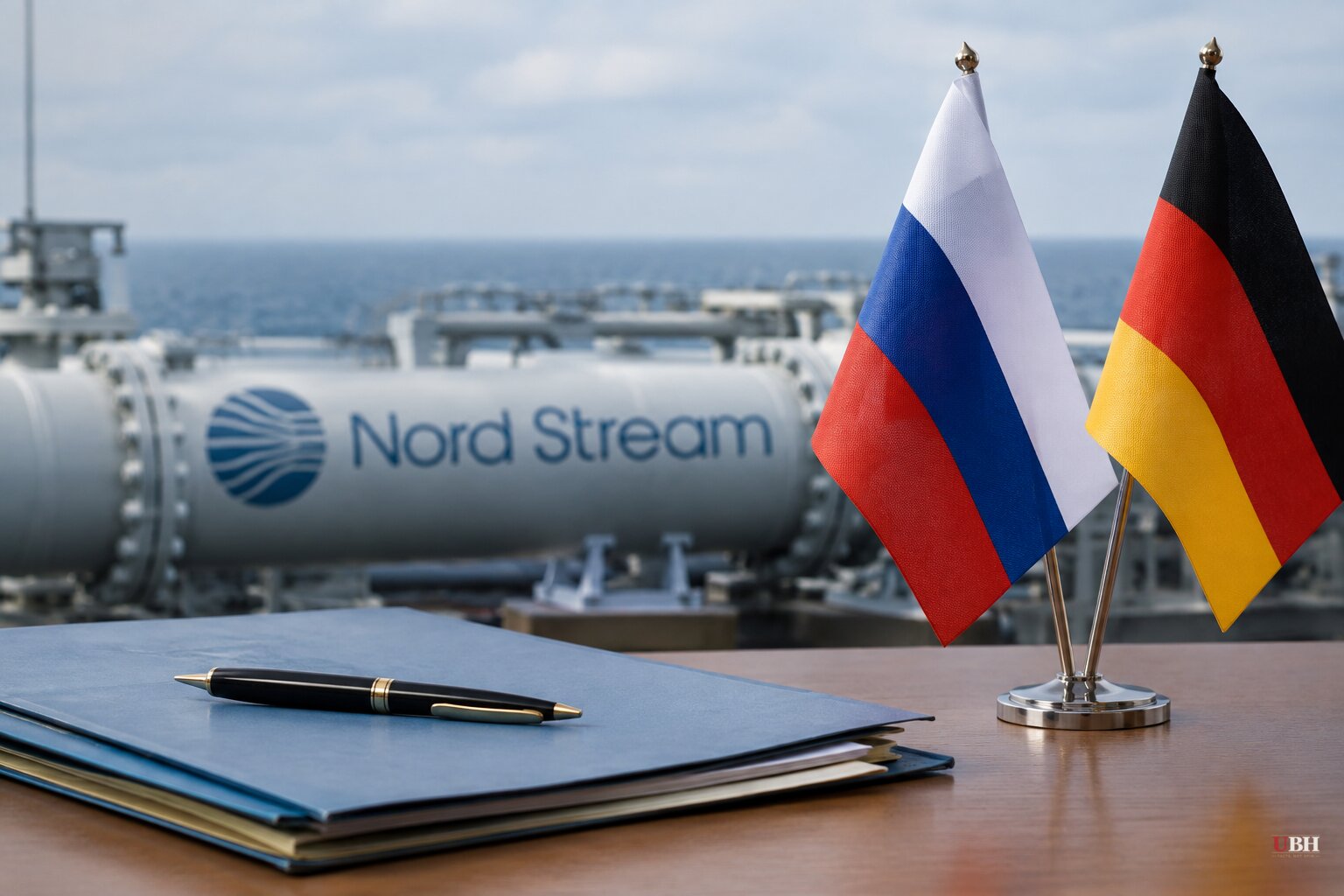
Germany's opposition Alternative for Germany party is laying groundwork for a meeting with one of Vladimir Putin's top economic advisers to talk about turning the Russian gas tap back on, according to Reuters, which cited two people familiar with the plans.
The proposed sit-down would bring together Kirill Dmitriev, Putin's economic envoy and head of Russia's sovereign wealth fund, with AfD co-leaders Alice Weidel and Tino Chrupalla. Reuters reports it could happen as early as March 2027, with Israel, the United Arab Emirates or India floated as possible venues.
The meeting only happens if Russia and Ukraine first agree on a peace framework, according to the sources cited by Reuters. Nothing has been finalized, and neither the AfD nor Dmitriev's representatives would comment when Reuters asked.
The subject is Nord Stream. Organizers want to discuss reopening the pipelines that once carried Russian gas straight to Germany under the Baltic Sea, according to Reuters. Both Nord Stream 1 and 2 were knocked out by explosions in September 2022. German investigators believe the sabotage was carried out by a group of seven suspects led by a Ukrainian citizen, Serhii Kuznietsov, according to the Kyiv Independent. Kyiv has denied involvement.
Before the 2022 invasion, Russia supplied more than half of Germany's natural gas and over a third of its crude oil imports, per Reuters. That share has since collapsed as Berlin turned to Norway, the Netherlands and LNG imports. The EU plans to end Russian gas imports entirely next year.
Organizers also hoped U.S. envoys Steve Witkoff and Jared Kushner would take part, given Dmitriev met with both of them in Moscow earlier this month. But a senior U.S. official told Reuters that Witkoff and Kushner were never informed about the proposed summit and haven't been invited.
Alice Weidel has made the economic argument plainly. In a June interview with Reuters, she said "cheap energy from Russia was the secret of the success of 'Made in Germany.' We need it back." She's argued the loss of Russian energy cost hundreds of thousands of jobs and left Germany paying far more for American energy instead.
German industry has genuinely struggled with higher energy costs since 2022, and voters feeling squeezed by bills have a legitimate grievance to air, regardless of what one thinks of the AfD's broader platform. The party is betting that pocketbook pain outweighs security worries for a critical mass of German voters. The AfD won roughly 44% of the vote in this month's Saxony-Anhalt state election, according to CNN, taking 39 of 83 seats, just short of the 42 needed for an outright majority. It was the closest a far-right party has come to power in a German state since World War II. Lead candidate Ulrich Siegmund called it a mandate for "sensible diplomacy" with both Russia and the U.S.
Green Party lawmaker Michael Kellner, who managed German energy policy during the initial cutoff from Russian supply, told Reuters that reopening Nord Stream would be a mistake. "We cannot repeat the mistakes of the energy crisis," Kellner said. "It cost us €50 billion. We cannot want to go back to that. It would be treason. Putin is using the AfD to his own ends."
Christian Democrat lawmaker Roderich Kiesewetter went further, according to Reuters: "The AfD is on Russia's side, willing to betray both Ukraine and Germany. Russia uses energy, especially Nord Stream, as a hybrid weapon for military purposes. Reopening Nord Stream would be a disaster for European security and isolate Germany." Chancellor Friedrich Merz has already ruled out any Nord Stream restart.
The AfD holds no seats in the federal governing coalition, so it can't reopen a pipeline or lift a sanction on its own. Reuters and the Kyiv Independent both flag that any meeting would be "largely symbolic," a way for the AfD to showcase foreign-policy credibility and put Berlin's energy failures on display, not an actual policy shift.
ZeroHedge's coverage leans into the AfD's framing almost entirely, presenting the talks as a direct response to voter demand without engaging the security objections raised by Kellner and Kiesewetter. The Kyiv Independent and Hromadske give more weight to the sabotage investigation and to Merz's stated opposition, which matters given the pipelines are physically damaged and Germany's governing coalition has no plans to repair them.
What happens next depends entirely on something nobody controls yet: whether Russia and Ukraine reach a peace framework at all. Kirill Dmitriev already sat down with Witkoff and Kushner in Moscow this month on unrelated matters, per Reuters, so the diplomatic channel exists. Whether Washington wants any part of a gas summit with a party it hasn't officially recognized is still an open question the White House hasn't answered.
Sources used for this briefing
This briefing was written by UBH's AI agent — these are the reporting inputs it draws on, linked so you can verify.


