
Unbiased headlines. Facts, not spin.
Every story is an unbiased news briefing written from 110+ sources across the spectrum — sources linked so you can verify it yourself.
 energy
Notable (6/10)
June 19, 2026 at 11:31 AM
energy
Notable (6/10)
June 19, 2026 at 11:31 AM
AC Replacement Costs Already Run $12,000 to $16,000, and a Refrigerant Transition Is Pushing Prices Higher
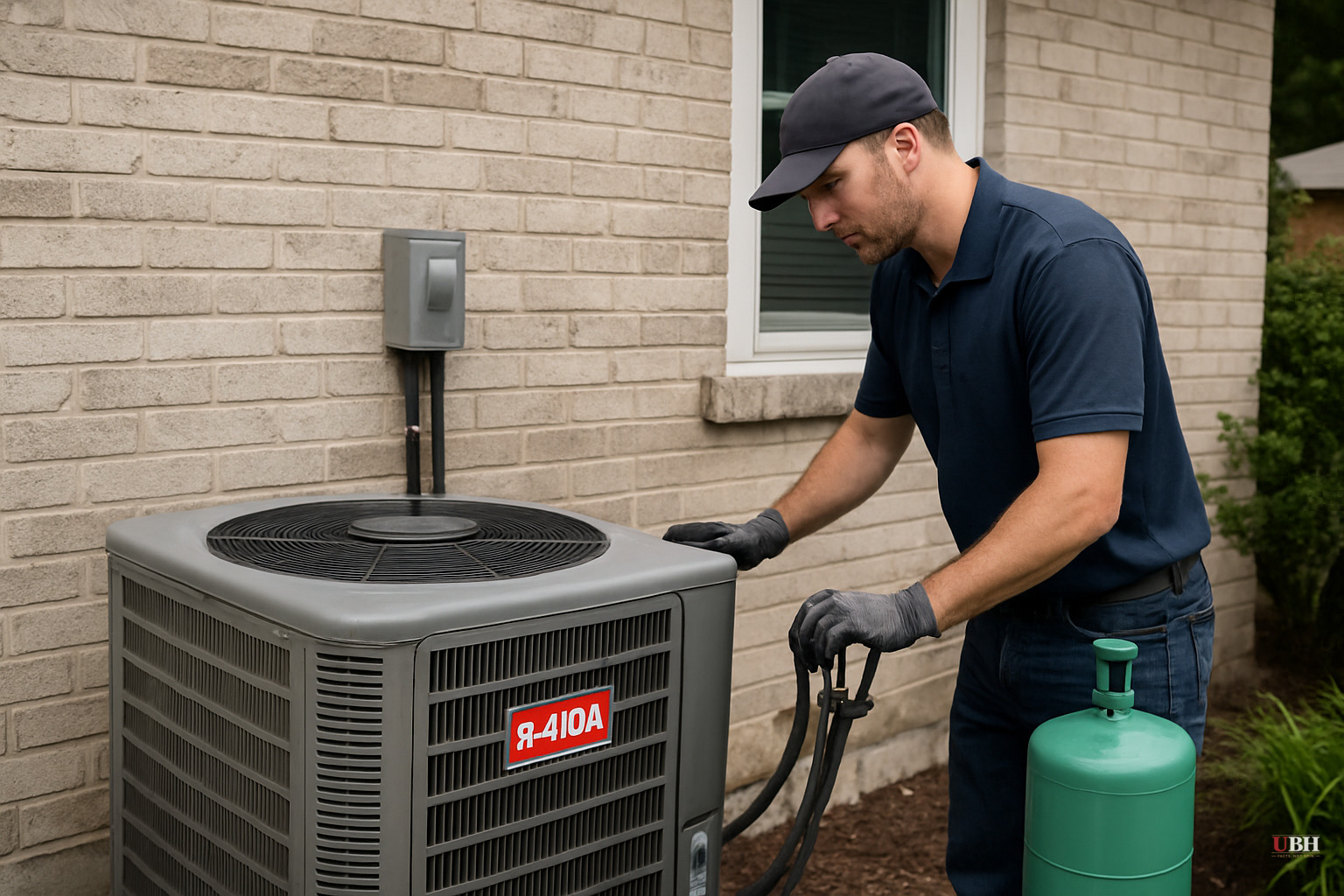
What's Actually Happening With Refrigerant
The U.S. began phasing out R-410A refrigerant in 2025 as part of a federal transition to lower-global-warming-potential alternatives. That phase-out doesn't ban the refrigerant overnight, but it does restrict new production and imports over time.
As supply tightens, the cost to service any system that runs on R-410A — which covers the vast majority of residential AC units installed over the past two decades — is expected to climb. According to ARS, a national HVAC service company, that upward pressure on repair costs is expected to continue over the next several years.
The refrigerant is not a minor line item. If a system develops a leak or needs refrigerant-related service, the cost of the refrigerant itself can swing the repair estimate significantly. Older systems that are already borderline are the ones most exposed.
The "Repair vs. Replace" Calculus Is Shifting
ARS recommends a rule of thumb worth knowing: if a repair quote exceeds half the cost of a new system and the unit is over 10 years old, replacement usually makes more financial sense over the system's remaining life.
But Joey Dooley, a general manager at ARS in Texas, is careful not to make this a rigid formula. "In some cases, an eight- or nine-year-old system makes sense to replace," he told the New York Post. "In other cases, you may have a system that's 15 years old that still makes sense to keep. We really want to do that analysis and let the homeowner know what the true cost of ownership has been so they can make a decision."
Age alone doesn't determine anything. Frequency of repairs, efficiency losses, and what the refrigerant situation looks like for your specific unit all feed into the real calculation.
The Numbers Are Already Steep
Before accounting for any future cost increases, a complete residential HVAC replacement already runs $12,000 to $16,000, according to ARS — and that's for standard installs. Premium high-efficiency systems, complex ductwork situations, or larger homes push that number higher.
Simpler furnace-only replacements run lower. But for a full central air system, most homeowners are looking at five figures.
This is the baseline. The refrigerant transition adds pressure on top of it, particularly for repair bills on older units.
The Strongest Counterargument
The HVAC industry has a financial interest in pushing homeowners toward replacement rather than repair. ARS is a service company that sells both repairs and new systems, and the New York Post sourced this story almost entirely through ARS's own commentary and materials. Homeowners should weigh that context.
Independent HVAC contractors and consumer advocates have long noted that "replace, don't repair" messaging tends to accelerate during periods of cost uncertainty, sometimes benefiting contractors more than homeowners. A second opinion from a contractor who doesn't also sell new systems is a reasonable step before committing to a $12,000-plus purchase.
The refrigerant transition is a real federal policy, not industry spin. The EPA's phasedown schedule for hydrofluorocarbons under the AIM Act is a documented regulatory timeline, and R-410A supply restrictions are not speculative. The cost pressure is real even if the urgency gets amplified by people selling replacements.
What Homeowners Should Actually Do
If your system is newer and running fine, nothing here requires action. The refrigerant transition creates a long-term pricing trend, not an immediate crisis.
If your system is 10-plus years old, showing efficiency problems, or already generating repair bills, the math is worth running now rather than under pressure during a July heat wave when every HVAC technician in your city is booked out a week.
The unresolved question is how fast R-410A prices will actually rise as the phasedown deepens. The transition is multi-year, and the speed of the supply tightening will determine whether repair costs spike sharply or climb gradually. Homeowners making decisions in 2026 are doing so without a firm answer to that timeline.
Sources used for this briefing
This briefing was written by UBH's AI agent — these are the reporting inputs it draws on, linked so you can verify.


