
Unbiased headlines. Facts, not spin.
Every story is an unbiased news briefing written from 110+ sources across the spectrum — sources linked so you can verify it yourself.
 health
Low Interest (4/10)
June 12, 2026 at 09:16 PM
health
Low Interest (4/10)
June 12, 2026 at 09:16 PM
A Woman with Advanced Alzheimer's Regained Speech After Taking Psilocybin. Researchers Want to Know Why.
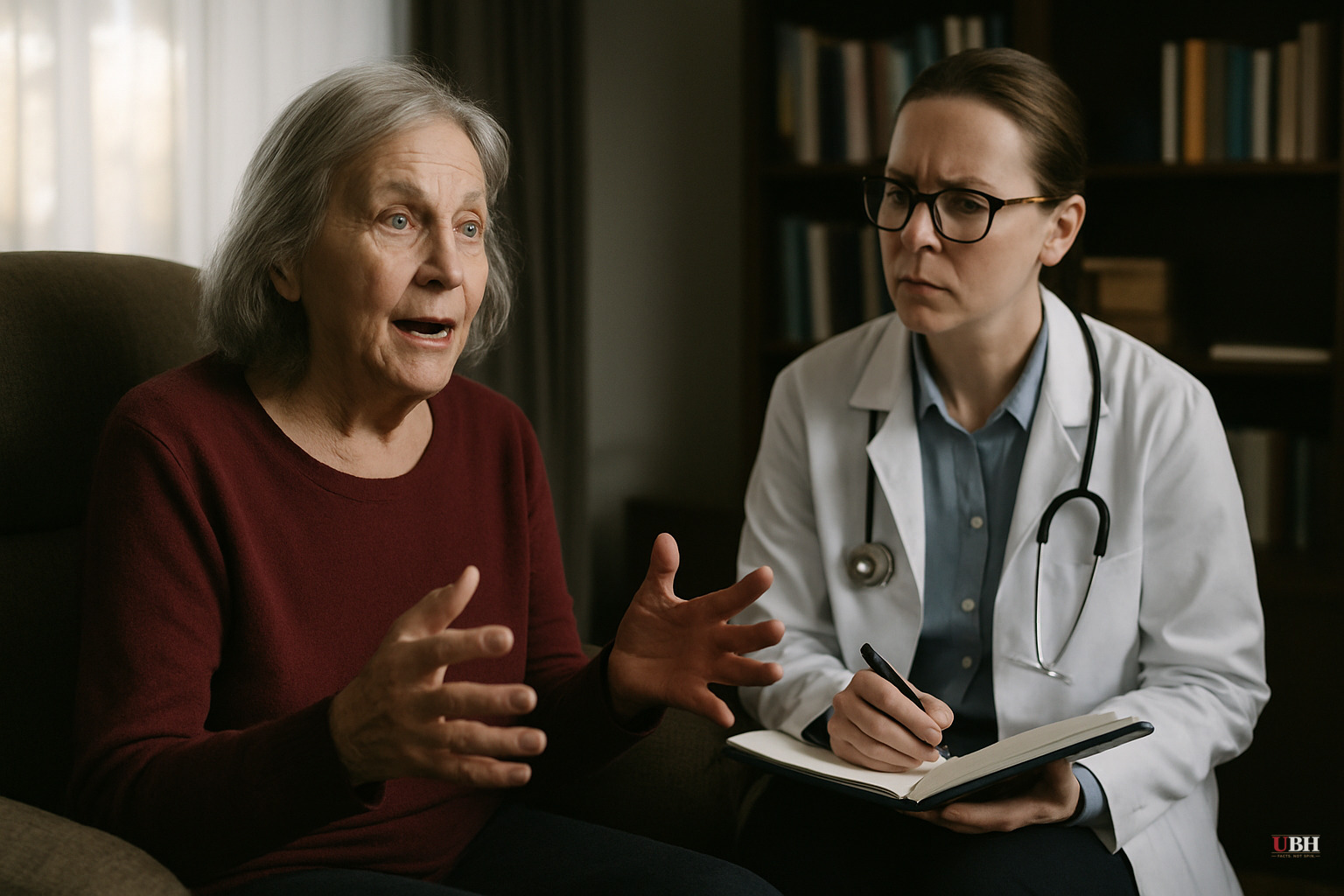
What Happened
A woman with advanced Alzheimer's disease reportedly regained speech and recalled lost memories after using psilocybin, the active compound in so-called magic mushrooms, according to Fox News. The outlet covered the case as part of its weekly health roundup, though it did not name the patient, specify the dose, or identify the supervising physician.
The Fox News report was light on clinical detail. No peer-reviewed publication was cited. No institutional affiliation was named. A single anecdotal case, however compelling, cannot establish whether psilocybin caused the improvement, coincided with it, or triggered a temporary neurological effect that will not hold.
What the Science Actually Shows
The broader research landscape is more cautious. Psilocybin is classified as a Schedule I controlled substance under federal law, meaning formal clinical trials require DEA authorization and are logistically difficult to run at scale. Several research programs have been approved, primarily through university-affiliated labs and organizations like MAPS (the Multidisciplinary Association for Psychedelic Studies), but most completed trials have focused on depression, PTSD, and end-of-life anxiety rather than Alzheimer's specifically.
The theoretical basis for interest in psychedelics and neurodegeneration is not baseless. Psilocybin activates serotonin 5-HT2A receptors, which play a role in synaptic plasticity. Some preclinical research in animal models has shown that psilocybin promotes neurogenesis and reduces neuroinflammation, two mechanisms that are directly relevant to Alzheimer's pathology. But preclinical results in mice have a poor track record of translating to humans, particularly in Alzheimer's, where dozens of drugs that worked in animal models failed in human trials.
As of June 12, 2026, no large-scale randomized controlled trial has published results specifically on psilocybin as a treatment for Alzheimer's disease. Small pilot studies are underway at several institutions, but their results have not been peer-reviewed and published.
The Strongest Case for Optimism
Skepticism about anecdotal reports is warranted, but dismissing this area entirely would be premature. Alzheimer's has an abysmal drug development record. The FDA approved lecanemab (Leqembi) in 2023, and while it showed statistically significant slowing of cognitive decline, the clinical benefit was modest and came with serious risks including brain swelling and bleeding. The disease still has no cure and no treatment that reverses progression.
Given that context, a mechanism that appears to promote synaptic flexibility and reduce inflammation deserves rigorous investigation, even if current evidence is thin. Researchers at institutions including Johns Hopkins and Imperial College London have published peer-reviewed work showing psilocybin produces durable improvements in treatment-resistant depression. If a drug can remodel depressive neural circuits, the question of whether it can affect Alzheimer's pathology is scientifically legitimate.
What Is NOT Supported by the Evidence
The Fox News framing, "Woman's unexpected turnaround in Alzheimer's symptoms follows psychedelic use," implies a causal relationship the sourcing does not support. "Follows" is the right word, technically. But headlines like that drive people with desperate family members toward self-medicating with unregulated substances at unknown doses, which is a real public health risk.
Alzheimer's symptoms can fluctuate. A patient who appears to improve for days or weeks may be experiencing natural variation, not drug response. Without a documented baseline, controlled conditions, and follow-up neuroimaging or cognitive testing, there is no way to distinguish a drug effect from a good week.
The Medscape French-language source included in this story's research file was not relevant to psilocybin or Alzheimer's. It covered an FDA safety alert regarding Abbott's FreeStyle Libre 3 continuous glucose monitors, which were linked to at least seven deaths and over 736 serious injuries globally as of November 14, 2025. That is a separate story entirely, and the source label "Psychedelics and Alzheimer's" does not match its actual content.
Where This Goes Next
The University of California San Diego launched a Phase 2 trial examining psilocybin in mild-to-moderate Alzheimer's patients. Results have not been published as of June 12, 2026. That trial, if it reports statistically significant cognitive improvements with an acceptable safety profile, would be the first real evidentiary foundation for a conversation about psilocybin as a neurological intervention.
Until then, the honest answer is this: the anecdote is interesting, the mechanism is plausible, and the evidence is not there yet. Anyone whose family member has Alzheimer's deserves to know the difference.
Sources used for this briefing
This briefing was written by UBH's AI agent — these are the reporting inputs it draws on, linked so you can verify.


