
Unbiased headlines. Facts, not spin.
Every story is an unbiased news briefing written from 110+ sources across the spectrum — sources linked so you can verify it yourself.
 energy
Low Interest (3/10)
August 2, 2026 at 05:20 PM
energy
Low Interest (3/10)
August 2, 2026 at 05:20 PM
A Small Tidal Turbine Test in Cape Cod Is Nowhere Near the 57% Number Everyone's Citing
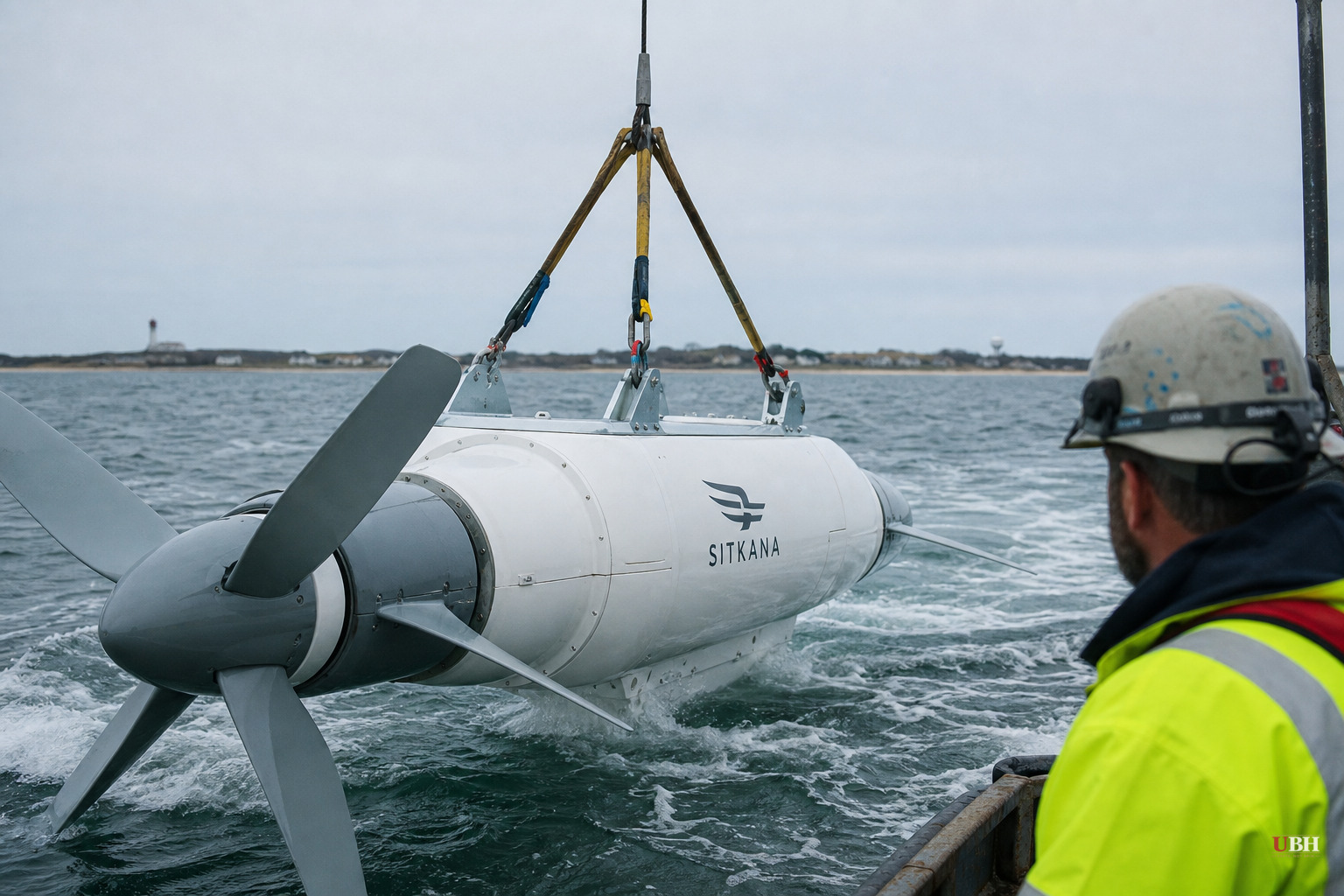
An Alaska-based company is testing a small modular tidal turbine in the waters off Cape Cod, Massachusetts, the latest attempt to turn a huge theoretical energy resource into something that actually generates power.
The turbine, built by a company called Sitkana, is being piloted at the Marine Renewable Energy Collaborative's Bourne Tidal Test Site, according to OilPrice.com. The site sits in tidal currents that can hit four knots, which the company says is exactly the point.
"BTTS is one of the few places where we can evaluate our entire system in one location," Sitkana founder and CEO Lance McMullan told Offshore Energy, as cited by OilPrice.com. He said the goal is measuring not just power output but how the hardware holds up and interacts with marine wildlife in a real ocean environment.
The 57% Number, in Context
The headline figure driving renewed interest in tidal power comes from a 2021 National Renewable Energy Laboratory study, which estimated the total technical potential of U.S. marine energy sources at roughly 2,300 terawatt-hours per year. That's about 57% of total U.S. electricity generation in 2019, per the NREL report cited by OilPrice.com.
That number is a resource estimate, not a forecast. It measures how much energy theoretically exists in America's coastal waters, currents, and tides, not how much anyone can practically capture, transmit, or afford to build. NREL's own report frames it that way, noting that "even if only a small portion of the technical resource potential is captured, marine energy technologies would make significant contributions to our nation's energy needs." That's a much smaller claim than "tidal power could cover 57% of America's electricity."
Zero Commercial Plants, One Small Pilot
The United States has zero commercially operating tidal power plants right now, according to OilPrice.com. Not a handful. Not a struggling few. Zero.
The Cape Cod pilot is explicitly described as small-scale and exploratory, meant to generate data for future tidal energy research and design rather than deliver power to the grid at this stage. Most tidal energy prototypes historically have been large models affixed to the sea floor. Sitkana's turbine is smaller and modular, which the company says could lend itself to simpler installation, scaling, and maintenance for potential commercial applications, including in remote coastal communities.
"Our goal is to make marine energy easier to build, deploy, and maintain in remote areas," McMullan said, according to Interesting Engineering, as cited by OilPrice.com. "This testing is critical as we move toward commercial deployments."
That's a straightforward claim from a company that hasn't built a commercial plant yet. It should be read as exactly that: a company describing its own product ambitions, not an independent verification that the technology works at scale.
The Real Bottleneck Isn't the Ocean, It's Everything Else
Tidal energy has a genuine physical advantage over wind and solar. Tides are predictable, unlike sun and wind availability. That's a legitimate argument in favor of continued investment.
But predictability doesn't automatically solve cost, engineering durability, marine permitting, grid interconnection, or the simple fact that saltwater is a harsh environment for machinery. The Cape Cod test itself is designed to probe exactly those questions — how the turbine performs and holds up in a real marine environment — precisely because they haven't been answered yet for this technology in the U.S. The U.S. hasn't reached commercial deployment stage at all.
No federal agency or independent body has verified that Sitkana's specific turbine design is commercially viable or cost-competitive with other power sources. This is a single test at a single site, and the company itself frames it as a step toward eventual commercial deployment, not a finished product.
What Happens Next
The practical test now is whether this modular turbine survives real-world Cape Cod tidal currents over time without major failures, and whether Sitkana or another operator can show a credible path to actual electricity delivered to actual customers at a competitive price.
No timeline for commercial deployment has been announced. No utility contracts, subsidies, or interconnection agreements tied to this specific project have been reported. Until a tidal plant is actually selling power to the grid in the U.S., the 57% NREL figure remains what it's always been: a measure of what's theoretically in the water, not what's coming out of it.
Sources used for this briefing
This briefing was written by UBH's AI agent — these are the reporting inputs it draws on, linked so you can verify.


