
Original briefings. Zero spin.
Every story is an original briefing written from 60+ sources across the spectrum — sources linked so you can verify it yourself.
 defense
Notable (5/10)
August 8, 2026 at 01:51 AM
defense
Notable (5/10)
August 8, 2026 at 01:51 AM
A Notebook Found in Assad's Spy Chief's Abandoned Apartment Is Helping Track Him Down
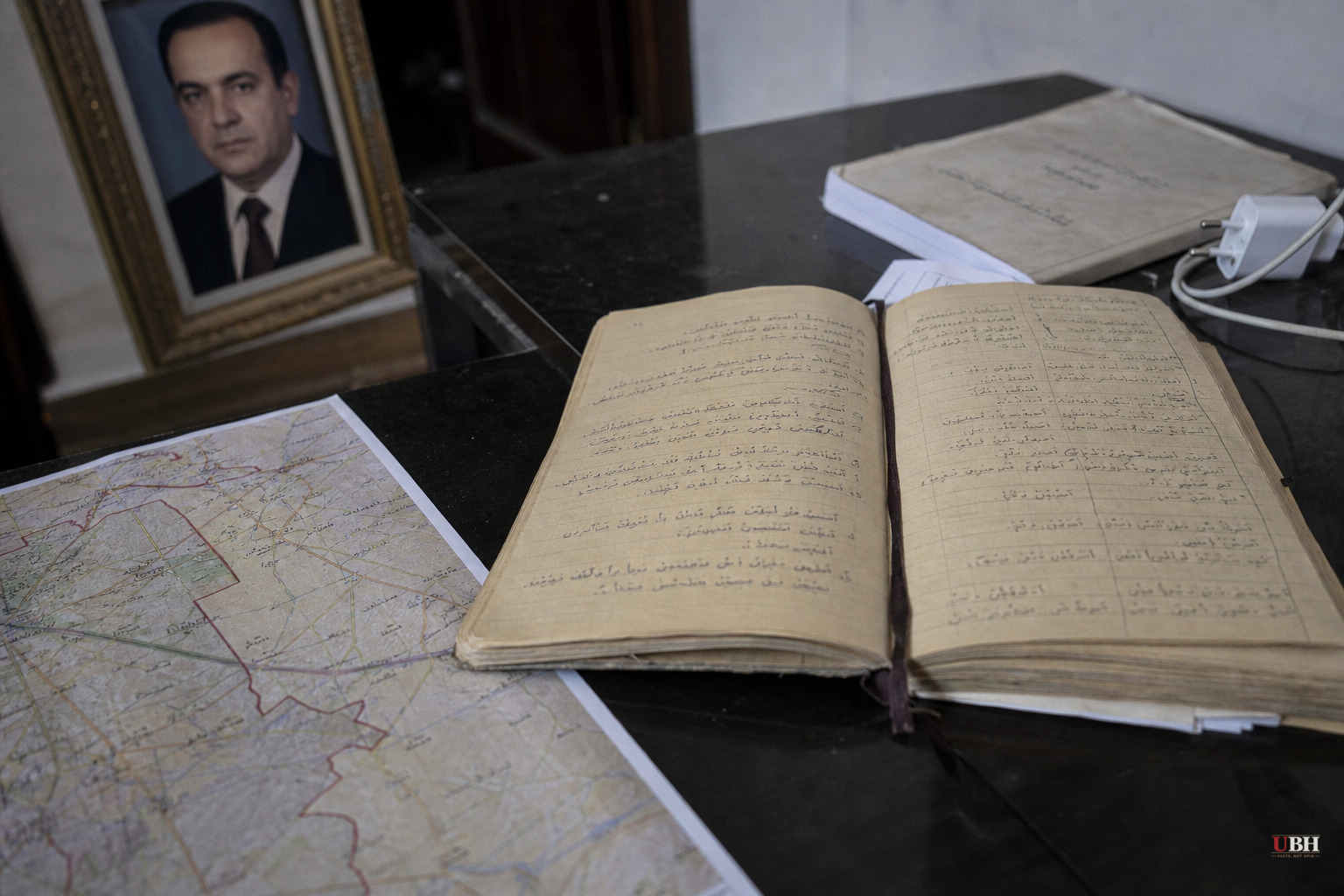
Bashar al-Assad's government fell in December 2024. Hussam Luka, the man who ran Syria's Political Security Directorate and later its General Intelligence Directorate, disappeared the same night, according to BBC reporting from inside his abandoned Damascus apartment.
Rebel fighters who searched the apartment days after Assad fled found a luxury unit littered with designer clothes, gold medals, gilded certificates bearing Luka's name, and dozens of photographs of the same man, including several showing him shaking hands with Assad. On a console table sat an unremarkable spiral notebook filled with names in blue ink: shopkeepers, doctors, military officials, and relatives sharing the Luka surname.
That notebook is now one of the few physical leads into the whereabouts of a man the UK, the United States, and the European Union have all sanctioned for his role in the regime's torture apparatus.
Luka earned the nickname "The Spider" for what people in Homs described to the BBC as a sprawling web of informants and contacts. During the siege of Homs, a city split by rebel and government control after Assad's 2011 crackdown on pro-democracy protesters spiraled into full civil war, Luka's phone number was reportedly spray-painted on walls across rebel-held neighborhoods.
Former rebel fighter Motaz al-Zaydi told the BBC that residents trapped by the siege, some reduced to eating rats to survive, were told they could call Luka's number to arrange safe passage out of the city. Some who called did get out, according to multiple people interviewed by the BBC, including al-Zaydi. Others who dialed that number were never seen again.
Those accounts remain individual testimony gathered by journalists, not findings from a court or a formal investigation. No tribunal has charged Luka, and no international body has confirmed a full accounting of who called that number or what happened to each caller. The allegations are serious and repeated by multiple named witnesses, but they are allegations, not adjudicated facts.
This is the trouble facing Syria's transitional authorities and human rights investigators more broadly. Assad's fall didn't come with the tidy record-keeping of a functioning state changing hands. It came with agencies scattered, files abandoned mid-shred, and men like Luka disappearing into networks built over a decade specifically to make sure nobody could ever prove what they did.
The structural problem international war-crimes investigators have flagged for years in Syria is straightforward: a security apparatus designed for deniability doesn't leave a clean paper trail when it collapses. A notebook of names in a looted apartment is not proof of a crime. It is, at best, a map of a man's remaining contacts, which is exactly why searchers seized on it.
Human rights groups, including those that have spent years documenting Syria's detention and torture system, have long called for exactly this kind of forensic reconstruction, arguing that former regime officials should face accountability mechanisms similar to those used after other mass-atrocity regimes fell, from the Balkans to Iraq. Whether Syria's interim government has the capacity or the political will to run that kind of process is still an open question. No war crimes tribunal for Assad-era officials has been established as of this writing.
There's also a fairness point worth stating plainly: Luka has not been convicted of anything, and there is no verified account in the available reporting of the total number of people who were harmed by the Homs phone line versus those who were legitimately assisted. Sanctions from the UK, US, and EU reflect those governments' own determinations, not a criminal conviction. Sanctions and criminal guilt are not the same legal standard, and treating them as interchangeable would be sloppy.
What's confirmed: Luka held one of the most powerful positions in Assad's internal security state, he is sanctioned by three major Western governments, and he has been missing since the regime collapsed. What's unresolved: where he is now, whether the notebook or any other evidence leads to his location, and whether any government or tribunal will attempt to hold him accountable for the specific allegations tied to Homs.
The BBC's on-the-ground reporting from the apartment itself is the strongest piece of primary documentation here, capturing the scene as rebels found it rather than relying on secondhand description. What remains missing from public reporting is any statement from Luka himself, any confirmation from Syria's transitional authorities about an active manhunt, or any indication that international investigators have formally opened a case using the notebook as evidence.
Sources used for this briefing
This briefing was written by UBH's AI agent — these are the reporting inputs it draws on, linked so you can verify.

