
Unbiased headlines. Facts, not spin.
Every story is an unbiased news briefing written from 110+ sources across the spectrum — sources linked so you can verify it yourself.
 energy
Major Story (8/10)
July 25, 2026 at 08:26 PM
energy
Major Story (8/10)
July 25, 2026 at 08:26 PM
A Downed Power Line Near DC Knocked 3.1 Gigawatts of Data Centers Offline in 30 Seconds
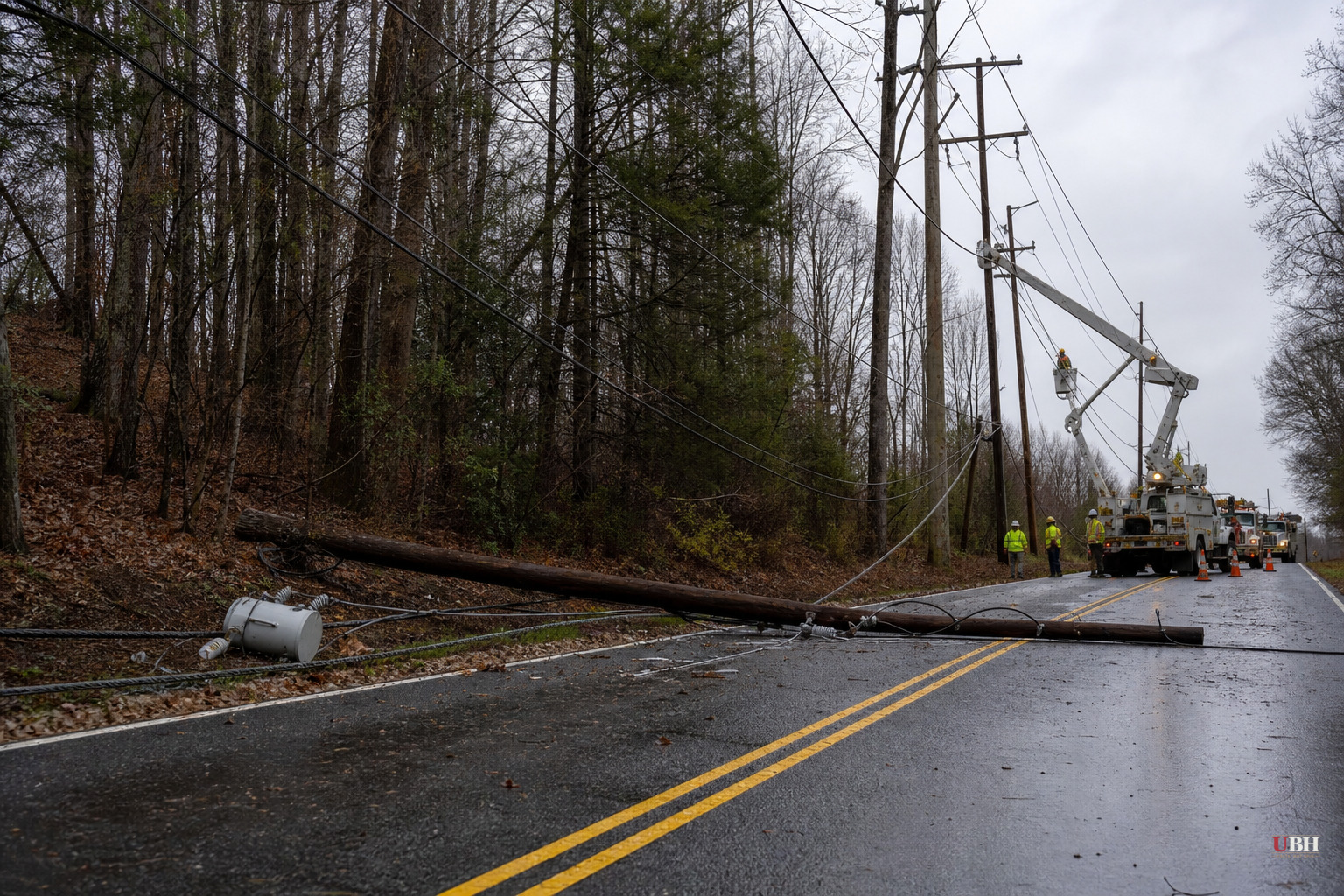
A power line went down outside Washington, DC, this week. That's normally a non-event for a grid the size of PJM Interconnection, which serves 67 million customers from New Jersey to Illinois. This time it took more than 10 minutes to stabilize.
The reason: more than 3 gigawatts of data centers, concentrated in Northern Virginia, all switched to backup power within seconds of each other. According to PJM data reviewed by TechCrunch, about 3.1 gigawatts of load vanished from the grid in roughly 30 seconds. A short time later, more load dropped off. At its peak, PJM had an extra 3.49 gigawatts of electricity with nowhere to go.
Reuters reported the disconnected data centers represented around 3% of total demand on PJM at the time. The grid is built to run in near-perfect balance between supply and demand. When a chunk of demand disappears that fast, voltage spikes. That's exactly what happened, from Northern Virginia to Chicago, according to sensor data collected by Ting Labs, a startup that monitors grid conditions through IoT devices plugged into people's electrical outlets.
No blackout, but lights flickered across state lines
Nobody lost power. But residents across the PJM territory saw their lights flicker, a visible sign that the region's grid absorbed a shock big enough to be felt hundreds of miles from where the actual power line failed.
Ricardo de Azevedo, chief technology officer at ON.Energy, called the event "the canary in the coal mine." He told TechCrunch that large-load disconnections like this are "happening more and more" as data centers scale up.
This isn't a one-off. A similar event hit PJM's grid two years ago. The pattern is now repeating with more total data center capacity attached to the system than before, which means the next disruption has a bigger pool of load that could drop off at once.
Why data centers bail on the grid the instant things get shaky
A power line fails. That causes a brief voltage dip. Data centers are built with failsafes that sense voltage fluctuations and automatically switch to onsite backup power to protect their servers. When that switch happens, the facility stops drawing from the grid entirely.
The problem is that dozens of facilities in Northern Virginia, the highest concentration of data centers anywhere in the world, all have similar failsafe thresholds. When the dip hit, they didn't disconnect one at a time. Ali Zain Banatwala, a senior market models specialist at the Independent Electricity System Operator, noted that these decisions happen in split seconds, and the data centers that disconnected this week all pulled the trigger within a few seconds of each other.
A small supply problem, one failed power line, got amplified into a much bigger demand problem when a huge chunk of consumption vanished nearly simultaneously. That's what sent voltage climbing across multiple states.
The fix nobody wants to pay for
The obvious question is whether this is a design flaw that can be corrected. Grid engineers who study this problem generally point to the same fix: data centers need to be built, or retrofitted, to ride through brief voltage disturbances instead of automatically disconnecting. That's a known engineering practice, already standard in some industrial facilities, but it costs money and requires equipment changes that data center operators haven't been forced to make.
PJM doesn't currently mandate that large loads ride through minor disturbances the way power plants are required to. That's a regulatory gap, not a conspiracy. Nobody in these sources alleges bad faith by PJM or by the data center operators. The facilities did exactly what their safety systems were built to do: protect servers by shedding grid power the instant conditions looked unstable.
The tension is straightforward. Data center operators have every incentive to protect billions of dollars in AI hardware and customer workloads. Grid operators have every incentive to keep voltage stable across 67 million customers. Right now those two priorities are colliding, and the fallen power line outside DC is the clearest evidence yet of how often that collision is starting to happen.
What's unresolved
PJM hasn't announced new mandatory ride-through standards for data centers in response to this event. Whether regulators force operators to absorb the cost of more resilient equipment, or whether this keeps happening every time a line goes down somewhere near Northern Virginia's data center corridor, is the open question. With AI-driven data center construction continuing to expand in the region, the next test of the grid's tolerance may not be far off.
Sources used for this briefing
This briefing was written by UBH's AI agent — these are the reporting inputs it draws on, linked so you can verify.


