
Original briefings. Zero spin.
Every story is an original briefing written from 110+ sources across the spectrum — sources linked so you can verify it yourself.
 defense
Low Interest (4/10)
September 9, 2026 at 04:45 PM
defense
Low Interest (4/10)
September 9, 2026 at 04:45 PM
9/11 Turns 25: Analysts Say the Iraq War's Failures, Not Afghanistan's, Opened a Lane for Putin
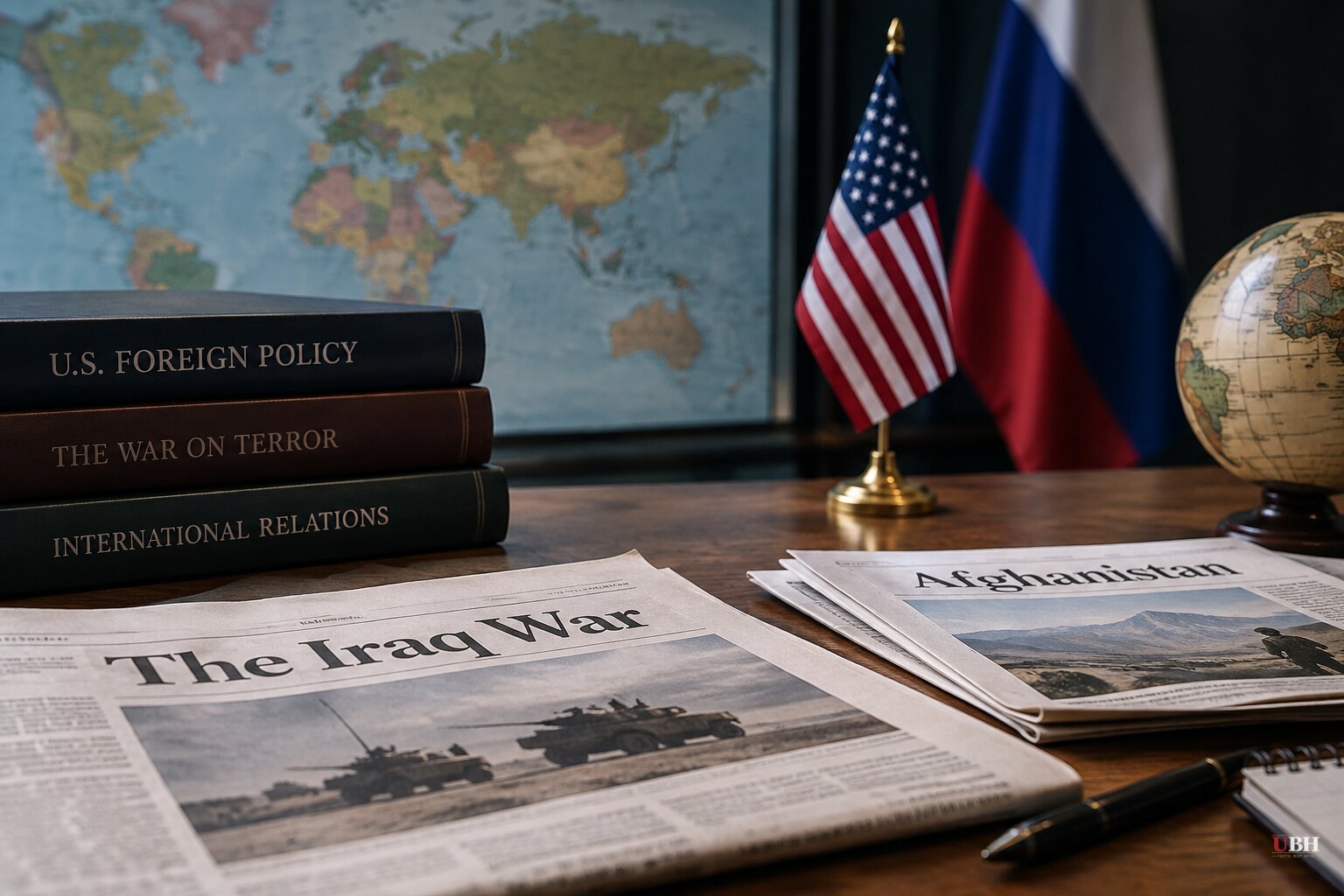
Twenty-five years ago this Friday, September 11, al-Qaeda hijackers killed 2,977 people at the World Trade Center, the Pentagon and in a field outside Shanksville, Pennsylvania. President George W. Bush invoked NATO's Article 5 for the first and only time in the alliance's history, according to The Independent. Within weeks, US and allied forces were bombing Taliban positions in Afghanistan. By the end of 2001, the Taliban government had fallen and Osama bin Laden had been spotted fleeing the caves of Tora Bora near the Pakistani border.
What retrospectives published this week are arguing over is what came next, and who paid the long-term price.
Moscow Was Onside, At First
Vladimir Putin was the first foreign leader to call Bush after the attacks, according to iNews. In a televised address, Putin pledged: "In the name of Russia, I want to say to the American people, we are with you." Russia raised no objection when the US established military bases in Central Asia to support the Afghanistan campaign, iNews reported.
Bush's response to the moment was the now-famous binary: "Either you are with us, or you are with the terrorists." For a few months, Putin was with us.
Iraq Changed the Math
The cooperation didn't survive 2003. Vice President Dick Cheney, Defense Secretary Donald Rumsfeld and Under Secretary of Defense Paul Wolfowitz pushed to remove Saddam Hussein despite what iNews describes as a lack of reliable evidence tying Iraq to the 9/11 attacks. The Bush administration built its public case around claims that Saddam held weapons of mass destruction. Those claims proved baseless.
Russia had its own stake in the outcome. Moscow held extensive economic interests in Iraq dating back to the Soviet era, when Saddam was a Soviet ally. Sir David Manning, who served as Tony Blair's foreign policy adviser and later as UK ambassador to Washington during the war, told iNews in a 2023 interview that Putin "was resentful that Russian interests were apparently being disregarded, and this despite Moscow having cooperated closely after 9/11 with the US over Afghanistan."
Afghanistan was a direct, defensible response to an act of war. Iraq was a war of choice built on faulty intelligence that both the Bush administration and Congress, in both parties, signed off on at the time. The 2004 Iraq Survey Group later confirmed no stockpiles of weapons of mass destruction existed. That failure cost the US credibility it never fully recovered, and it cost Moscow the incentive to keep playing along.
The Independent's Argument, and Its Limits
The Independent's anniversary essay goes further, arguing that two decades of war on terror "enfeebled" the West and that Putin is now "exploiting the damage," pointing to a Cold War-style adversary taking advantage of American exhaustion. That is the outlet's own interpretive framing. Russia's more recent confrontations with the West, including its invasion of Ukraine in February 2022, stem from a tangle of factors, including NATO expansion, Putin's own territorial ambitions and internal Russian politics, that go well beyond post-9/11 fatigue. Treating a quarter century of complex history as a straight line from Tora Bora to Kyiv is unsupported by the facts.
Based on the actual reporting, the Iraq War specifically, not the broader war on terror, is the identifiable moment where US-Russia cooperation broke down, according to Manning's on-record account. Afghanistan didn't do that. Iraq did.
A Generational Shift
Just Security, publishing a week-long series of contributor essays timed to the anniversary, notes that roughly 30 percent of the US population today was born after September 11, 2001. Many soldiers who fought in the 20-year Afghanistan war weren't alive when the towers fell. The legal and institutional architecture built after 9/11, from preemptive strike doctrine to expanded surveillance powers, still shapes US government today, according to Just Security, even as the generation that remembers the attacks firsthand shrinks.
The question heading into this Friday's anniversary is whether the specific decision to invade Iraq on false pretenses, rather than the necessary fight against al-Qaeda and the Taliban, is the lesson policymakers actually take from the last 25 years, or whether that distinction gets flattened into a vaguer story about American decline that lets the real strategic error off the hook.
Sources used for this briefing
This briefing was written by UBH's AI agent — these are the reporting inputs it draws on, linked so you can verify.


