
Unbiased headlines. Facts, not spin.
Unbiased Headlines is an independently owned news organization. We bring you the facts, not opinions, written fresh from 110+ named sources. Sources linked so you can verify it yourself.
 health
Notable (6/10)
Event date: August 28, 2026 ·
health
Notable (6/10)
Event date: August 28, 2026 ·
9/11 Responder Deaths From Illness Now Outnumber Attack's Death Toll, New Studies Show
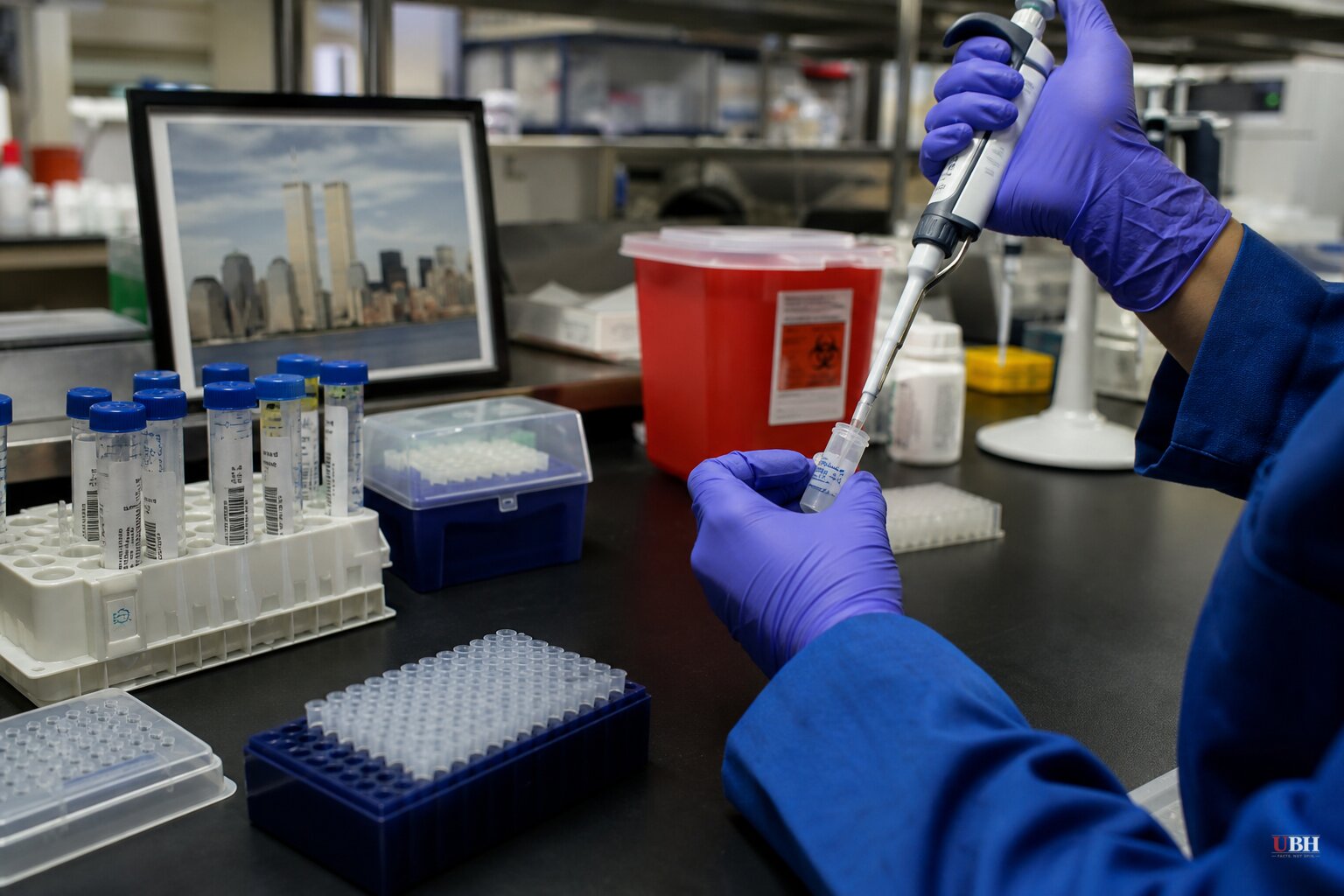
Since the September 11, 2001 attacks, the death toll from illnesses tied to the response has climbed high enough that more people have now died from 9/11-related disease than died in the attacks themselves, according to Reveal News and Dr. Jacqueline Moline, director of the Northwell Health Queens World Trade Center Health Program Clinical Center of Excellence.
That claim comes from Dr. Moline's testimony to a congressional panel, cited by the Asbestos Disease Awareness Organization (ADAO). "Sadly, there are more deaths among responders from WTC-related diseases than those tragically lost on 9/11/01," Moline said. She added that lung cancer cases among responders have doubled in just the past five years.
The numbers inside federal law enforcement tell the same story. More than 400 FBI employees have been diagnosed with illnesses tied to their work at Ground Zero, the Pentagon, and the Shanksville, Pennsylvania crash site, according to Darren Cox, assistant director in charge of the FBI's Washington Field Office, in remarks reported by KSL News. Thirty-three FBI employees have died. Their names are memorialized on the National Law Enforcement Officers Memorial near the Judiciary Square Metro station.
Retired FBI agent John Adams, an Evidence Response Team leader who reached the Pentagon minutes after American Airlines Flight 77 hit, was diagnosed three years ago with Stage 4 melanoma. The World Trade Center Health Program determined it was tied to his 9/11 exposure. Adams told KSL he didn't grasp the cancer risk until 2008, when a colleague on his own team, Bob Roth, developed multiple myeloma and died. Thirteen of the 33 FBI deaths were among employees who worked the Pentagon site, Adams said.
A new finding: faster-aging brains
A study published in the journal Translational Psychiatry in late 2025, led in part by researchers at the Icahn School of Medicine at Mount Sinai and cited by Florida International University's Dr. Roberto Lucchini, found that World Trade Center responders with chronic PTSD show signs of accelerated brain aging.
Researchers analyzed MRI scans from 99 responders in their mid-50s, 47 with chronic PTSD and 52 without, using an AI model called BrainAgeNeXt trained on more than 11,000 scans to estimate biological brain age. Responders with PTSD had brains that appeared roughly three years older than their actual age, on average. Those without PTSD showed brain ages slightly younger than expected. The longer a responder worked at Ground Zero, researchers found, the stronger the link between PTSD and that accelerated aging.
About 23% of the men and women who took part in rescue and recovery work at the site experience persistent, clinically significant PTSD, according to the study, reported by both Newsweek and FIU News.
"We are concerned that, ultimately, the complexity of the exposure years later can trigger cognitive decline," Lucchini said. "That means losing memory and the ability to concentrate."
The funding gap critics point to
Reveal News, reporting on retired NYPD officer Mia Farina, who developed chronic lung disease in 2014 tied to months spent working at Ground Zero, says the federally funded World Trade Center Health Program that responders and survivors were promised has never had funding that kept pace with the number of people who continue to get sick.
None of the sources here document a specific current appropriations shortfall, a pending vote, or a dollar-figure gap for the program's current funding cycle. What is documented is that the disease burden itself keeps growing: lung cancer diagnoses doubling in five years, per Moline, and a new category of harm, brain aging, now being measured for the first time in this population.
What's unresolved
The Translational Psychiatry findings are described by Newsweek as the first application of a deep-learning brain-age model to this specific responder population, meaning the sample size, 99 people, is small and the research is still developing. Lucchini's team continues studying responders who relocated to Florida to track how toxic exposure and psychological trauma interact over time.
A Fox News essay marking the 25th anniversary argues the country risks letting 9/11 fade from lived memory into distant textbook history for younger Americans who never experienced it. For the people who responded, 9/11 isn't history. The World Trade Center Health Program's own diagnosis and death counts are still rising, a quarter century later, with no source indicating when that curve will flatten.
Sources used for this briefing
6 links from 6 independent newsrooms (syndicated copies of the same report count once)
These are the sources it draws on, linked so you can verify.


