
Original briefings. Zero spin.
Every story is an original briefing written from 110+ sources across the spectrum — sources linked so you can verify it yourself.
 defense
Major Story (7/10)
Event date: September 5, 2026
defense
Major Story (7/10)
Event date: September 5, 2026
9/11 at 25: The Security System Built After the Attacks Now Faces Trump's Intelligence Shake-Up
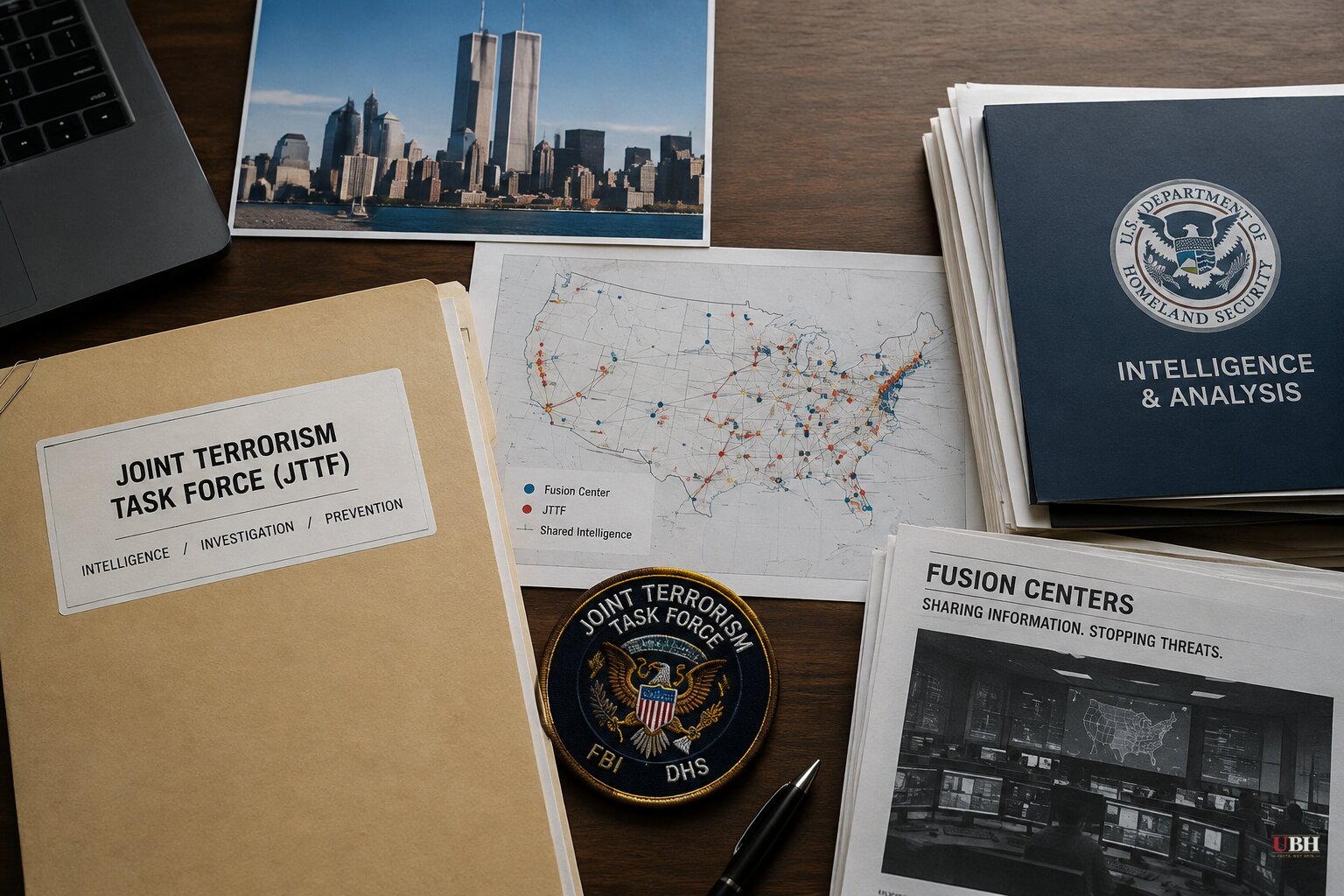
Twenty-five years after al-Qaeda killed nearly 3,000 people on September 11, 2001, the security apparatus built in response is being restructured again, this time by the man running the country.
The 9/11 Commission's core finding was that agencies had enough scattered signals to potentially stop the plot but failed to share them, according to reporting cited by Fox News. That failure led to the creation of the Department of Homeland Security, Joint Terrorism Task Forces, and regional fusion centers designed to force the FBI, CIA, and local police to talk to each other.
By most measures, it worked. DHS now employs roughly a quarter-million people, the second-largest federal agency after the Pentagon, according to NPR. No attack on U.S. soil since has come close to matching 9/11's death toll.
The Cops Who Never Stopped
CNN spoke with John Ryan, a former Chief of Department with the Port Authority Police, who lost 37 officers on September 11, more than any single U.S. law enforcement agency has lost in one day. Ryan later commanded a Joint Terrorism Task Force unit and told CNN intelligence-sharing has been the backbone of every plot quietly disrupted since, though he and CNN did not put a specific number on how many plots that includes.
The tradeoffs behind that record were largely hidden from the public. A PBS Frontline documentary, drawing on the reporting of Pulitzer Prize winner Dana Priest, detailed how the post-9/11 buildup included CIA black sites, interrogation techniques widely condemned as torture, and a warrantless NSA program intercepting Americans' calls and emails. Priest said in the documentary that after 9/11, "privacy versus another 9/11 attack, there was no real question about what was going to win."
A Fight Over What the Enemy Actually Is
Not every retrospective this anniversary agrees on what lesson matters most. Writing for the Daily Signal, Kristen Ziccarelli argues that President George W. Bush's framing of the problem as "terrorism," rather than the Islamist ideology behind it, was a mistake the country has never corrected. She points to Bush's September 17, 2001, statement that "the face of terror is not the true faith of Islam" and contrasts it with Osama bin Laden's own "Letter to America" and a 2016 ISIS propaganda article titled "Why We Hate You and Why We Fight You," both of which explicitly framed their violence in religious terms.
Other retrospectives this week don't make the same argument. The Epoch Times' Christian Milord and CNN's reporting both frame the lessons of 9/11 in institutional terms: better information-sharing, disrupting plots during the planning stage, closer cooperation with allied intelligence services, without addressing the ideological debate Ziccarelli raises.
Separately, the head of the Secure Community Network, the official security organization for North American Jewish communities, wrote in Fox News that the threat has changed shape entirely. Where planning a 9/11-scale attack once took years, the SCN leader wrote, a person can now consume extremist content, adopt a violent ideology, and launch an attack within the same day. That compressed timeline, the piece argues, is why fusion centers and task forces built for slower-moving conspiracies need to be redesigned for real-time detection.
Trump's 'Deep State' Overhaul
While the anniversary generates retrospectives, the intelligence community itself is being restructured. President Trump has framed his second-term national security changes as rooting out officials who worked against him. "We will clean out all of the corrupt actors in our national security and intelligence apparatus, and there are plenty of them," Trump said, according to NPR.
John Sipher, a nearly three-decade CIA veteran who ran the agency's Russia operations, told NPR the post-9/11 intelligence community had to build entirely new capabilities, from drones to network-mapping, that it wasn't trained for before the attacks. He did not comment in the NPR report on the merits of Trump's current restructuring.
Tim Weiner, author of "The Mission: The CIA in the 21st Century," was more direct, telling NPR that "since the re-inauguration of Donald Trump, the architecture of American national security is being destroyed, just like the east wing of the White House." NPR reported that critics broadly argue Trump is dismantling institutions with no clear plan for what replaces them, a characterization the administration disputes by pointing to its stated goal of removing officials it considers disloyal or corrupt.
Twenty-five years on, the unresolved question isn't whether the post-9/11 system worked. It's whether the version being built now, faster-moving, more centralized under presidential control, and shedding officials Trump deems disloyal, will hold up the same way. Neither NPR's critics nor the administration have offered a public accounting of what oversight structure replaces the one being dismantled.
Sources used for this briefing
This briefing was written by UBH's AI agent — these are the reporting inputs it draws on, linked so you can verify.


