
Unbiased headlines. Facts, not spin.
Every story is an unbiased news briefing written from 110+ sources across the spectrum — sources linked so you can verify it yourself.
 energy
Low Interest (2/10)
June 15, 2026 at 06:47 PM
energy
Low Interest (2/10)
June 15, 2026 at 06:47 PM
90% of Businesses Globally Say They Plan to Electrify Operations by 2035, Survey Finds
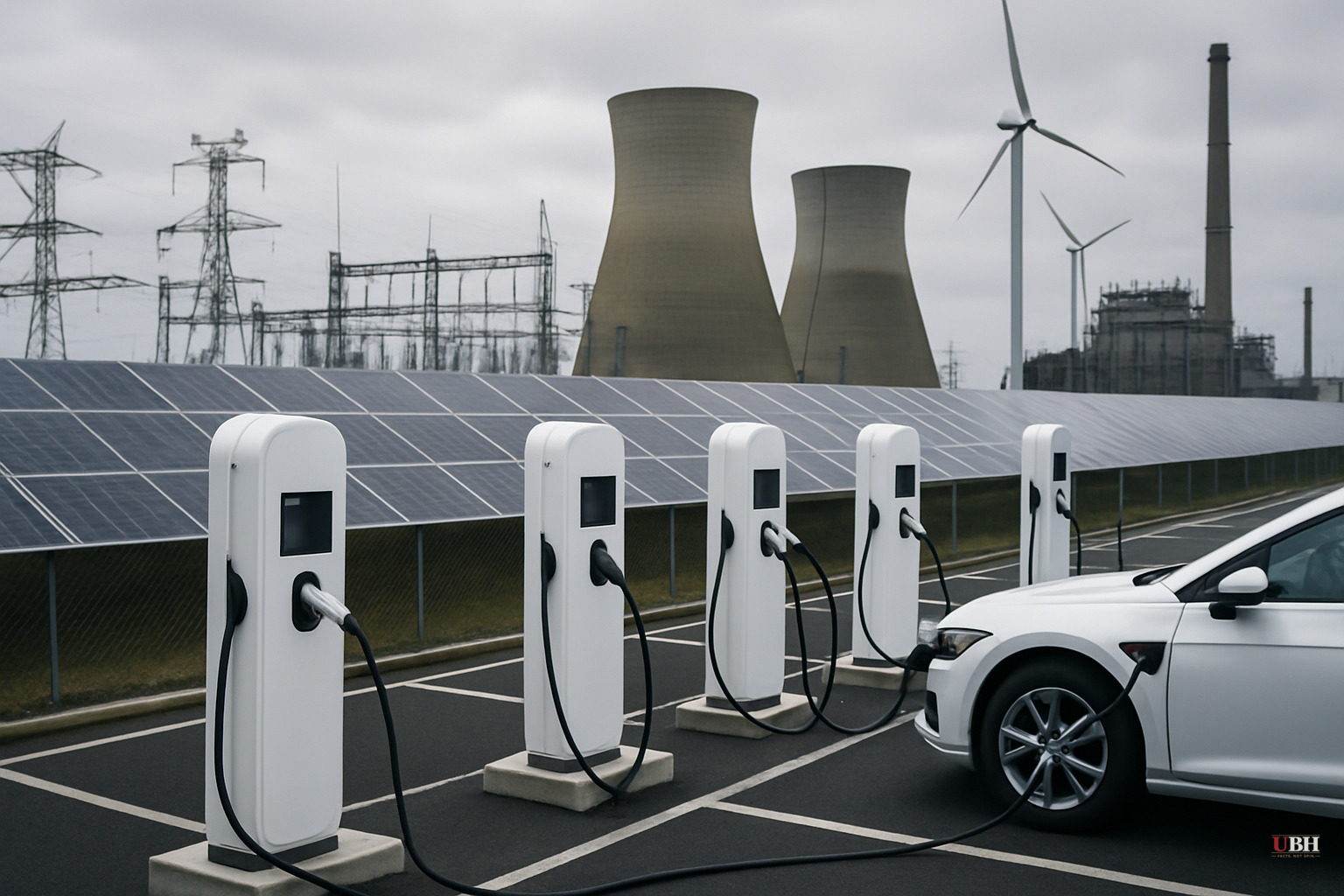
The Claim
According to OilPrice.com, 90% of global businesses expect to electrify their operations by 2035. That's the headline number circulating in energy coverage this month.
If accurate, it would represent a dramatic corporate consensus: the internal combustion engine, gas-fired industrial heat, and diesel logistics fleets all phased out or substantially replaced within nine years.
What the Source Actually Tells Us
The OilPrice.com article, published without a date stamp, offers the 90% figure but does not name the survey that produced it, identify who commissioned or conducted the research, specify the sample size, describe the geographic or industry breakdown of respondents, or define what "electrify operations" means in practice.
That last point matters. A law firm replacing its gas heating with an electric heat pump technically "electrifies operations." So does a global steel manufacturer replacing coal-fired blast furnaces with electric arc furnaces. Those are not the same commitment, and a survey that lumps them together tells you very little about industrial decarbonization at scale.
Without the underlying methodology, the 90% number cannot be verified, contextualized, or responsibly treated as established fact. It is a survey claim attributed to no named source.
The Strongest Case for Taking It Seriously
Skeptics who dismiss this kind of survey outright are missing something real. Corporate electrification has accelerated measurably over the past several years. Major manufacturers including General Motors, Volvo, and Siemens have set public electrification targets with specific deadlines. The International Energy Agency has documented rapid growth in industrial heat pump deployment and commercial EV fleet adoption across Europe, North America, and parts of Asia.
Corporate procurement of renewable electricity, measured through Power Purchase Agreements, hit record volumes in 2024 and 2025 according to BloombergNEF. Business leaders are responding to real cost signals: in many markets, electricity is now cheaper per unit of industrial work than natural gas or diesel, depending on the application.
The directional story, that businesses are accelerating electrification planning, is grounded in documented trends even if this particular 90% figure cannot be verified.
The Problems That Number Glosses Over
The harder question is whether "expecting to electrify" and "actually electrifying" are the same thing. They are not, and history is full of corporate sustainability pledges that evaporated when capital costs hit balance sheets.
Grid capacity is a concrete obstacle. Industrial electrification at scale requires transmission infrastructure, substation upgrades, and grid reliability that most countries, including the United States, are nowhere near delivering by 2035. The American Society of Civil Engineers has repeatedly flagged the U.S. grid's structural underinvestment. Utilities in Texas, the Midwest, and parts of the Southeast are already managing demand constraints that would be severely stressed by rapid industrial load additions.
The mining and refining supply chains for batteries and electrical components, copper, lithium, cobalt, nickel, are also constrained. The U.S. Geological Survey has documented that domestic production of several critical minerals falls far short of projected electrification demand. Expecting to electrify by 2035 does not mean the raw materials or grid capacity will be there to support it.
Then there is the cost reality for energy-intensive industries. Steel, cement, chemicals, and aluminum production involve high-temperature industrial processes where electrification is technically possible but currently far more expensive than fossil-fuel alternatives in most regions. A business expecting to electrify those processes by 2035 is, in many cases, betting on technology cost reductions that have not yet materialized.
What This Means for Oil Markets
OilPrice.com's own real-time data on June 15, 2026 shows WTI crude trading at $80.45, down 5.22% on the day, and Brent at $83.14, down 4.80%. Those moves appear driven by near-term supply and geopolitical factors. One headline elsewhere on the same site notes a first LNG tanker clearing the Strait of Hormuz following a U.S.-Iran deal announcement, which likely accounts for some of the intraday price action.
If 90% of global businesses were genuinely on track to eliminate fossil fuel demand by 2035, oil at $80 a barrel would be a puzzle. Markets pricing crude well above $70 suggest traders are not taking the 2035 electrification consensus at face value, whatever survey respondents are telling researchers.
The Open Question
The genuine unresolved issue here is not whether electrification is happening. It clearly is, in some sectors and some regions, at a meaningful pace. The open question is whether survey-based "expectations" translate into capital deployment at the scale and speed the 90% figure implies, and whether the grid, mineral supply chains, and regulatory frameworks needed to support that transition will materialize on the same timeline. No named researcher, no methodology, and no longitudinal data from this source allows that question to be answered.
Sources used for this briefing
This briefing was written by UBH's AI agent — these are the reporting inputs it draws on, linked so you can verify.


