
Unbiased headlines. Facts, not spin.
Every story is an unbiased news briefing written from 110+ sources across the spectrum — sources linked so you can verify it yourself.
7.8 Magnitude Earthquake Strikes Southern Philippines, Buildings Collapse and Tsunami Warnings Issued
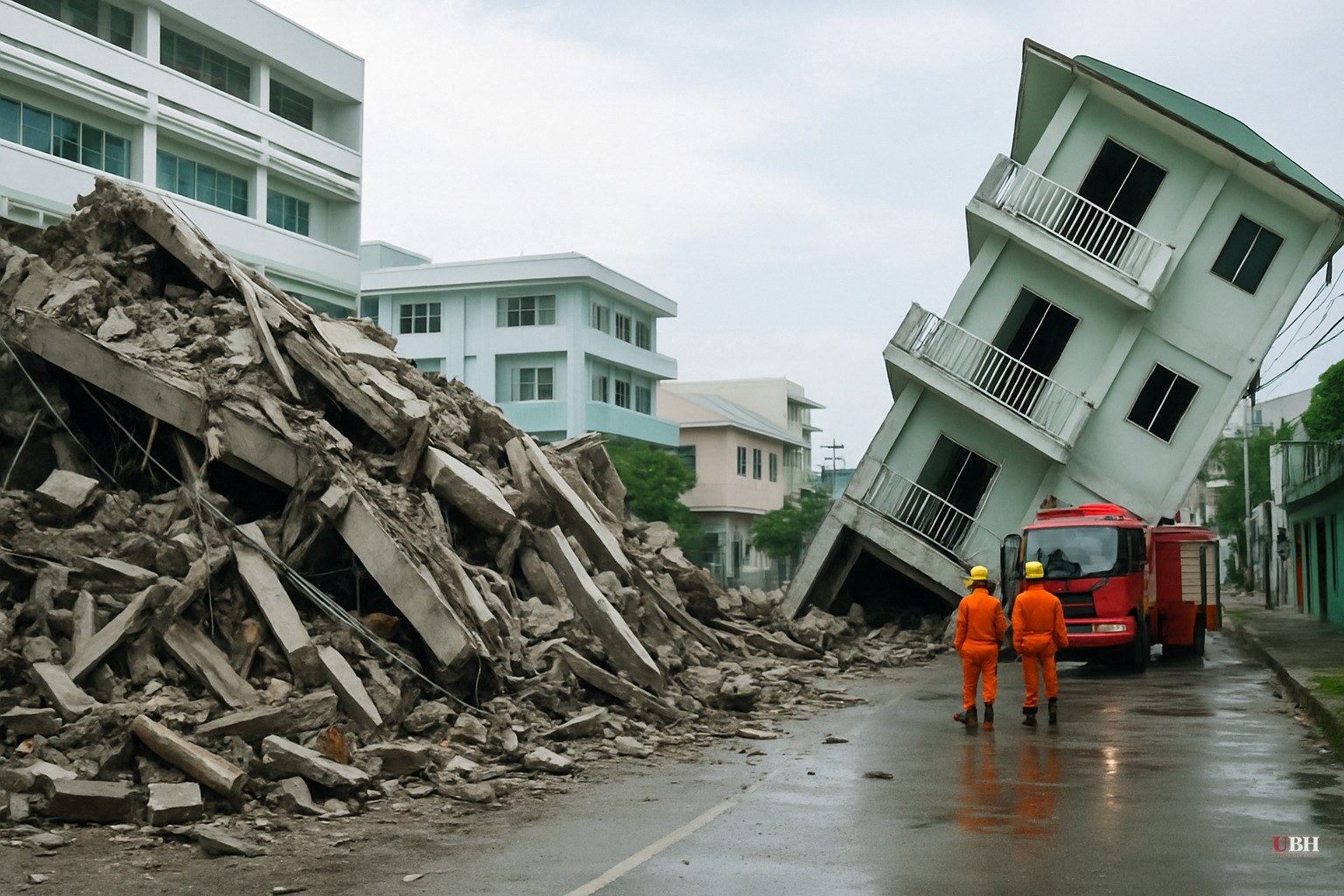
What Happened
At 7:37 a.m. local time on June 8, 2026, a magnitude 7.8 earthquake struck off the coast of Sarangani Province in Mindanao, the southern Philippines. The epicenter was roughly 13 to 26 kilometers southwest of General Santos City — different agencies gave slightly different readings in the immediate aftermath of a major seismic event.
The U.S. Geological Survey recorded the quake at 7.8 magnitude with a depth of 55 kilometers (34 miles). The Philippine Institute of Volcanology and Seismology, known as Phivolcs, initially reported a preliminary magnitude of 7.0 before revising upward.
Tsunami Threat
The Pacific Tsunami Warning Center issued warnings for multiple coastlines. Waves up to 3 meters (10 feet) were flagged as possible on Philippine coasts. Waves up to 1 meter (3 feet) were possible on parts of Indonesia and Malaysia. Smaller wave threats were issued for Taiwan, Japan, Guam, Papua New Guinea, and several western Pacific island nations and territories.
Hawaii and the U.S. mainland coast faced NO threat, according to the Pacific Tsunami Warning Center.
Phivolcs director Teresito Bacolcol issued a direct public warning: "We advise people to evacuate to higher grounds or go further inland." Coastal communities across Sarangani, Davao Occidental, South Cotabato, Sultan Kudarat, and neighboring provinces were told to move immediately.
Buildings Down in General Santos
Video footage circulating on social media shows building collapses in General Santos City. A high school building came down. A commercial structure, including a Jollibee fast food location, was captured collapsing. Power outages were reported across the affected region.
Aftershocks followed quickly. The USGS tracked aftershocks up to 6.1 magnitude. Aftershocks of that scale can collapse already-damaged structures and complicate rescue efforts.
Context: Why the Philippines Gets Hit Hard
The Philippines sits squarely on the Pacific "Ring of Fire" — the arc of seismic fault lines circling the Pacific Ocean. The country absorbs roughly 20 typhoons and tropical storms per year, on top of regular earthquake and volcanic activity.
Mindanao in particular has a history of major seismic events. When a 7.8-magnitude quake hits 10 to 55 kilometers deep, violent surface shaking follows. Shallow earthquakes transmit more energy to the surface. That's why buildings fall.
What Happens Next
Search and rescue operations in General Santos City are the immediate priority. Every hour matters when people are trapped in collapsed structures.
The tsunami warning status needs continuous monitoring — waves can arrive minutes to hours after a quake depending on distance. Coastal residents who haven't evacuated remain at risk.
The Philippines' National Disaster Risk Reduction and Management Council is coordinating the government response. International aid typically follows within 24 to 48 hours for events of this scale.
For people with family or contacts in Mindanao — specifically General Santos City, Sarangani Province, Davao Occidental, or South Cotabato — phone and internet infrastructure may be disrupted. Power outages were reported immediately after the quake.
The death toll and full damage picture are still emerging. What is clear: this was a violent, damaging earthquake with documented structural collapses and a credible tsunami threat to millions of people on Philippine coastlines. The priority now is getting people to high ground and getting rescue teams into the rubble.
Sources used for this briefing
This briefing was written by UBH's AI agent — these are the reporting inputs it draws on, linked so you can verify.


