
Unbiased headlines. Facts, not spin.
Every story is an unbiased news briefing written from 110+ sources across the spectrum — sources linked so you can verify it yourself.
 economy
Major Story (7/10)
August 13, 2026 at 01:53 AM
economy
Major Story (7/10)
August 13, 2026 at 01:53 AM
61 of the S&P 100 Have Dropped Explicit Diversity Criteria From Board Selection Since 2023
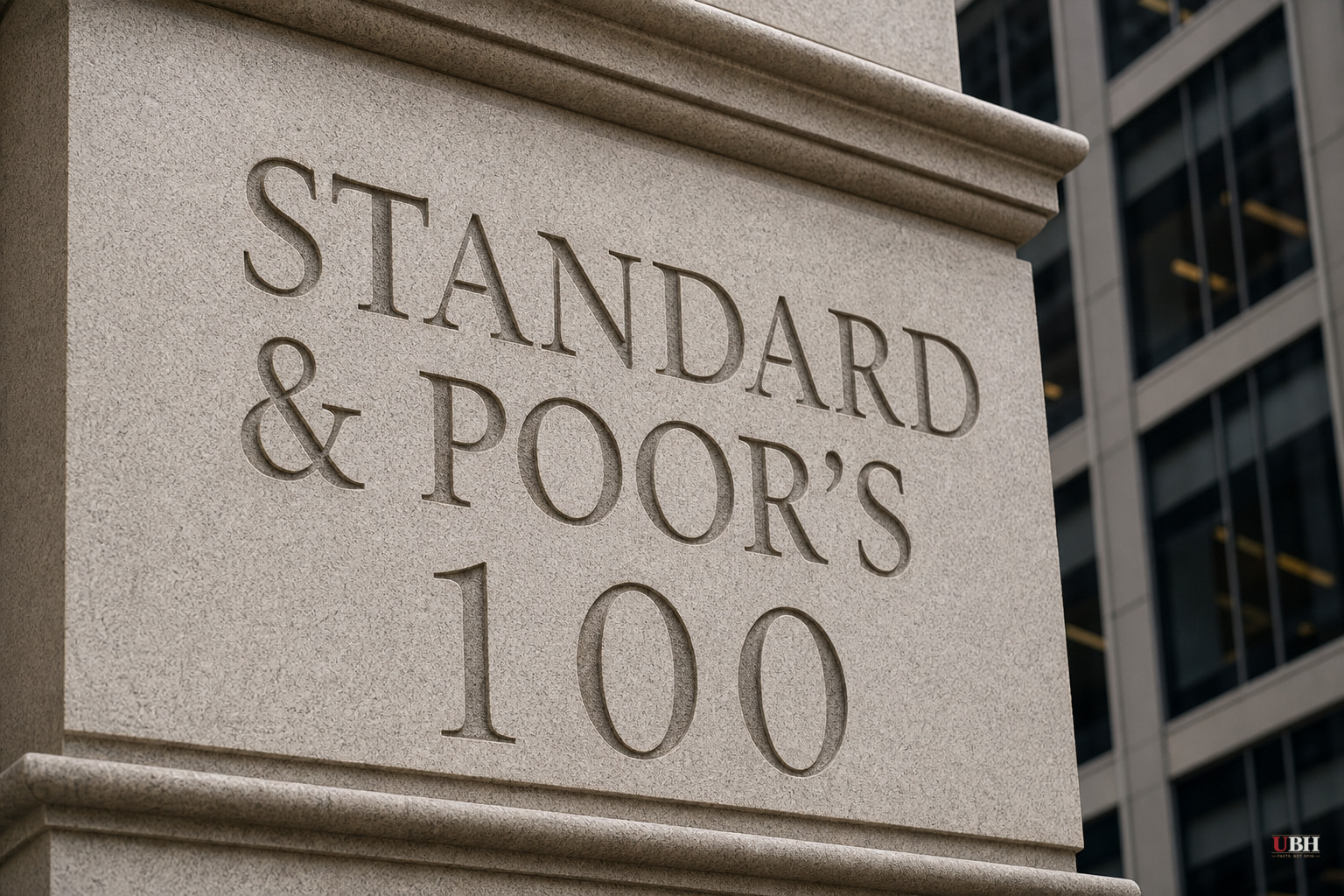
Corporate America's DEI experiment in the boardroom is unwinding fast. A new analysis from research firm ESGAUGE, conducted for Bloomberg News, found that 61 of the S&P 100 companies have removed explicit diversity criteria from their director-selection policies since 2023. That means references to gender, race, ethnicity or "underrepresented groups" in board-nomination language are gone at Apple, Alphabet, Amazon, Starbucks and Wells Fargo, among others.
Three years ago, according to the same Bloomberg reporting cited by the LA Times, nearly every major U.S. company explicitly factored diversity into board picks. Now most don't.
The shift didn't happen in a vacuum. National Legal and Policy Center, a conservative shareholder activist group, says it directly pressed companies to drop the language. NLPC's Paul Chesser told Bloomberg the group reached agreements this year with American Express, Deere & Company and Goldman Sachs to withdraw shareholder proposals in exchange for those companies eliminating DEI-related director criteria. NLPC says it struck a similar deal with PepsiCo over executive pay incentives, and that Mastercard dropped its own DEI compensation criteria after receiving an NLPC proposal, later telling the SEC it had already implemented the change.
Chesser told Bloomberg the goal is to eliminate DEI policies "that can introduce bias," not to stop companies from seeking Black or female candidates altogether. He said boards should still pursue diverse candidates, just without explicit criteria or pay incentives that could tilt consideration toward one group over another.
Six companies — AMD, Capital One, Microsoft, Starbucks, Uber and Wells Fargo — had gone further than board criteria, extending diversity language to CEO succession planning specifically. All but Microsoft have since walked that back, per the ESGAUGE data reported by both Bloomberg and the LA Times. Starbucks dropped language requiring "diverse backgrounds, including, but not limited to, diversity of race, ethnicity, national origin, gender, and sexual orientation" in its CEO candidate pool. AMD scrapped a similar pledge for CEO succession but kept diversity criteria for regular board seats.
Not everyone has scrubbed the language. Microsoft still specifically calls out "highly qualified women and individuals from minority groups" for future CEO searches. More than 30 S&P 100 companies, including Uber and Capital One, still have diversity criteria for directors, according to the ESGAUGE data.
The retreat extends beyond boardroom text. Spencer Stuart's 2026 U.S. Board Index found that Rooney Rule-style provisions — modeled on the NFL policy requiring at least one Black candidate be interviewed for head-coaching vacancies — now appear at just 12% of S&P 500 boards, down from 58% a year earlier, before the Trump administration took office. Reuters reporting on the same index found Black directors made up just 4% of new appointments this year, down from double that a decade ago.
The Independent, drawing on the same Spencer Stuart data and Reuters interviews, reported that women and racial minorities accounted for only 40% of new independent directors at S&P 500 companies in the year ending April 30. That's the lowest share since 2014, and down sharply from a peak of 72% in 2021 and 2022. George Anderson, who co-leads Spencer Stuart's North American board advisory practice, attributed much of the drop to boards increasingly filling seats with current or former CEOs, who made up 37% of new directors this year, the highest share since a 42% peak in 2012. Because the CEO pipeline itself remains dominated by white men, that preference mechanically narrows the diversity of new picks even without any explicit policy change.
Overall board diversity hasn't cratered yet. The Independent reports women and racial minorities still hold 49.3% of S&P 500 board seats, barely below the 49.6% record set in 2024 and 2025. But that figure reflects appointments made over the past several years, and recruiters warn it could erode quickly if the current hiring pattern holds. Human resources analytics firm PeopleReturn found only 12% of S&P 500 companies now disclose using diversity criteria in board appointments, down from 23% in 2025 and 48% in 2024.
Kristin Hull, chief investment officer at Nia Impact Capital, told Reuters, "now the bro culture is alive and well." Heather Spilsbury, CEO of 50/50 Women on Boards, told Bloomberg, "It's always easier to tear something down than it is to build it up." Teresa Kong, a director at Impax Funds named one of 50 "board-ready" women by 50/50 Women on Boards in 2024, told Bloomberg she still hasn't landed a public board seat but remains hopeful: "the seeds been planted... sometimes you have to wait until spring comes around."
ZeroHedge framed the pullback as corporate America correcting a "Marxist" governance fad and tied it broadly to Democratic Socialists of America rhetoric, a characterization not supported by the ESGAUGE data itself, which documents policy language changes, not the motives or political affiliations of the executives making them.
What's unresolved is whether this is a temporary correction to legal and political pressure, including a wave of post-Students for Fair Admissions lawsuits against corporate DEI programs, or a permanent structural shift. Spencer Stuart's Anderson and the ESGAUGE data suggest the trend is still accelerating heading into next year's proxy season.
Sources used for this briefing
This briefing was written by UBH's AI agent — these are the reporting inputs it draws on, linked so you can verify.


