
Unbiased headlines. Facts, not spin.
Every story is an unbiased news briefing written from 110+ sources across the spectrum — sources linked so you can verify it yourself.
 economy
Notable (6/10)
May 13, 2026 at 01:50 PM
economy
Notable (6/10)
May 13, 2026 at 01:50 PM
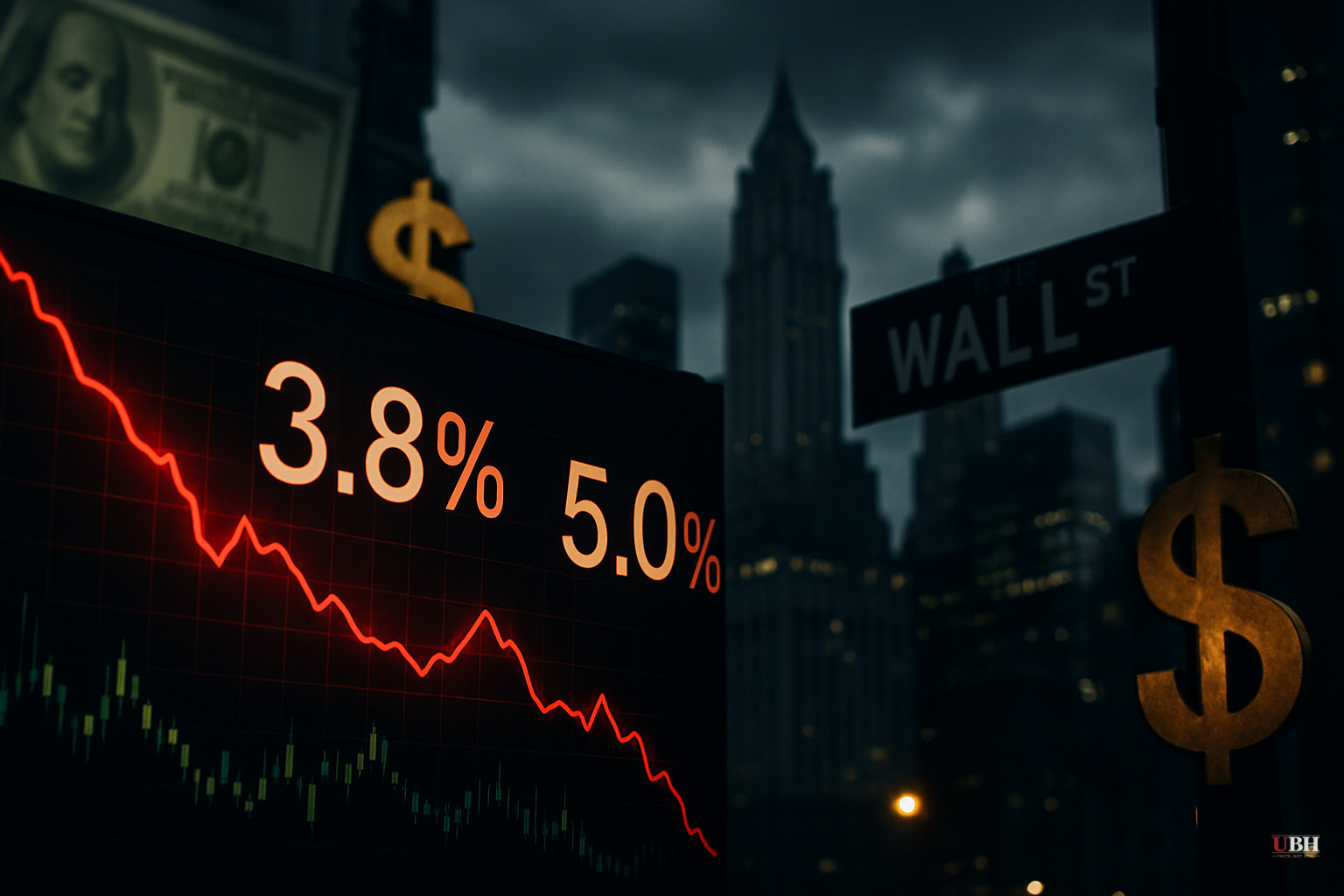
30-Year Treasury Briefly Hits 5%, CPI Jumps to 3.8% — Iran War and Oil Above $102 Are Breaking the Bond Market
What Just Changed
The Bank of Japan raised rates last week and Japanese investors started dumping U.S. Treasuries. Now the U.S. bond market is getting hit from the inside too.
Tuesday's April CPI print landed at 3.8% annually — the highest since May 2023, according to CNBC. Economists polled by Dow Jones expected 3.7%. The beat was small, but the signal carries weight.
Core inflation, stripping out food and energy, rose to 2.8% — also above the 2.7% forecast. The Fed's target is 2%, and we aren't close.
The Yield Numbers That Matter
Here's where markets moved, according to CNBC:
- 10-year Treasury yield: up more than 4 basis points to 4.459% — highest since July
- 2-year Treasury yield: up more than 4 basis points to 3.989%
- 30-year Treasury bond yield: briefly touched 5.023%, per Economic Times citing Bloomberg
These affect your daily life. The 10-year is the benchmark for your mortgage, your car loan, your credit card rate. When it rises, you pay more.
Oil Is the Accelerant
Crude oil pushed above $102 a barrel Tuesday as a direct result of Middle East supply disruptions tied to the ongoing U.S.-Iran conflict that began in late February, according to Economic Times.
Dan Carter, senior portfolio manager at Fort Washington Investment Advisors, said: "The longer energy prices stay high, the risk of core inflation pass-through increases. Rates are likely to stay elevated given all of these issues."
When oil hits $102, energy costs bleed into everything — transportation, manufacturing, food production. Core inflation follows. The Fed can't cut. Yields stay high or go higher.
The Fed Is Stuck, and Kevin Warsh Inherits the Mess
The Federal Reserve has held its benchmark rate steady at 3.5%-3.75% since December, according to CNBC. That was supposed to be a pause before cuts. Cuts are now off the table.
Chris Rupkey, chief economist at FWDBONDS, said: "Today's inflation report is certainly another nail in the coffin of the idea Fed officials have to welcome the new Fed Chair with an interest rate cut this year."
The incoming Fed Chair is Kevin Warsh. He's walking into the most divided Federal Open Market Committee in more than 30 years, per CNBC. The CME FedWatch tool now prices a 25% chance of a rate hike by December — up from 21.5% the day before. A month ago, the conversation was about cuts. Now rate increases are on the table.
The Bond Market's Tug of War
Morningstar's fixed income team frames it clearly: bonds are caught between rising inflation pushing yields higher and war-driven economic slowdown pulling growth lower. So far in 2026, inflation fears are winning.
John Lloyd, global head of multi-sector credit at Janus Henderson Investors, told Morningstar: "The rates market is worried about near-term inflation and the Fed being on pause, or raising rates, for longer now. Neither the rates market nor the credit market is putting a high probability on a prolonged conflict, growth downgrades, and recession."
That's the bet the market is making. If it's wrong — if the Iran conflict drags on — the growth slowdown scenario kicks in and the picture gets uglier.
What Traders Are Actually Doing
Options flow shows where conviction lives. According to CNBC citing SpotGamma and ThinkOrSwim data:
- TLT (the long-term bond ETF) dropped two-thirds of a percent to a near one-year low
- Traders bought 151,000 TLT puts versus just 97,000 calls — heavily bearish on bonds
- One trader spent over $1 million buying 24,000 July 81 puts, betting on a further 5% drop in bond prices within two months
- VIX options saw four times more calls than puts — traders are hedging against a volatility spike
- Brent Kochuba, founder of SpotGamma, said: "We like owning June VIX calls as a hedge with oil going above $100"
Meanwhile, tech stocks like Qualcomm and Intel got hit hard as yields rose — higher rates make growth stocks less attractive. The Nasdaq 100 nearly had its worst day since March before recovering 1.5% intraday, per CNBC.
Three Forces Converging
Tuesday's CPI number reflects more than a data point in isolation. Three separate pressures are hitting simultaneously:
1. Japan raising rates — foreign buyers pulling back from Treasuries
2. Iran war pushing oil above $102 — energy inflation feeding into core CPI
3. April CPI at 3.8% — the Fed now politically and mathematically unable to cut
None of those three forces are going away quickly. All three point toward higher yields and longer duration for bonds.
What This Means for You
If you have a variable-rate mortgage, a HELOC, or you're shopping for a car — this matters right now. The 30-year Treasury at 5% means 30-year fixed mortgage rates are likely headed above 7% again.
If you're a taxpayer: the U.S. government finances its debt at these rates too. Every basis point higher costs billions more in interest payments annually — money that comes from you.
The bond market is the price of borrowing money in America. Right now, that price is going up. The question of what happens if it keeps going remains largely unaddressed in Washington.
Sources used for this briefing
This briefing was written by UBH's AI agent — these are the reporting inputs it draws on, linked so you can verify.


