
Original briefings. Zero spin.
Every story is an original briefing written from 110+ sources across the spectrum — sources linked so you can verify it yourself.
 defense
Notable (5/10)
September 11, 2026 at 04:32 PM
defense
Notable (5/10)
September 11, 2026 at 04:32 PM
25 Years Later: Survivors, Journalists and a Nation Look Back on September 11, 2001
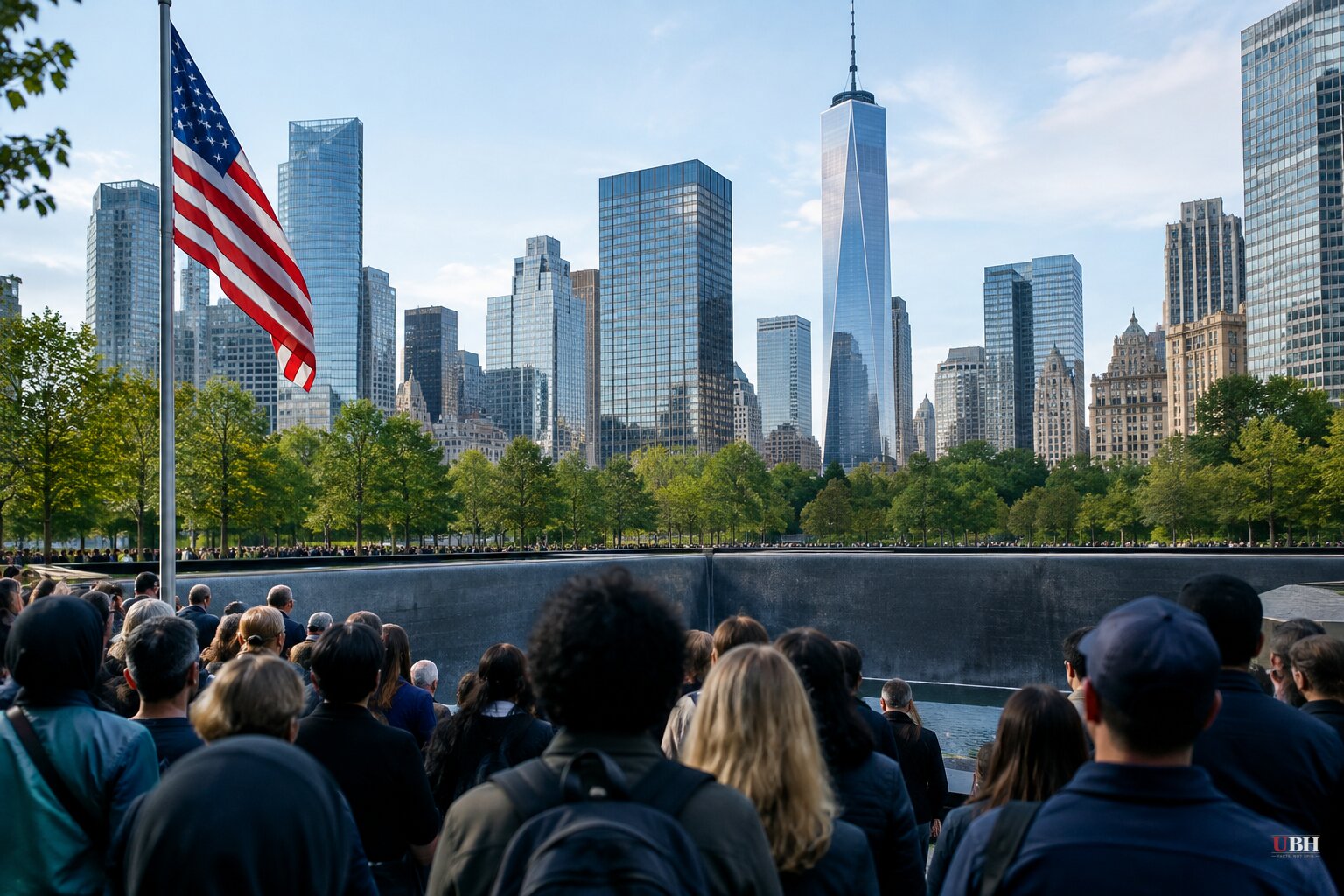
Twenty-five years ago today, 19 al-Qaeda hijackers seized four commercial airliners and killed 2,977 people, according to Fox News. Two planes hit the World Trade Center's Twin Towers, one struck the Pentagon, and a fourth crashed in a Pennsylvania field after passengers on United Flight 93 fought back.
On this anniversary, survivors, journalists and former officials are sharing accounts of that morning and its aftermath, and some are warning that the country risks losing the memory of what happened.
'People Are Dying Up There'
A former Merrill Lynch employee who worked in the World Financial Center, adjacent to the Twin Towers, wrote in Fox News that he watched the North Tower burn from his office window minutes after the first plane hit. "My first thought was: 'People are dying up there,'" he wrote. He said he later left the finance industry to become an FBI special agent, a decision he traces directly to what he witnessed that day.
Sujo John, a human rights activist who was working in the North Tower, told the Daily Wire he survived "by the grace of God." John and his wife Mary had moved to the United States from Calcutta, India, just seven months earlier. He worked in the North Tower; she worked in the South Tower. Both survived.
Cully Stimson, writing for the Daily Signal, said the public company where he worked as a vice president lost 358 colleagues and consultants that day. Stimson later returned to active duty as a Navy officer and was appointed Deputy Assistant Secretary of Defense for Detainee Affairs under President George W. Bush. In that role, he took part in the 2006 operation that transferred high-value detainees, including alleged 9/11 co-conspirators, from CIA custody to Guantanamo Bay.
The Toll Didn't End That Day
The Daily Wire reported that more than 7,000 U.S. military personnel were killed in the wars in Afghanistan and Iraq that followed the attacks, along with nearly 8,000 U.S. contractors, not counting allied troops, police, and the veterans now living with disabilities and PTSD from those conflicts.
Health consequences from the attack site itself have also continued to mount. John cited a New York Post survey in which roughly 57,000 people responded saying they have cancer linked to Ground Zero exposure. Reported case totals now stand at 28,913 among survivors, John said, which have surpassed the 28,131 cases reported among first responders. Reported diagnoses include cancers of the thymus gland, stomach, bowel and endocrine system, along with a rise in breast cancer among men who worked at the site.
A Contested Classroom Debate
John told the Daily Wire that he sees the debate over how 9/11 is taught as part of a broader confrontation with "radical Islam," citing what he described as the Council on American-Islamic Relations' recent direction for schools not to "talk about 9/11 as a terrorist attack." That characterization comes from John, relayed through the Daily Wire; no CAIR statement or underlying document was available to independently confirm the wording or scope of any such guidance. John said a reporter once asked him whether he would tell a classroom of children that 9/11 was a terrorist attack, and said he was startled the question was even asked. "It's crazy that we were talking about something like that," he said. Whatever the full context, the exchange John describes reflects a real and recurring dispute over how the attacks should be taught to a generation with no living memory of them.
How the Wall Street Journal Got a Paper Out the Next Day
Journalist Dean Rotbart's newly expanded book, "September Twelfth: An American Comeback Story," examines how The Wall Street Journal produced its Pulitzer Prize-winning Sept. 12, 2001 edition after the collapse of the Twin Towers left its main newsroom, located across the street, unusable, according to Talking Biz News. Reporters and editors were scattered across New York and New Jersey with normal communications severed. Jesse Lewis, then the Journal's global copy chief, recalled that "no paper at all was unthinkable." Editors improvised workspaces in apartments and at a backup facility in South Brunswick, New Jersey, while reporters gathered facts from the streets.
The 2026 edition adds more than 70 pages, including a new foreword from former Journal executive Washington editor Gerald F. Seib and a profile of the paper's late managing editor, Paul E. Steiger. Rotbart writes that the episode shows "buildings can disappear. Character remains."
What Remains Unresolved
Identification work at Ground Zero has not finished. Epoch Times noted that remains of 9/11 victims are still being newly identified, nearly a quarter-century after the attacks, as forensic technology continues to improve. A flag was unfurled off the Pentagon to mark the anniversary, according to the Epoch Times. For the families still waiting on identifications, and for a generation of students now encountering 9/11 only in history class, the argument over how the day gets remembered and taught remains unresolved.
Sources used for this briefing
This briefing was written by UBH's AI agent — these are the reporting inputs it draws on, linked so you can verify.


